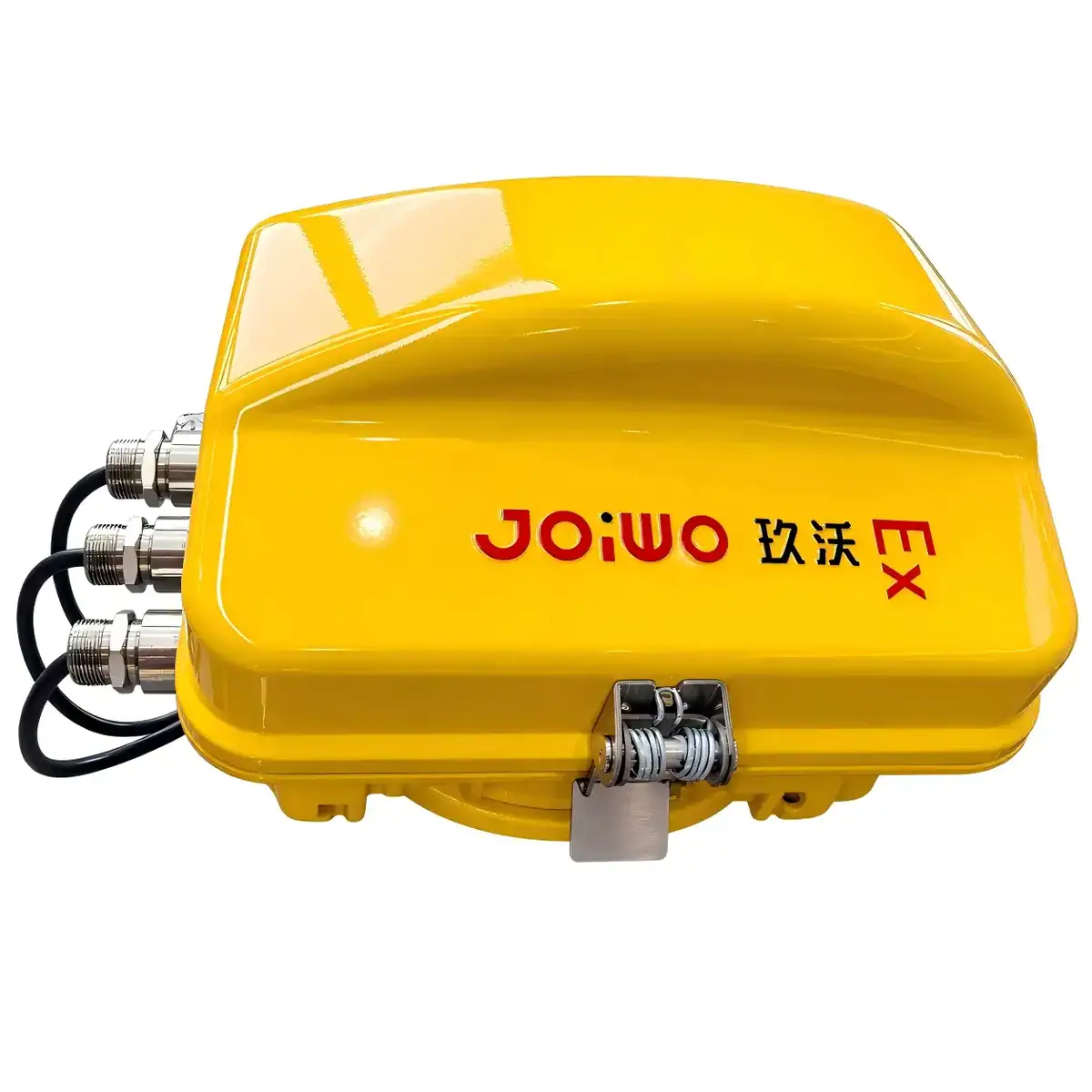
IIC Explosion Proof Telephone JWBT811
The JOIWO JWBT811 IIC Explosion Proof Telephone provides voice communication for Zone 1 and Zone 2 hazardous gas environments, with a die-cast aluminum enclosure, IP66 protection and an anti-noise handset. Available in analog and SIP VoIP versions, it supports routine and emergency calling in refineries, chemical plants and offshore facilities.
- IIC Explosion Protection: The JWBT811 IIC Explosion Proof Telephone is designed for Zone 1 and Zone 2 hazardous gas environments. Its complete gas explosion-protection marking is Ex d ib IIC T6 Gb; confirm certificate suitability for the installation site.
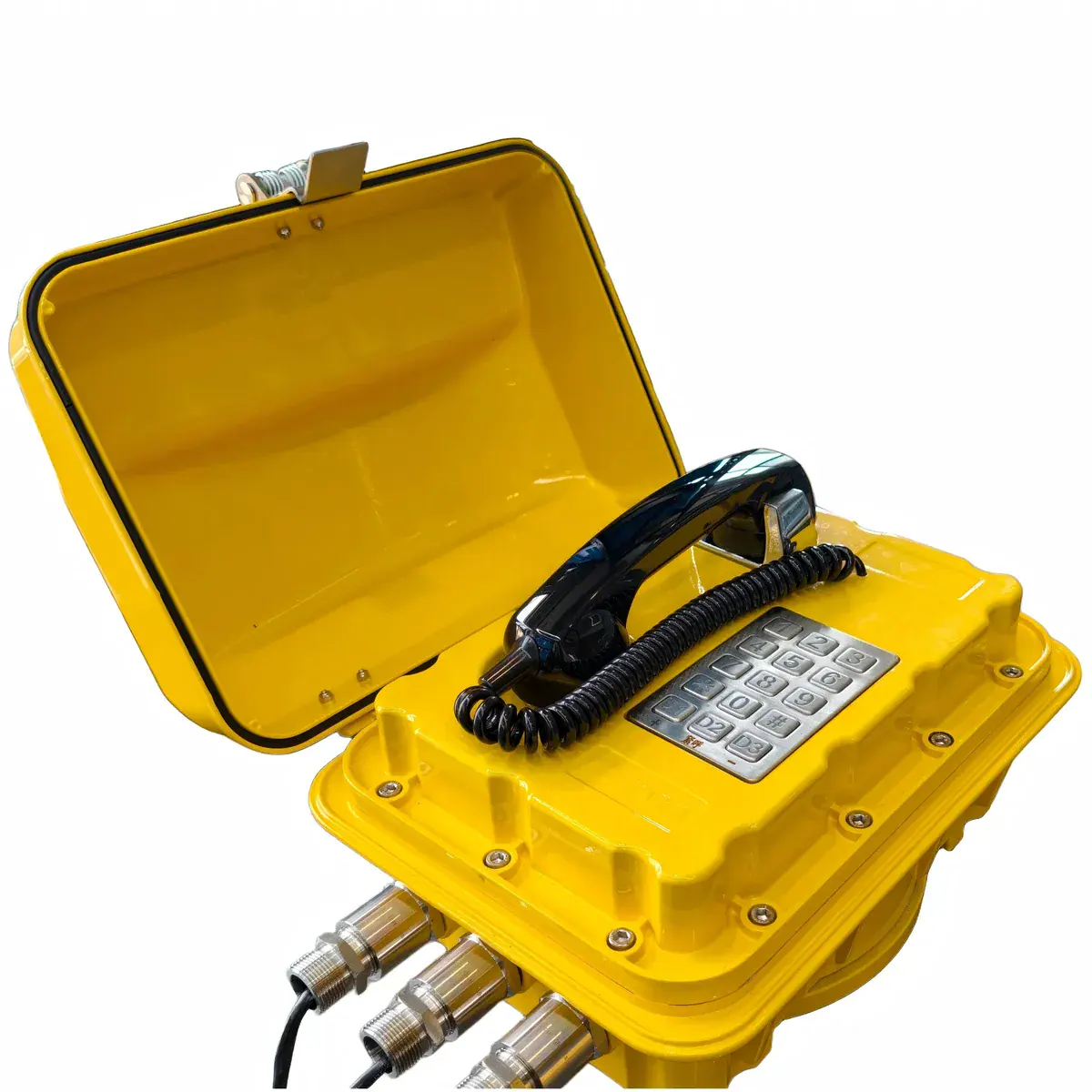
- IP66 Aluminum Enclosure: Heavy-duty die-cast aluminum housing protects against dust and powerful water jets, supporting installation in wet industrial areas and exposed outdoor locations.
- Corrosion-Resistant Construction: A protective coating and rugged structure suit demanding operating conditions in chemical plants, refineries and offshore facilities.
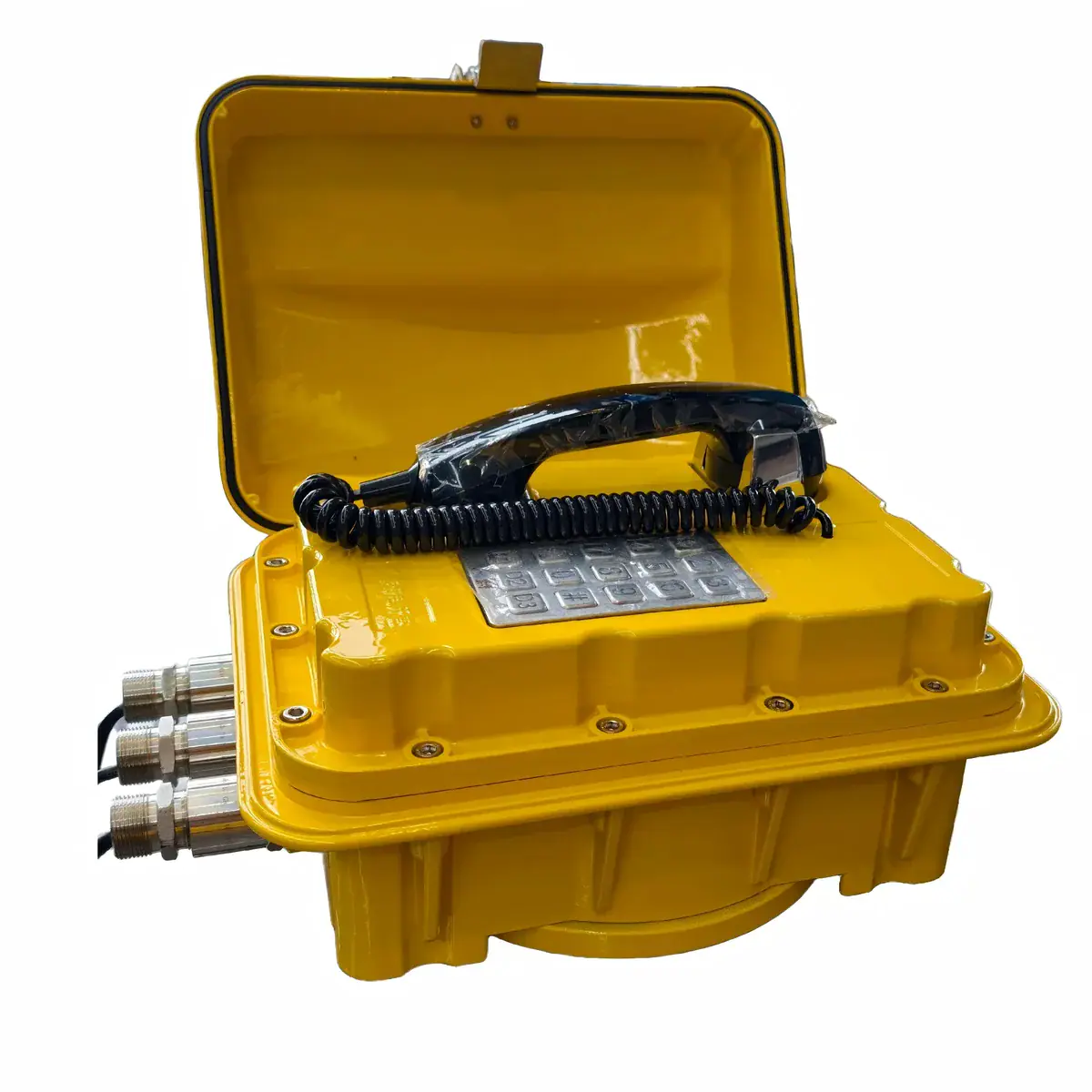
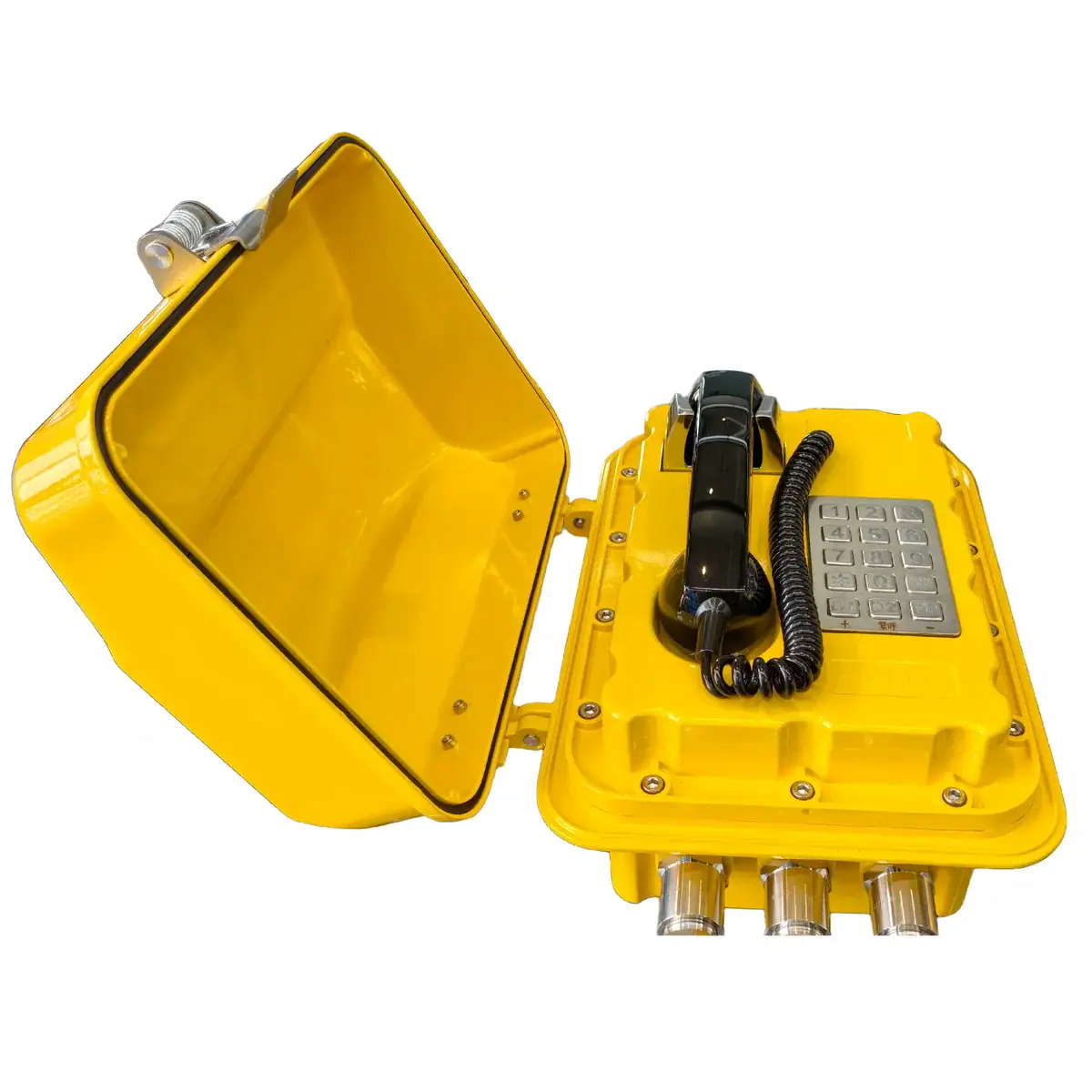
- Industrial Keypad and Handset: A stainless steel numeric keypad provides tactile operation, while an anti-noise handset supports voice communication in noisy workplaces.
- Analog and SIP Options: This explosion proof telephone is available in analog and SIP VoIP versions for connection to compatible PABX or IP PBX systems.
- Emergency Calling Functions: Configurable speed dial and off-hook automatic dialing provide direct access to a control room or designated assistance number.
- Protective Cover: An opening cover shields the keypad and handset from external exposure when the telephone is idle.
- Wall-Mounted Design: Dedicated mounting points and cable entries support permanent installation. For projects specifying an Ex d IIC telephone, confirm the required connection type, cable glands and certified configuration before ordering.
| Item | Technical data |
| Explosion-Proof Mark | Ex d ib IIC T6 Gb/EX tD A21 IP66 T80℃ |
| Voltage | Phone Line Powered |
| Standby Work Current | ≤0.2A |
| Frequency Response | 250~3000 Hz |
| Amplified Output Power | 10~25W |
| Ringer Volume | 110dB(A) at 1m distance |
| Corrosion Grade | WF2 |
| Ambient Temperature | -40~+60℃ |
| Atmospheric Pressure | 80~110KPa |
| Relative Humidity | ≤95% |
| Lead Hole | 3-G3/4” |
| Installation | Wall-mounted |
- Main unit: Explosion proof telephone
- Explosion-proof cable glands (pre-installed)
- Mounting accessories & fixing bolts
- Explosion-proof certificate, operation manual, wiring diagram
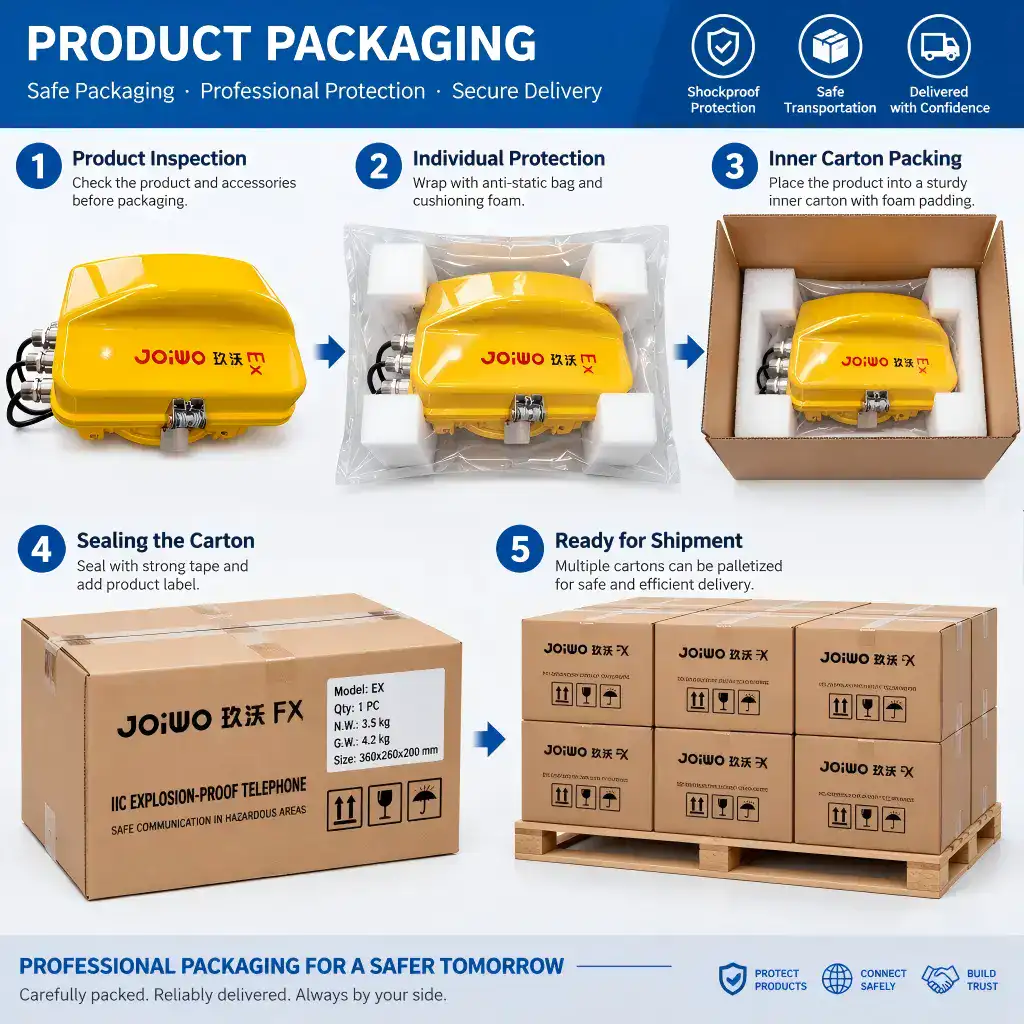
- Export standard plywood case / carton with foam inner padding, shockproof for sea & air shipment
- Custom packaging support upon request
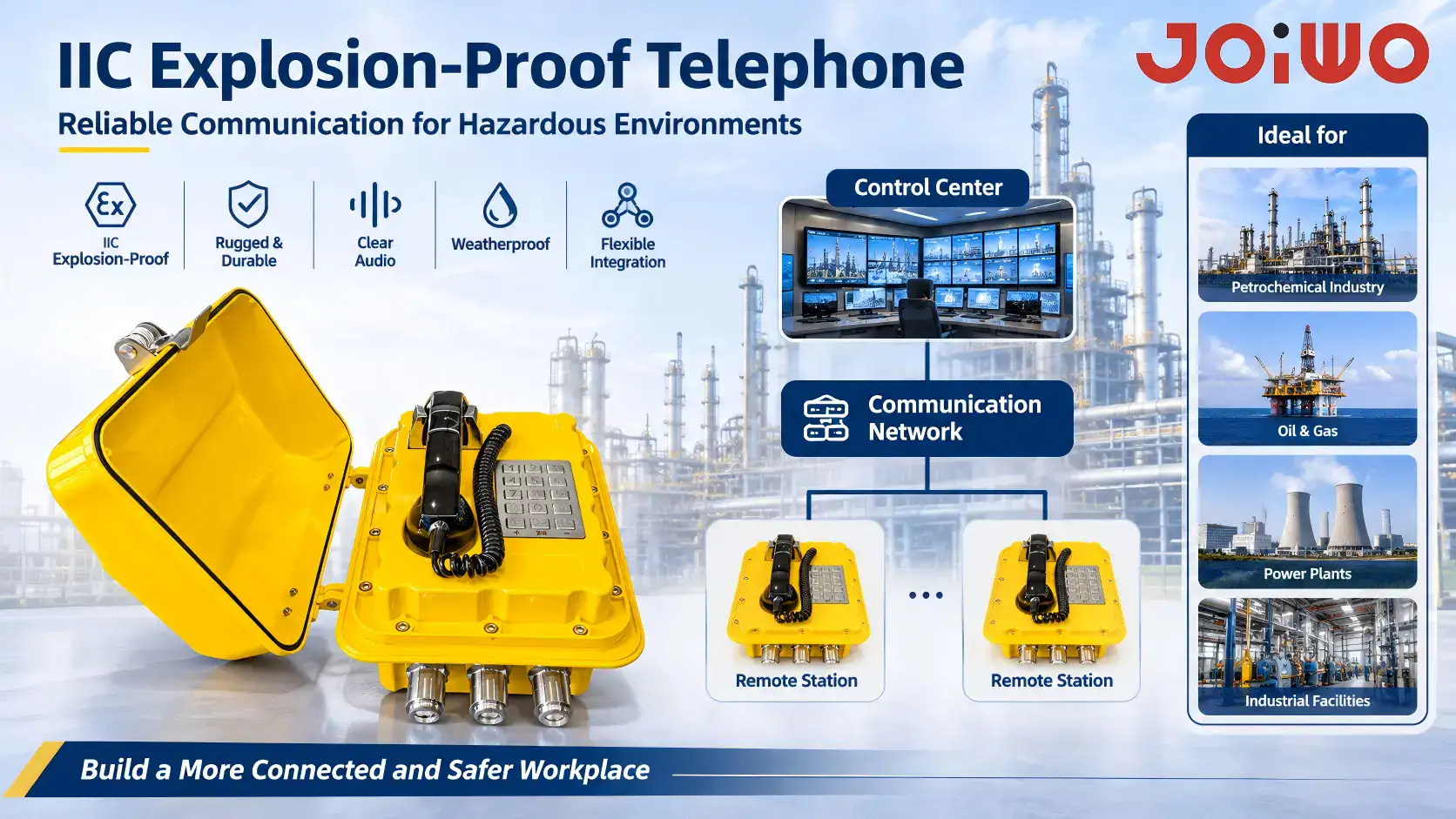
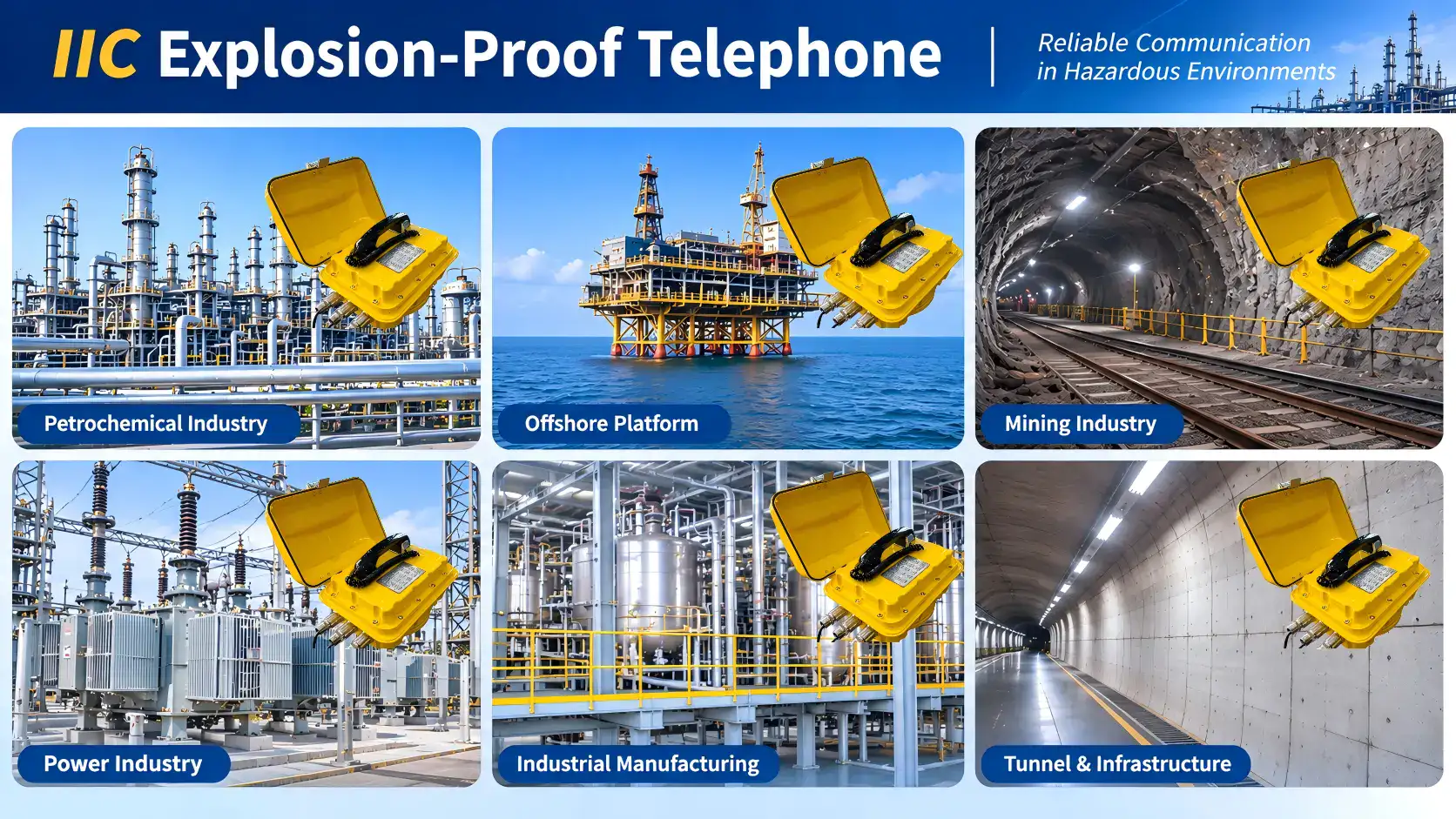
This IIC explosion-proof telephone is specially developed for explosive hazardous environments of Zone 1 and Zone 2. It delivers reliable, stable voice communication for petrochemical refineries, onshore oilfields, offshore platforms, chemical plants, LNG and hydrogen stations, mines, power plants, hazardous goods tank farms, ports and wastewater treatment facilities. It can also be deployed in tunnels and other enclosed high-risk sites as emergency call terminals. Whether for daily production communication or accident emergency alerting, it maintains clear calls even when mobile network signals fail, safeguarding on-site personnel and property safety.
Hazardous Area Voice Communication Solution
This IIC explosion-proof telephone is the core terminal for emergency and daily voice communication in explosive zones.
- SIP VoIP Solution: Connect to industrial SIP PBX, realize intercom, group call, emergency broadcast, call recording, remote management over Ethernet.
- Analog PSTN Solution: Work with traditional PABX / telephone lines, plug-and-play, no network configuration required, ideal for sites with limited network infrastructure.
- Hotline Emergency Solution: Set as one-touch hotline phone. When the handset is picked up, it automatically dials the control room for alarm reporting, greatly shorten response time during accidents.
- Distributed Communication Network: Deploy multiple explosion-proof phones across the whole plant, form a independent communication network independent of public mobile signal, guarantee communication when cellular network fails.