

Analogue PBX JWDTC31-01
A PBX is an enterprise communication system based on a programmable telephone switching system. It is composed of a mainframe, telephones, and cables, providing internal communication through features including extension forwarding, call answering, and billing management. This system is well-suited for small and medium-sized enterprises (SMEs), residential settings, and secretarial lines, eliminating the need for dedicated maintenance personnel.
- Flexible Dialing & Call Routing: Supports equal-length or variable-length internal/external dialing plans, and features intelligent outbound route selection.
- Enhanced Call Handling: Enables group pickup for external calls, call conferencing (both internal and external), and music-on-hold for busy lines.
- Mobility & Transfers: Supports call forwarding to mobile phones and external-to-external call transfer.
- Convenience Features: Includes automated day/night mode switching and provides busy extension reminder tones to external callers.
- Account Management: Offers real-time prepaid account balance control.
| Operating Voltage: | AC220V |
| Line: | 64 Ports |
| Interface type: | Computer serial port/analog interface: a, b lines |
| Ambient temperature: | -40~+60℃ |
| Atmospheric pressure: | 80~110KP |
| Installation Method: | Desktop |
We ensure your product arrives safely. Each unit is housed in custom-cut, high-density foam within a robust corrugated box. Our packaging undergoes rigorous testing to meet industrial shipping standards, guaranteeing protection against shock, vibration, and handling stress.
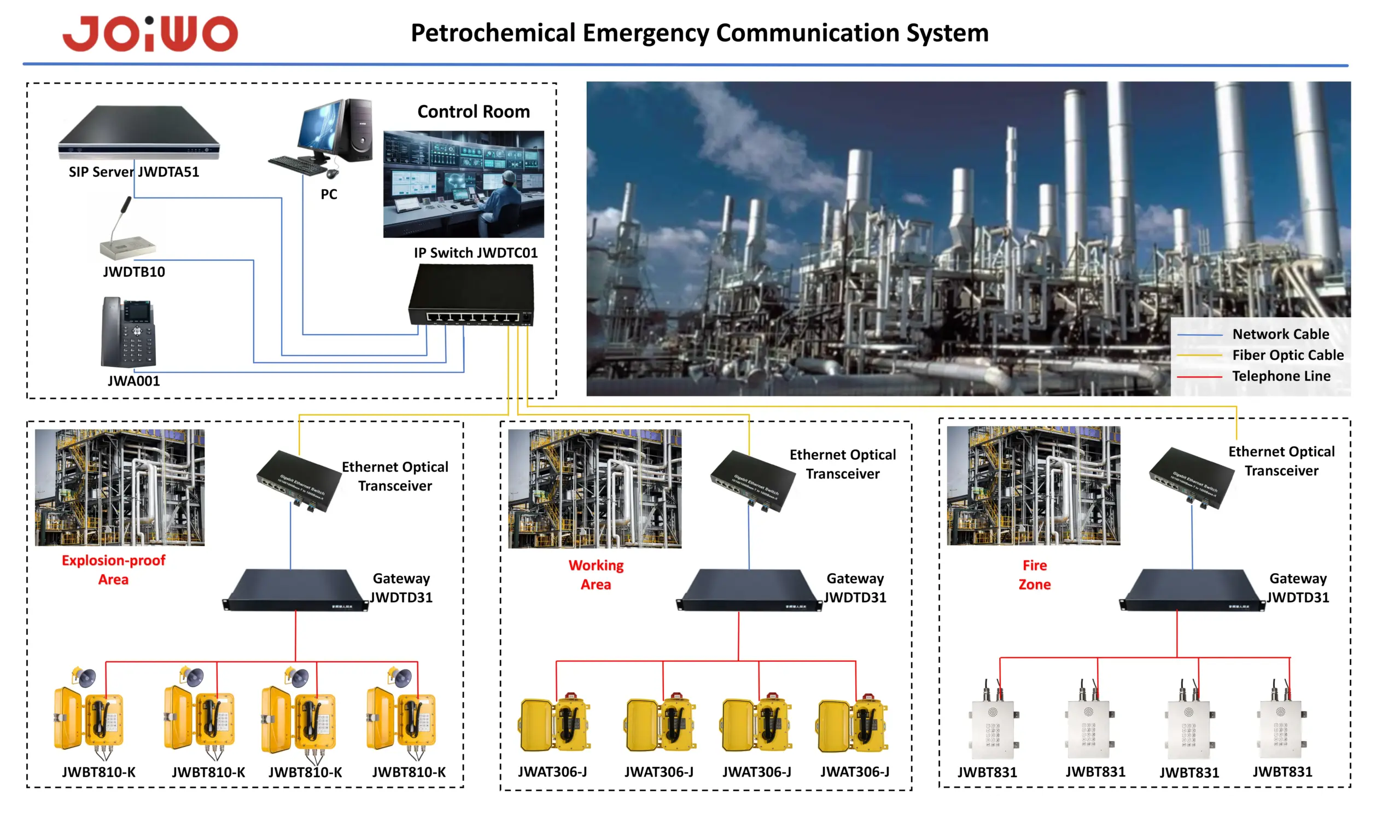
It is well-suited for a wide range of organizations, including rural administrations, hospitals, military units, hotels, and schools. Furthermore, it is an ideal fit for mission-critical communication systems in specialized industries such as electric power, mining, petroleum, and railways.
At Joiwo, we safeguard safety and operational continuity in critical industries. We deliver efficient, highly reliable emergency communication solutions for demanding environments like highways, tunnels, maritime operations, and mining, leveraging superior product quality and integrated systems to protect people and assets.