Operational communication improves when each port work area has a clear route to the team responsible for its next decision. Berth activity, cargo inspection, storage and maintenance need different call arrangements, even within one terminal. Buyers can build a more useful port communication system by specifying these workflows alongside exposure, speech performance and ongoing support.
Map calls across the cargo journey
Follow a typical cargo movement from arrival through loading, inspection and storage. Identify where workers request instructions, report equipment problems or ask for assistance. Record which team receives each call and the hours that team is available. The exercise should include supervisors, security, maintenance and contractors who use the same working areas.
Look for handovers between departments. A damaged access barrier might first be reported to security, then passed to maintenance while operations adjusts traffic. Agree how that handover works and which person retains responsibility. An equipment list can identify the telephone but leaves the operational decision chain unresolved unless the specification describes it.
Create a station schedule with location, user task, destination and environmental exposure. Mark where a keypad is useful and where a limited-button interface may simplify the call. Review access routes during busy operations. Cargo, vehicles and temporary barriers can make a station difficult to approach even when it looks conveniently positioned on a drawing.
Specify marine communication equipment by exposure
Coastal installations face combinations of airborne salt, rain, humidity and sunlight. Describe each location rather than applying one broad marine label to the entire project. A sheltered inspection entrance and an exposed berth service point can need different arrangements. Include the expected cleaning method and the way water drains around the installation.
Ask for material and finish information covering the complete supplied assembly. Review hinges, mounting brackets, handset cords, fasteners and cable entries alongside the enclosure. Request relevant environmental evidence and ask which configuration was tested. Water-ingress protection and corrosion resistance require separate consideration; neither should be used as a shortcut for the other.
Match call indication to the work area
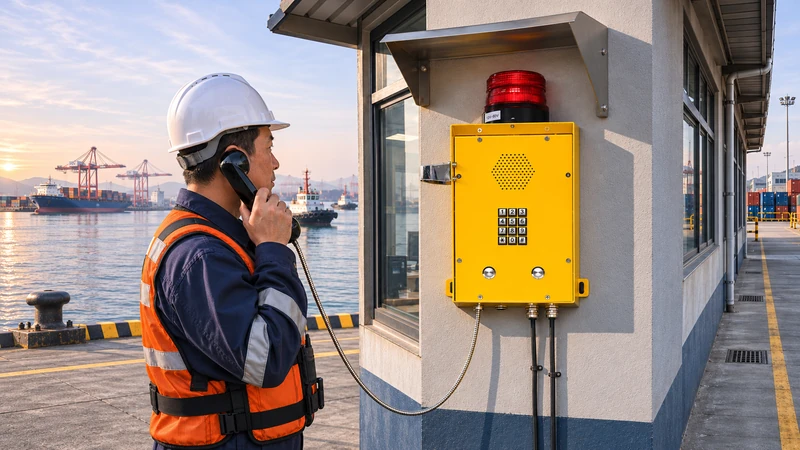
Joiwo’s Industrial Outdoor Weatherproof Telephone with Beacon JWAT309 combines a handset, keypad and visual beacon. This arrangement can be assessed where workers need an incoming-call indication alongside detailed conversation. Verify the ordered interface, beacon behavior and environmental documentation. The beacon’s purpose should be clear in the site’s signaling arrangements.
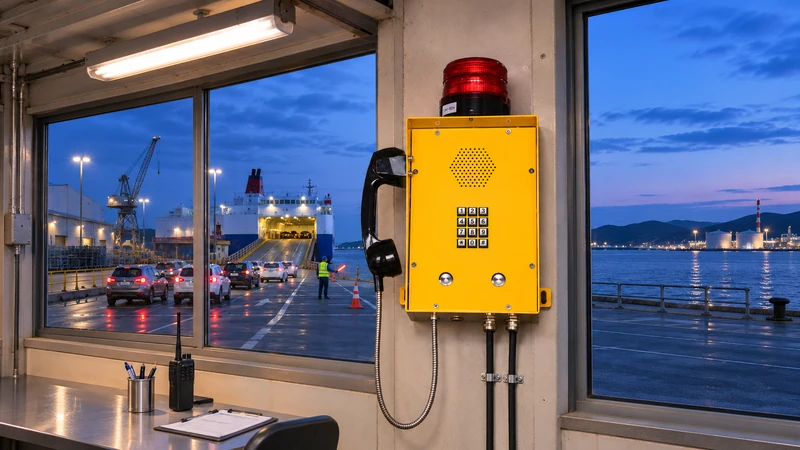
Check whether workers can see the JWAT309 beacon from their normal position and hear the conversation during representative activity. Avoid confusing a call indicator with a site evacuation signal. If several signaling systems operate nearby, agree their meanings and ownership with terminal operations. Confirm that any optional external devices and their power requirements are included in the commercial scope.
Choose interfaces for specific port tasks
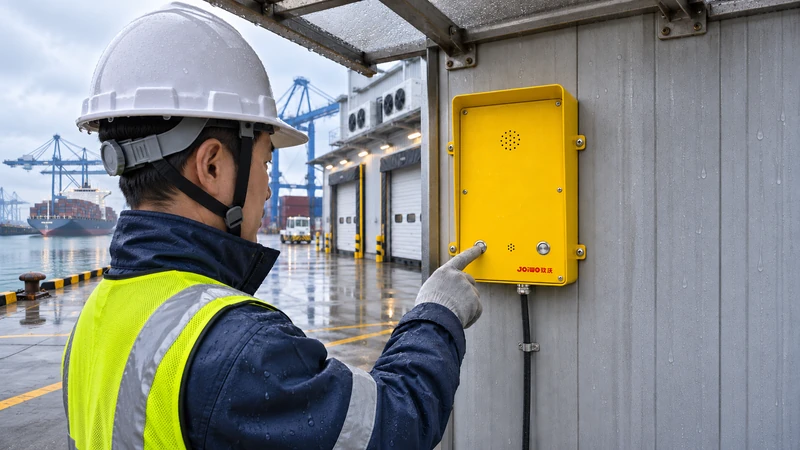
A port industrial telephone with a keypad can support calls to several approved destinations. A hands-free station may suit an access or inspection task where handling a receiver is inconvenient. Choose the interface around the user’s activity, protective equipment and required call sequence. Keep instructions short enough to be followed during a routine interruption.
The Emergency Hands-Free PoE Intercom with SIP Function JWAT416P offers a different interface for selected service locations. Evaluate its button functions, speech performance and SIP platform compatibility in the intended configuration. Confirm the PoE arrangement and the site’s local environmental requirements before selecting it for an outdoor installation.
Demonstrate the complete conversation
Test both directions using realistic berth names, vehicle locations and equipment identifiers. Wind and machinery can affect the caller differently from the receiving operator. Include normal gloves and hearing protection in the trial. Record the settings and mounting arrangement that achieve useful speech, so the supplier can reproduce them during installation.
Hands-free audio also depends on where the user stands. Check the speaking distance, nearby reflective surfaces and local noise. A successful office demonstration provides a starting point, while the terminal trial determines practical usability. If a station needs shelter or an acoustic arrangement, include that complete installation in acceptance.
Connect berths and storage areas
A harbor communication system may extend through long service routes and several buildings. Measure actual cable lengths and identify intermediate cabinets. Include areas where vehicles, maintenance work or construction could damage the route. Review the cost of access and reinstatement before selecting a topology that adds equipment in difficult locations.
For IP endpoints, verify cable limits, switch capacity and available power. A fiber backbone may be appropriate between distant operating areas, with suitable access equipment near stations. Each cabinet needs an environmental and serviceability review. Consider temperature, condensation, surge protection and how technicians reach the equipment during terminal operations.
For existing analog circuits, inspect condition and test compatibility with the proposed line interfaces. A mixed installation may need gateways. Include those gateways in call trials and dependency drawings. Decide how the terminal will manage addressing, configuration and spares across the migration period so that future additions remain supportable.
Give the operations center clear ownership
Define destination groups by responsibility, such as marine operations, cargo control or maintenance. Use endpoint names that match terminal maps and daily working language. Check that the receiving system displays the information operators need. An extension number can be technically correct while still forcing staff to search for the caller’s location.
Specify what happens when the primary destination is busy or unanswered. Include shift changes, vessel-related working hours and temporary closures. Ask operations to approve the escalation route and assign a person to maintain it. Routing changes should be recorded and checked rather than left to informal adjustments during a busy shift.
At a pilot-operations service point, the JWAT309 can illustrate how a named fixed station supports a detailed call. Test whether a receiving operator can recognize the location and transfer the call while retaining useful context. The station’s role, destination and supported transfer behavior must be agreed with the integrator.
Coordinate marine emergency communication
Marine emergency communication within a terminal should follow the approved response plan. Establish how a worker reports an event, who answers and who initiates wider action. Separate detailed two-way reporting from general notification. Where the systems are integrated, define the functions and demonstrate them with the proposed platform and accessories.
Review locations handling hazardous cargo with the responsible engineering team. A coastal weatherproof product description does not establish approval for a classified location. Identify the specific requirements and certification evidence for any such installation. Keep the scope distinction between shore facilities and vessel systems visible throughout purchasing and commissioning.
Use a controlled exercise to test an illustrative equipment incident. Have a worker report the location, let the first receiving position be unavailable and follow the approved alternate route. Verify that operators understand the report and know the next action. Agree exercise boundaries so it cannot be confused with a live emergency.
Include resilience and support in the comparison
For seasonal operations or terminals with changing cargo allocations, include a review of station assignments in the maintenance plan. A call point that served one department may need a different destination after a berth is reassigned. Check the physical label, directory entry and receiving responsibility together. Record who authorizes the change and verify a complete call before staff rely on the revised arrangement.
For phased installations, define how new stations are commissioned while existing services remain available. Agree access windows, temporary contact arrangements and the evidence required before an area is handed over. These details give bidders a common basis for estimating site work and help terminal managers coordinate the installation around vessel and cargo schedules.
Trace shared supplies, network cabinets and host equipment across the complete call path. Define which functions require backup power and the duration justified by the project assessment. Ask what happens to new calls during a planned interruption. Redundant devices provide a useful benefit only when the overall design addresses the relevant failure.
Request maintenance instructions, suitable spares and a replacement procedure for each station type. Include checks for corrosion, damaged entries, mounting security and degraded audio. Consider the service effort at difficult locations. A low component price can be outweighed by the cost of gaining access and restoring the installation during restricted operating windows.
Compare bids using the same station schedule and acceptance scenarios. Include configuration, accessories, training, final drawings and support responsibilities. Require explicit deviations. A practical port communication system gives each worker a usable contact point and gives the receiving team enough information to act consistently.
Before final acceptance, review the instructions with a worker unfamiliar with the installation. Ask that person to locate a station, place a routine call and explain the alternative contact arrangement during an outage. The exercise can reveal unclear labels or assumptions that experienced project staff overlook. Record the findings and correct the relevant instructions before issuing the final operating package.
Contact Us to discuss your port and marine facility communication requirements and Request a Quote for suitable industrial telephones and supporting equipment.