A railway communication system succeeds when passengers, maintenance crews and control-room staff can reach the right person from the location where help is needed. The main challenges are different operating environments, unclear call ownership and dependencies that become visible during disruption. For project buyers, a useful specification starts with those operational situations and connects them to equipment, network and acceptance requirements.
Define the railway communication system scope
Rail projects contain several distinct communication functions. Passenger assistance, maintenance telephony, operational dispatch and emergency notification may share infrastructure while serving different users. Define their boundaries at the start of procurement. Identify who owns each function and which existing systems it must connect with. This prevents a field telephone purchase from quietly acquiring responsibilities that the wider project has never specified.
An infrastructure communication package also needs clear boundaries with onboard equipment. A carriage help point and a tunnel maintenance station can have different interfaces, installation requirements and approval processes. Record whether the tender covers stations, tunnels, depots, rolling stock or interfaces between them. Ask bidders to identify any configuration that depends on another contractor’s equipment or software.
Give each operating area an owner who approves call destinations and access arrangements. The person buying equipment may not be the person staffing the receiving position. Resolve that distinction before finalizing quantities. A correctly installed station still needs an available recipient and a process for handling requests when the first destination cannot answer.
Plan passenger assistance at the point of use
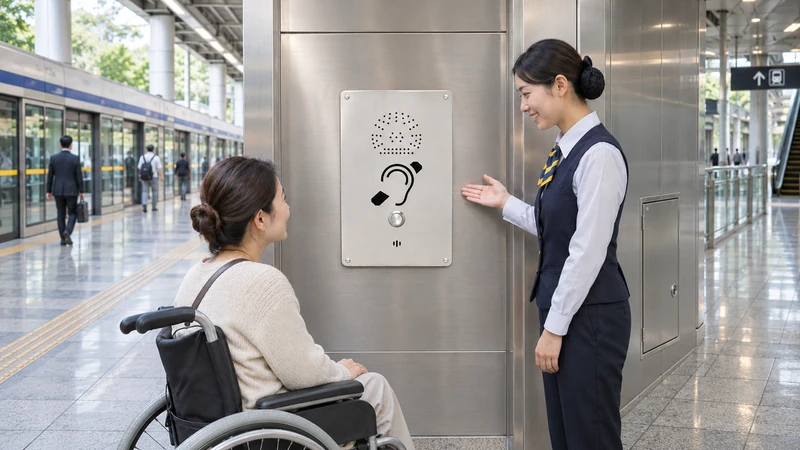
Passengers need a recognizable way to request assistance without understanding the railway’s internal organization. Position help points within the operator’s accessibility and station design requirements. Review approach space, reach, visibility and local signage with the responsible team. Include how staff assist people who have difficulty hearing, speaking, seeing or operating a conventional handset.
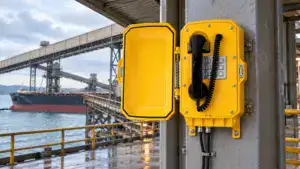
Joiwo’s Hands-free Emergency Induction loop Telephone JWAT411 offers a single-button stainless steel panel with an induction-loop function. Assess the supplied configuration for the intended passenger assistance point. Verify the complete hearing-assistance arrangement in its installed setting, including coverage, user instructions and interaction with nearby electrical equipment.
Confirm what the passenger experiences
Test the sequence from pressing the button to receiving an understandable response. Agree how connection progress is indicated and what happens if the destination is busy. Include realistic platform or concourse noise. The receiving operator must understand the caller, while the passenger needs enough feedback to know that a request is being handled.
Use participants representative of the intended users during acceptance. An engineering demonstration can confirm connectivity, but passenger usability requires attention to language, instructions and access. Document which assistance features are included in the order and which depend on site infrastructure. A product feature description alone cannot establish accessibility of the complete installation.
Connect train help points to the responsible team
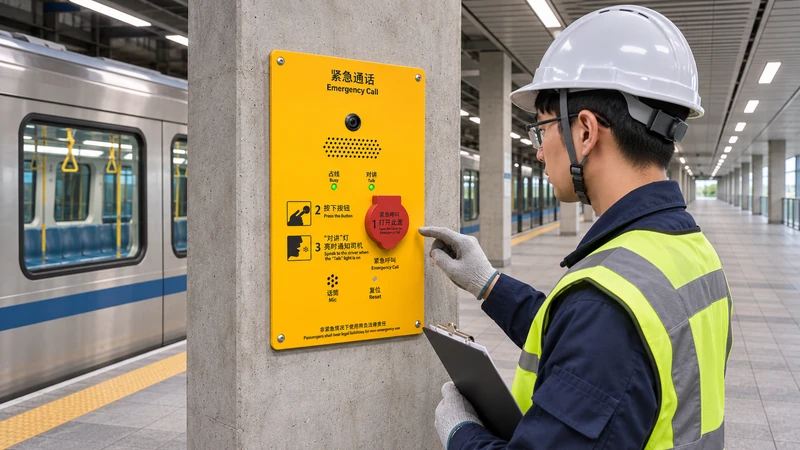
Some projects include wired audio or video help points within a vehicle. Decide which calls go to the driver and which can be passed to another authorized position. Specify the operating circumstances for that behavior. Platform staff, train crews and control-room teams need a shared understanding of who takes responsibility as the train moves through its service cycle.
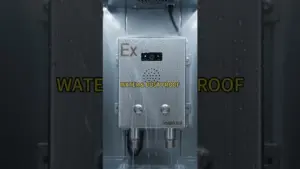
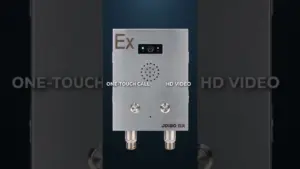
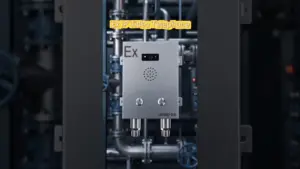
The Railway Emergency Wired Video Intercom System JWAT421P provides a reference for discussing a railway help-point interface. Joiwo describes wired audio/video intercom use and an optional camera arrangement. Confirm the actual supplied variant, host compatibility and applicable rolling-stock requirements. Any recording, visual access or retention function also needs the operator’s approved policy and configuration.
Test the intended host and software
A video-capable endpoint needs more than a network connection to provide a useful service. Test audio, video where ordered, call identification and operator controls with the actual host platform. Include software versions and any gateway in the acceptance record. Establish how faults are reported and who can restore service after a configuration change.
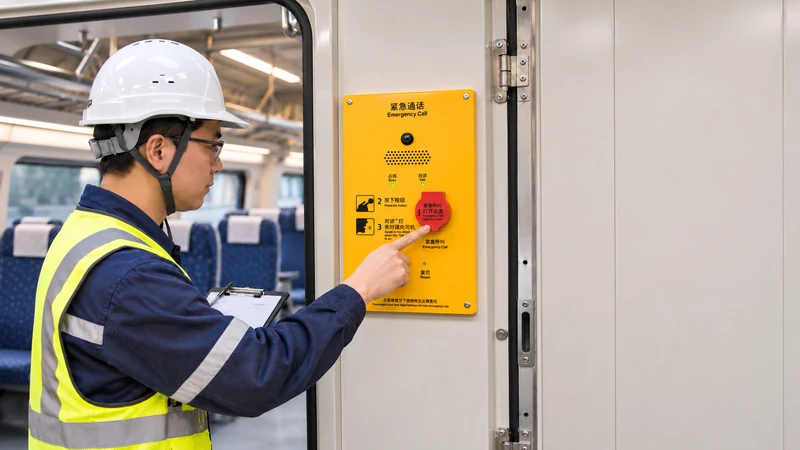
During a depot commissioning exercise, have staff activate the JWAT421P while another team receives the call on the intended system. Confirm that the originating vehicle and help-point location are recognizable. Repeat the test for unanswered calls and the agreed alternate operating condition. A controlled mock-up makes these checks possible before passenger service begins.
Address railway tunnel communication separately
Railway tunnel communication requires an installation plan based on permitted access routes and maintenance procedures. Identify where personnel can safely stop to make a call and how they locate a station under the expected conditions. Consider visibility, water exposure, equipment clearance and access during an engineering possession. Coordinate any location with railway safety and evacuation design responsibilities.
Measure actual cable routes through cross-passages, equipment rooms and service galleries. Record intermediate cabinets and the environmental limits applying to them. Long routes may require a fiber backbone with suitable local interfaces and power. Evaluate how a damaged route affects neighboring sections, and distinguish logical network separation from physically independent routing.
Select tunnel endpoints against their own requirements. The passenger help-point examples in this article do not establish suitability for a tunnel installation. Request the exact enclosure, environmental and interface evidence for each proposed station. Where the project requires fire performance or specific cable approvals, have the responsible specialist identify the applicable requirements in the tender.
Make control-room routing unambiguous
A metro communication system needs location names that match the way operators describe the railway. Use station, level, platform, tunnel section or equipment-room identifiers as appropriate. Keep labels, drawings and the system directory aligned. Agree how much information the receiving position displays and verify that the selected platform can deliver it.
Define busy, unanswered and out-of-hours behavior for every call group. A maintenance call should reach a team able to act during the work period. Passenger assistance needs a response arrangement consistent with operating hours. Assign ownership for updating destinations when staffing or infrastructure changes, and keep a record of who approves those updates.
Keep maintenance calls usable during disruption
Railway emergency communication can become difficult when several people call at once. Establish required call capacity and how receiving teams handle concurrent requests. Test transfers and escalation where included. If priority handling is proposed, ask the integrator to demonstrate its behavior with the actual endpoints and platform rather than relying on a feature name.
Trace power and network dependencies across the complete path. Include the endpoint, access switch or line interface, backbone, host and receiving position. Define the backup duration through the project’s assessment and calculate the load of every relevant component. A backed-up central server offers incomplete protection when a remote cabinet loses its supply.
Plan maintenance access alongside equipment selection. Record how a panel is replaced, how its identity is restored and how staff verify its call destination afterward. Keep suitable spares, configuration records and installation instructions available. Standardize equipment where the operating requirements match, while retaining different interfaces where user needs justify them.
Turn the tender into an acceptance plan
Plan changes before opening day
Railway industrial telephone requirements should include a controlled process for configuration changes. An altered destination or renamed station can affect more than the endpoint being edited. Decide who approves updates, how the previous configuration is retained and which calls are rechecked afterward. Schedule changes around operational constraints and keep the receiving teams informed before the new arrangement goes live.
For staged metro extensions, document temporary boundaries between commissioned and unfinished areas. Identify which help points are available, which teams receive their calls and which routes remain under construction. Remove obsolete instructions when each stage is handed over. This gives the operator a clear record of the service available at each point in the project.
Provide bidders with a location schedule, user group, interface requirement, environment and required call behavior. Include mounting accessories, configuration, training and commissioning in the scope. Ask for explicit deviations and dependencies. This gives procurement a meaningful way to compare delivered functionality and lifecycle support across offers.
Acceptance should follow an operator or passenger task from beginning to end. Verify identification, two-way speech, assistance features, unanswered-call handling and recovery after an approved interruption test. Record the final equipment versions and configuration. These results become a practical baseline for future expansion and fault investigation.
Include a short training session for receiving staff and the maintenance team before handover. Receiving staff should practice identifying a location, clarifying a request and following the agreed escalation route. Maintenance staff should demonstrate a replacement and confirm the restored destination. Record unresolved issues with an owner and completion date. This gives the purchaser a clear distinction between delivered equipment, demonstrated service and work still outstanding before the railway accepts responsibility for operation.
Contact Us to discuss your railway and metro communication requirements and Request a Quote for suitable industrial telephones and supporting equipment.