Water treatment plant communication needs to connect operators with the people who can support an inspection, maintenance task or abnormal operating condition. A useful infrastructure plan covers remote pump stations, treatment buildings and the control room as one operational chain. This guide helps B2B buyers translate those requirements into suitable call points, dependable connections and clear acceptance evidence.
Follow the operator’s inspection route
Begin with the route staff actually walk during a shift. Include intake works, pump buildings, treatment galleries, laboratories and outdoor inspection points where relevant. Record where an operator may need instructions or maintenance support. Identify which locations have nearby staff and which depend on reaching someone in another building or at a central control position.
Water and wastewater facilities have different processes and exposures. Even within one site, a dry electrical room differs from a wet service gallery or a building near sludge handling. Specify each proposed installation independently. Use the process layout to identify tasks and hazards, then use the station schedule to document the equipment and communication requirements.
Consider staffing outside normal office hours. A small remote station may be visited by a lone technician while the usual local office is empty. Define the available receiving team and the escalation route. A fixed telephone can support a known reporting point, but the operating procedure still needs to explain what staff do if the intended call cannot be completed.
Separate moisture and chemical exposure
A wastewater communication system may encounter condensation, outdoor rain, cleaning water and corrosive atmospheres in different locations. Describe the actual exposure instead of specifying a single generic waterproof requirement. Include cleaning agents and methods, expected temperature variation and whether equipment is sheltered. Ask suppliers to identify restrictions affecting their proposed assembly.
Review seals, cable entries, mounting hardware and exposed controls as well as the housing. An enclosure rating addresses defined protection tests. It does not by itself confirm resistance to every cleaning chemical or process atmosphere. Request evidence relevant to the materials and configuration being supplied, and assign responsibility for reviewing technical deviations before the purchase order is released.
Evaluate a hands-free treatment-area station
Joiwo’s Wall Mounted Hands Free Speakerphone JWAT405 provides a keypad-and-speaker interface within a protective housing. For a treatment gallery, assess whether hands-free operation suits the user’s work and whether speech remains intelligible in that location. Confirm the exact supplied variant, approved cleaning method and connection requirements with the supplier.
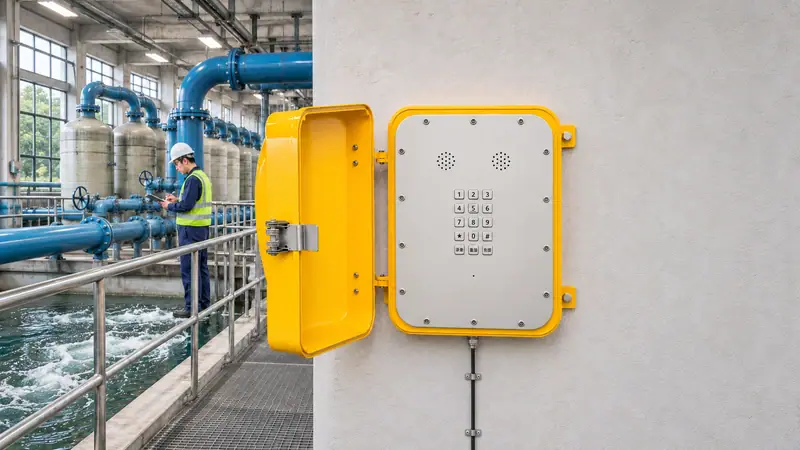
Test the door, controls and approach space using normal gloves and work clothing. A station should be reachable without obstructing the inspection route. Check how cleaning staff avoid forcing water into unsuitable openings or leaving contamination around the enclosure. Provide approved instructions to the team responsible for ongoing cleaning and inspection.
Plan pump station communication
Pump station communication often connects a small remote facility to a central operating team. Identify the calls a visiting technician is likely to make: reporting arrival, coordinating a controlled test, requesting maintenance advice or describing an abnormal condition. Define the destination for each task and agree which functions need direct access rather than a directory of numbers.
Joiwo’s Industrial Weatherproof IP Emergency Telephone JWAT308P offers a handset-and-button IP endpoint to assess for selected service points. Confirm the programmed calling behavior, platform compatibility and environmental evidence for the supplied configuration. Keep the installation outside any hazardous location unless its suitability is separately established by the responsible engineer.
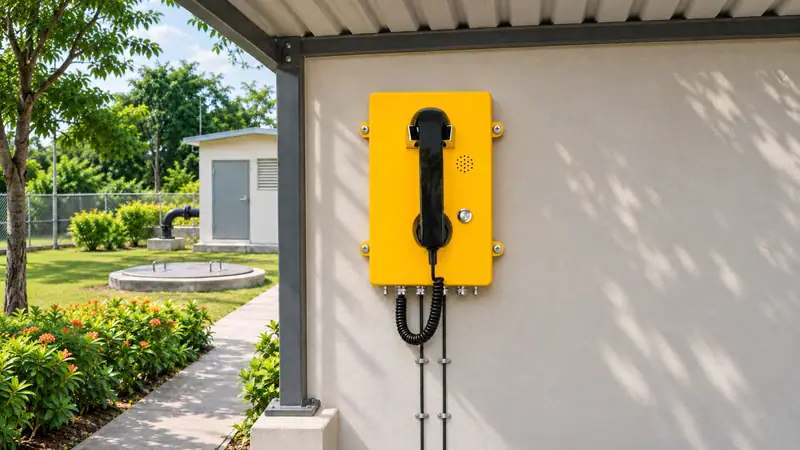
Make the remote location recognizable
Use station names that match asset records and maintenance work orders. A receiving operator should recognize which pump building or site is calling without relying entirely on the caller’s memory. Test the available location display on the proposed host. Keep physical labels, directories and drawings synchronized when sites are renamed or new pumps are commissioned.
Remote communication also needs a documented outage procedure. Establish how technicians check availability before relying on the station and what alternative contact method applies during a known fault. Assign an owner for restoring service. The endpoint, external connection and receiving position all contribute to whether a useful conversation can take place.
Keep treatment-building calls intelligible
Pumps, blowers and ventilation equipment can make conversation difficult. Survey proposed call points during representative operation and describe the local noise to bidders. Check both the field user’s ability to hear and the control room’s ability to understand the caller. Incoming call recognition and conversation quality should be evaluated as separate tasks.
For a JWAT405 station near a dosing-building access area, arrange a controlled hands-free speech trial from the intended standing position. Use equipment tags and location descriptions drawn from the site’s working vocabulary. Confirm performance with the selected host and actual settings. A successful test at a quiet sales demonstration does not establish the result beside operating machinery.
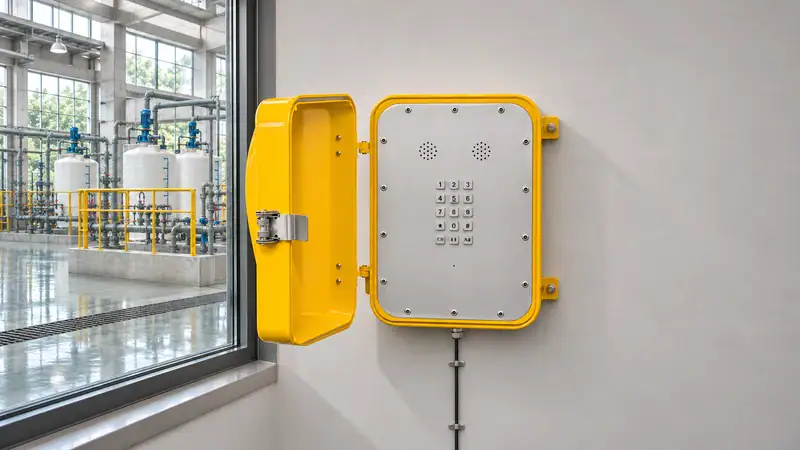
Place the call point where personnel can stop safely and communicate. Review nearby doors, cleaning activity and maintenance movements. A more sheltered or quieter position may be preferable if staff can still reach it when needed. If an acoustic accessory or visual indicator is proposed, include it in the installation drawing, power review and acceptance scope.
Choose an industrial telephone system architecture
Inventory the site’s existing exchange, IP platform, available circuits and network support capability. Suitable analog infrastructure may remain useful for some call points. IP endpoints may suit a wider managed network when their features and host compatibility are established. The choice should follow the required call behavior, support resources and actual installation conditions.
For a mixed system, identify gateways and the team responsible for their configuration. Test the full path from field endpoint to receiving position, including dialing and transfer behavior where required. Record software versions and settings. Compatibility should be demonstrated through the intended tasks rather than inferred from broad claims that products support standard protocols.
Review remote links and local power
Measure cable routes between treatment buildings and intermediate cabinets. Verify copper link limits and consider fiber where the design requires longer connections or separation between buildings. Each local switch or converter adds a power and maintenance dependency. Give those components the same environmental review as the visible telephone endpoint.
Trace the complete power path and define backup requirements through the site’s assessment. Include access equipment, communication hosts and receiving positions. Ask what happens during a planned supply interruption and how faults reach assigned personnel. Establish a practical recovery procedure and keep configuration backups available to the responsible support team.
Align emergency calls with plant procedures
A water plant emergency telephone supports reporting and instruction within the plant’s wider response arrangements. Define who answers, how the location is identified and who initiates further action. A call button needs an agreed destination and a process for busy or unanswered calls. Include contractors and visiting service teams in the instructions.
Wastewater facilities may include confined spaces, hazardous gases or areas with specific electrical classifications. Their safety controls require a separate competent review. A weatherproof telephone should never be treated as evidence that entry is safe or that equipment is approved for an explosive atmosphere. Coordinate communication points with the existing permit and emergency procedures.
Use an illustrative equipment-fault exercise during acceptance. Have a technician call from the pump station while the primary recipient is occupied, then follow the agreed escalation. Confirm two-way speech, location identification and the recipient’s next action. Keep the exercise controlled and distinguish it clearly from an actual emergency report.
Specify maintenance and handover evidence
Request a common response schedule from every bidder covering locations, exposures, interfaces, calling behavior and accessories. Include installation instructions, commissioning, training and spares in the commercial comparison. Ask suppliers to state assumptions and deviations explicitly. This helps buyers identify missing work before it becomes an installation variation.
Agree inspection tasks suited to the site. Checks may include mounting security, seal condition, damaged cords, blocked audio openings and successful calls to approved destinations. Define who records failures and who restores service. Review replacement effort for remote assets, where travel and access can cost more than the component itself.
Handover should include final drawings, station identities, configuration records and verified call destinations. Demonstrate how a replacement endpoint is installed and checked. A maintainable communication infrastructure gives operators a predictable way to reach support and gives maintenance teams the information needed to keep that service working.
Plan a follow-up review after operators have used the installation through a representative working period. Compare reported faults with the acceptance baseline and check whether station locations still suit inspection routes. Changes in staffing, cleaning methods or process equipment can alter the original assumptions. Assign a person to review those changes and decide whether routing, instructions or the installation itself needs an approved update.
Contact Us to discuss your water and wastewater treatment communication requirements and Request a Quote for suitable industrial telephones and supporting equipment.