Power tunnels create unique communication challenges due to their enclosed underground structure and critical electrical infrastructure. This requires a tunnel communication system that delivers reliable and clear communication in the event of an emergency.
Hardware Components and Safety Features
Power tunnel communication systems rely on specialized hardware and networks tailored for both underground wireless and wired environments. The solution we will be discussing in this blog mainly focuses on IP PBX telephone systems, industrial SIP terminals, and ruggedized equipment designed for safety and efficiency.
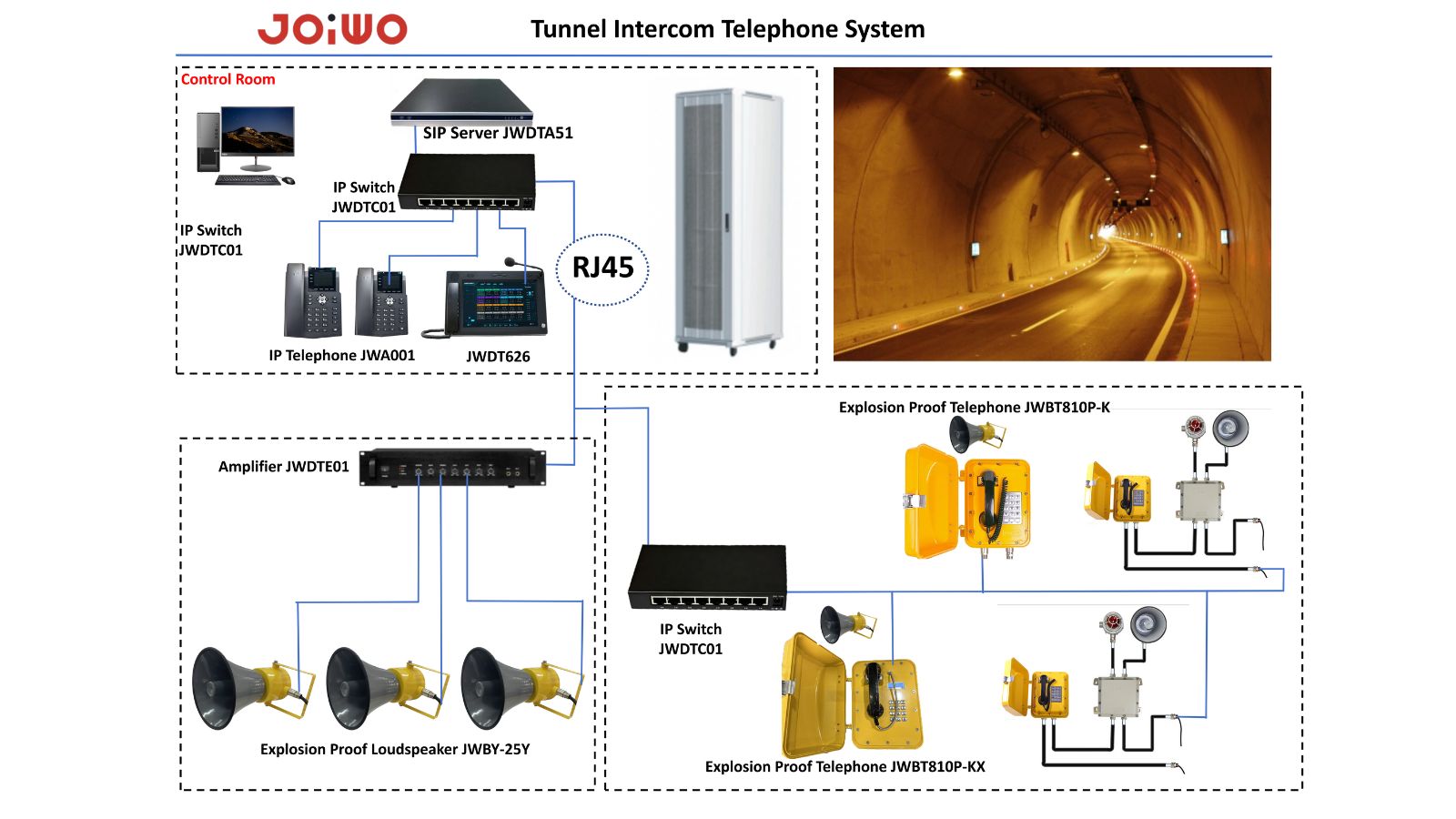
Control Room and Network Integration
The control room is where the site safety personnel monitor the whole power tunnel system. It typically houses:
- SIP server or IP PBX
- Operator console
- Core IP switches
From this centralized comms platform, operators manage real-time monitoring, place and receive calls, initiate public address messages, and supervise tracking systems deployed in different parts of the tunnel.
Integration with existing control systems, such as SCADA and IoT sensors, allows tunnel communication traffic to be routed to different departments, emergency centers, or external phone networks when required. This unified networking solution simplifies operations and avoids separate radio communication or telemetry networks.
Rugged IP and Emergency SOS Telephones
There will be situations where workers are required to enter the power tunnel for maintenance, making field communication devices an absolute necessity for crews to report situations or request help instantly.
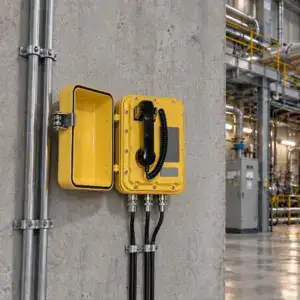
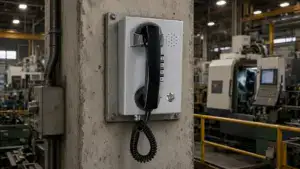
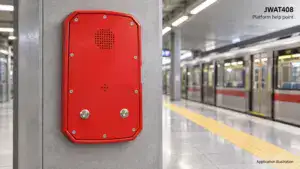
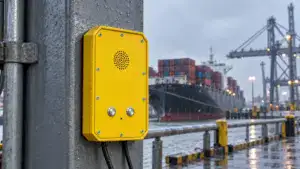
To facilitate this, emergency telephones or SOS call boxes are installed at regular intervals along tunnels, walkways, and escape routes. These devices are usually explosion-proof telephones or weatherproof IP intercoms with IP65 or IP67 ingress protection ratings. Featuring metal or reinforced enclosures, sealed keypads, and corrosion-resistant components, many are part of an emergency call box and phone series designed specifically for underground utilities.
Depending on the specific scenario, phones can also be equipped with specialized parts such as:
- Flashing beacons
- 110 dB horn speakers
- Relay outputs for monitoring and control of gates or fans
When a user triggers an alarm, the system provides fast automatic calling to the control room, including location details and man-down alerts.
Public Address, Horn Speakers, and Wireless Evacuation
While emergency telephones enable workers to contact the control room, safety personnel also require methods to reach out to every corner of the tunnel system. For broadcast messaging, an amplifier connects to tunnel horn speakers and integrates with the IP intercom platform.
Using the integrated public address network, operators can use wired or wireless communication to broadcast live instructions, warning tones, or evacuation messages to specific tunnel zones.
Explosion-proof loudspeakers and explosion-proof beacons provide high sound pressure levels and visual alerts. This ensures messages are heard over machinery noise and reach personnel throughout the tunnel during an emergency.
Where wireless network coverage is required, carefully positioned Wi-Fi access points or LTE backhaul can extend connectivity for handheld devices. These wireless systems use robust network design principles with redundant paths to maintain service during critical events.
Industrial Switches, Ethernet, and PoE Power Supply
Industrial Ethernet switches with ruggedized designs form the backbone of the tunnel communication network. These switches often support Gigabit Ethernet, extended temperature ranges, and redundant ring topologies to keep the system available even if a cable is damaged.
Power over Ethernet (PoE) simplifies the power supply by delivering both data and electricity to telephones, cameras, and access points through a single Cat6 port. When combined with managed switches, the system is designed to prioritize voice communications, minimize downtime, and monitor network ports for faults.
To keep the communication system available during mains outages, the SIP server, switches, amplifiers, and critical endpoints are connected to UPS or backup power supply systems. PoE switches powered by centralized UPS units allow many field devices to continue working without individual supplies in hard-to-reach environments.
Operational Communication and Real-Time Monitoring
In power tunnels, real-time monitoring is less about “calling capability” and more about maintaining operational readiness across long underground corridors. The monitoring center should be able to verify which emergency endpoints are available, identify faults early, and enforce escalation workflows so that alarms from the tunnel reach the right duty team immediately.
Operational tools such as call logs, event histories, and status supervision support post-incident review and maintenance planning—helping supervisors spot recurring fault locations, validate response times, and schedule inspections more efficiently.
When emergency calling and tunnel broadcasting are centrally managed as part of an integrated tunnel communications approach, the tunnel operator can coordinate routine work and emergency response with fewer communication blind spots and less operational overhead.
Applications in Tunnel Construction and Operations
Tunnel communication systems are valuable from early tunnel construction stages through long-term operation. Using a unified IP-based architecture throughout the lifecycle provides scalable, cost-efficient recommendations for upgrades and expansion.

Communication for Construction Sites
During construction, the system emphasizes efficiency and portability, and its main outreach components usually include:
- Temporary IP telephones
- Horn speakers
- Underground wireless communication devices
All these components can be connected back to a compact IP PBX or dispatch console. These systems enable real-time communication between surface teams, equipment operators, and safety staff working in different parts of the tunnel.
Rugged, portable telephones and switches tolerate dust, vibration, and impacts common on construction sites. As excavations advance, crews can relocate devices or add new endpoints along Ethernet routes without redesigning the whole network.
Transition to Permanent Solutions
Many infrastructure projects reuse cable routes and key devices from the construction phase when moving to permanent operation. Long-term systems typically include:
- Additional industrial weatherproof telephones
- More PA zones
- Complete integration with central control systems
Once the tunnel opens to traffic, emergency phones, PA horns, wireless access points, and control-room consoles form a scalable and adaptable communication system. Regular testing and predictive maintenance help ensure systems are always ready to support mission-critical tunnel communication.
Conclusion: The Lifeline of Power Tunnel Communication
Power tunnel communication systems act as essential lifelines, connecting underground workers directly to surface operations. Simply put, these specialized communication networks keep personnel safe and informed in hazardous, enclosed environments by combining robust hardware with advanced IP networking. They ensure that daily maintenance and emergency evacuations are handled with absolute precision.
Frequently Asked Questions (FAQ)
Can older analog tunnel phones be integrated into a new IP-based PBX system?
Yes, analog telephones can be integrated into modern IP networks using Analog Telephone Adapters (ATAs) or specialized VoIP gateways. This allows you to execute phased upgrades, replacing the core network and control room first while gradually swapping out older underground field devices as budgets allow. It provides a flexible transition path without compromising immediate safety or requiring a total system rip-and-replace.
What specific international safety standards apply to equipment installed in power tunnels?
Equipment must adhere to strict industrial standards depending on the region and the specific environmental hazards of the tunnel. Devices installed in potentially explosive atmospheres—where natural gases or combustible dust might accumulate—must carry ATEX or IECEx certifications.
Furthermore, network components often need to meet specific electromagnetic compatibility (EMC) standards to ensure they do not suffer interference from the high-voltage power cables running alongside them.
What is the expected lifespan of a ruggedized communication system, and what maintenance is required?
High-quality industrial communication systems are typically designed to last 15 to 20 years, even in harsh, corrosive, and damp underground environments. However, physical checks of the microphone seals, speaker grilles, and emergency push-buttons are still recommended annually to clear accumulated debris and verify physical integrity.