Choosing the wrong equipment for a hazardous area can create safety risks, failed inspections, and costly downtime. ATEX ratings help you select devices that are certified for specific gas or dust zones and specific protection levels.
This article from Joiwo will explain the ins and outs of the ATEX directive, including zones, equipment categories, and markings—so you can confidently specify compliant explosion-proof communication devices for your application.
Start From Basic: Defining ATEX Rating
An ATEX rating defines the safety standards in explosive atmospheres. It links legal rules, technical standards, and clear markings so users can match equipment to specific risks.
Origin and Purpose of ATEX
The term ATEX comes from the French phrase “Atmosphères Explosibles,” which means explosive atmospheres. This standard is created by the EU to control risks in places where flammable gases, vapors, mists, or dust can ignite.
The base of ATEX covers two major directions:
- The design and certification of equipment used in hazardous areas.
- Workplace safety and employer duties.
An ATEX rating appears on equipment as part of its marking, which shows key details such as the equipment group, category, gas or dust type, and temperature class.
In order to obtain an ATEX certification, an equipment manufacturer or company must be reviewed by a notified body for product design and production process. The product then carries the CE mark along with its ATEX code.
Relevance to Explosive Atmospheres
Potentially explosive atmospheres form when air mixes with flammable gas or combustible dust in the right concentration. If an ignition source appears, the mixture can explode. ATEX ratings connect equipment directly to these risks. They define which zone the equipment can enter, allowing engineers and safety managers to match equipment to each hazardous area with clear, factual criteria.
ATEX Zone Classifications
ATEX zones define where an explosive atmosphere may form and how often it is present. The zone classification determines which ATEX-rated equipment can operate safely in those hazardous zones.
Zone Classification Criteria
Zone classification depends on a formal risk assessment. Engineers review how often hazardous substances appear, how long they remain, and how they spread.
They study:
- Frequency of release
- Duration of the explosive atmosphere
- Ventilation and airflow
- Type of substance (gas or dust)
The results define the hazardous zones and guide equipment selection. A higher-risk zone requires equipment with a higher protection level.
Gas Zones: Zone 0, Zone 1, Zone 2
Gas zones (G) apply to areas with flammable gases, vapors, or mists. These ATEX zones rank risk based on how often an explosive atmosphere exists.
Zone 0 means an explosive gas atmosphere is present continuously, for long periods, or frequently. This often includes hazardous environments like the inside of tanks, pipelines, or fuel containers. Equipment used here must offer the highest level of protection.
Zone 1 means an explosive atmosphere is likely during normal operation. This can occur near pump seals, filling points, or vent openings. Equipment must handle expected faults and still prevent ignition.
Zone 2 means an explosive atmosphere is unlikely in normal operation and, if it occurs, lasts only a short time. Examples include areas near sealed systems where leaks are rare. Category 3G equipment often suits this zone.
Dust Zones: Zone 20, Zone 21, Zone 22
Dust zones (D) apply where combustible dust can mix with air and create an explosion risk. Many industries, such as food processing and grain storage, face this hazard.
Zone 20 means a dust cloud is present continuously or for long periods. This often occurs inside silos, mills, or powder handling systems where a high level of protection is needed.
Zone 21 means a dust cloud is likely during normal operation. This may happen near bagging stations or transfer points. Equipment must prevent ignition during routine work conditions.
Zone 22 means a dust cloud is not likely in normal operation. If it forms, it remains for a short time only. Warehouses with good dust control often fall into this category.
Equipment Categories and Groups
The ATEX rating defines how much protection equipment and protective systems must provide in explosive atmospheres. It uses clear categories and groups to match Ex equipment to specific zones, gas types, and dust hazards.
Category 1, Category 2, Category 3 Explained
ATEX divides equipment into three main categories based on the level of protection required.
Category 1 equipment provides a very high level of protection. It must remain safe even if two independent faults occur.
Category 2 equipment provides a high level of protection. It is intended for use in potentially explosive atmospheres where mixtures are likely during normal operation.
Category 3 equipment provides normal protection for environments where explosive atmospheres are unlikely or short-lived.
Additionally, equipment markings include an Equipment Protection Level (EPL). The EPL combines the atmosphere letter (G or D) with a lowercase letter (a, b, or c) to clearly define the protection level. “a” represents very high protection, “b” represents high protection, and “c” represents standard protection.
Here is a chart below for quick reference:
|
ATEX Category (Protection Level)
|
Hazard Type
|
Category Marking
|
EPL Marking
|
Safe for Use In
|
|---|---|---|---|---|
|
Category 1 (Very High)
|
Gas
|
1G
|
Ga
|
Zone 0
|
|
Dust
|
1D
|
Da
|
Zone 20
|
|
|
Category 2 (High)
|
Gas
|
2G
|
Gb
|
Zone 1
|
|
Dust
|
2D
|
Db
|
Zone 21
|
|
|
Category 3 (Normal)
|
Gas
|
3G
|
Gc
|
Zone 2
|
|
Dust
|
3D
|
Dc
|
Zone 22
|
These classifications and corresponding markings apply universally to both mechanical and electrical equipment used in hazardous areas.
Equipment Groups I and II
ATEX also classifies equipment by group, which defines the type of industry where it can operate.
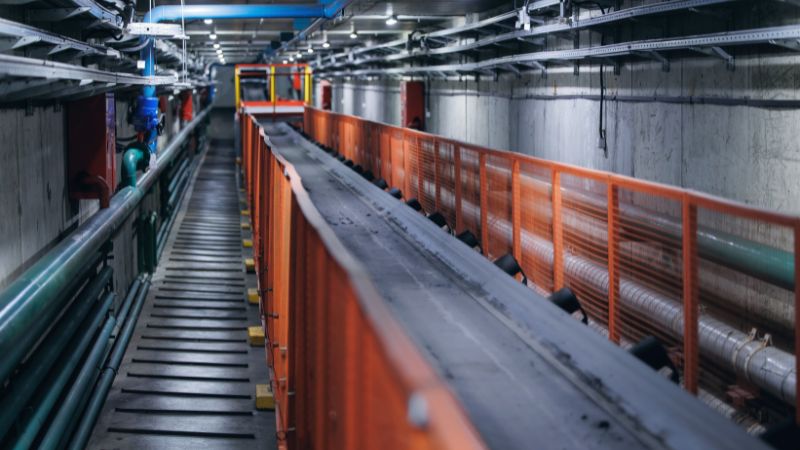
Group I covers equipment used in underground mines and areas exposed to firedamp. This group includes categories M1 and M2. M1 equipment must remain safe and operational even when gas is present. M2 equipment must shut down if a hazardous atmosphere appears.
Group II covers all other industries, such as oil and gas, chemical plants, food processing, and wastewater treatment. Most ATEX-rated equipment and protective systems fall into this group.
Gas and Dust Groups
ATEX ratings also define the type of substance that may ignite.
For gases, Group II equipment divides into:
- IIA – less easily ignited gases (such as propane)
- IIB – more easily ignited gases (such as ethylene)
- IIC – the most easily ignited gases (such as hydrogen and acetylene)
IIC represents the highest requirement. Equipment approved for IIC can also serve IIB and IIA.
For dust, the system uses:
- IIIA – combustible flyings
- IIIB – non-conductive dust
- IIIC – conductive dust
Conductive dust creates higher risk, so IIIC demands stronger protection. Selecting the correct gas group or dust group ensures the Ex equipment matches the exact ignition risk in the area.
Temperature Groups (T-Classes)
Along with gas and dust groups, ATEX equipment must be classified by its maximum surface temperature. This ensures the equipment does not get hot enough to reach the auto-ignition temperature of the surrounding hazardous substance.
For gases, the ATEX standard uses six distinct temperature classes, ranging from T1 to T6. Equipment rated for a higher T-Class (like T6) runs much cooler and is therefore safe to use in environments with lower auto-ignition temperatures.
Here is a breakdown of the ATEX temperature classes for gas:
|
Temperature Class
|
Maximum Equipment Surface Temperature
|
Safe for Gases with Auto-Ignition Temperatures
|
|---|---|---|
|
T1
|
450°C
|
> 450°C (e.g., Methane, Propane)
|
|
T2
|
300°C
|
> 300°C (e.g., Acetylene, Ethylene)
|
|
T3
|
200°C
|
> 200°C (e.g., Hydrogen Sulfide)
|
|
T4
|
135°C
|
> 135°C (e.g., Diethyl Ether)
|
|
T5
|
100°C
|
> 100°C
|
|
T6
|
85°C
|
> 85°C (e.g., Carbon Disulfide)
|
For combustible dusts, the maximum surface temperature is usually marked directly as a specific Celsius value rather than a T-Class code. Engineers must calculate a safety margin between the equipment’s marked temperature and both the dust cloud ignition temperature and the dust layer ignition temperature.
Protection Methods and Markings
ATEX ratings define how equipment prevents ignition in hazardous areas. They rely on specific explosion protection methods and clear markings that show where and how the equipment can operate safely.
Intrinsic Safety (Ex i)
Intrinsic safety (Ex i) limits electrical and thermal energy to a level too low to ignite an explosive atmosphere. It controls sparks and heat at the circuit level.
Intrinsically safe equipment remains safe even during certain fault conditions. This makes it suitable for high-risk areas such as Zone 0 for gases or Zone 20 for dust.
Flameproof (Ex d) and Increased Safety (Ex e)
Ex d (flameproof) equipment contains an internal explosion. If gas enters the enclosure and ignites, the housing withstands the pressure and cools escaping gases so flames do not spread outside.
Ex e (increased safety) prevents sparks and excessive heat during normal operation. It does not allow arcs, hot surfaces, or loose connections.
How to Read ATEX and Ex Markings
Every certified product carries a clear ATEX marking and Ex marking. These markings show where and how the equipment can operate.
A typical marking may look like this:
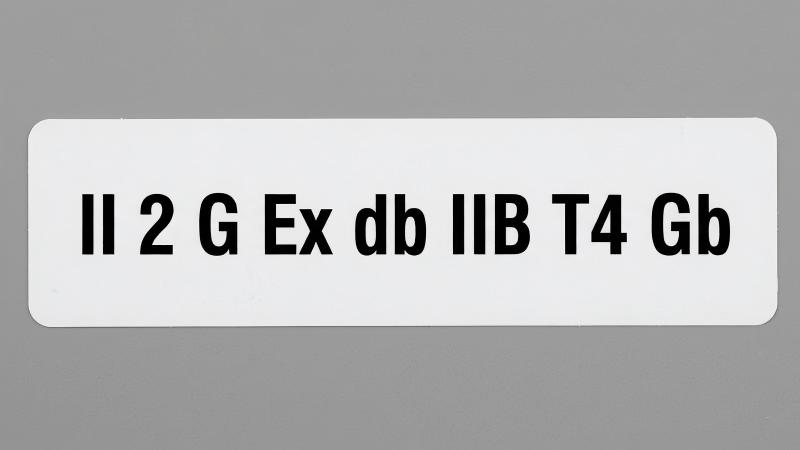
Each part has meaning:
- II – Equipment Group II (surface industries)
- 2 – Category 2 (Zone 1)
- G – Gas atmosphere
- Ex db – Flameproof protection
- IIB – Gas subgroup
- T4 – Maximum surface temperature class
- Gb – Equipment Protection Level
The temperature class ensures the surface temperature stays below the ignition point of the gas. Gas and dust groups show how easily a substance ignites.
Clear marking allows inspectors and engineers to match equipment to the correct hazardous zone without guesswork.
Industry Applications and Practical Considerations
ATEX ratings guide how companies select equipment, manage hazards, and document safety controls in explosive atmospheres. They apply directly to daily operations in high‑risk industries and shape how employers protect workers and meet legal duties.
Industries Requiring ATEX Rated Equipment
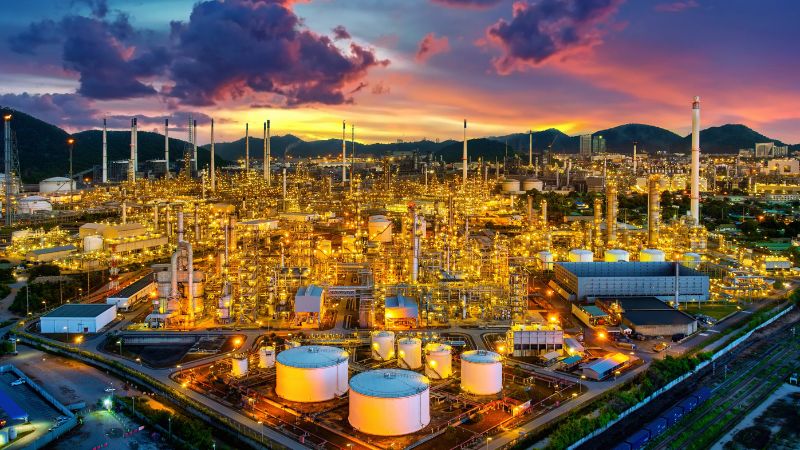
ATEX certified equipment is the essential health and safety requirement for many high‑risk sectors.
Common industries include:
- Oil & gas production and processing
- Oil refineries and petrochemical plants
- Chemical plants handling solvents and vapors
- Pharmaceutical manufacturing using alcohols and fine powders
- Food processing sites with combustible dust
Risk Assessment and Safety Regulations
Risk assessment forms the basis of ATEX compliance. Regulators expect companies in oil & gas, chemical plants, and pharmaceutical sites to apply these controls consistently. Strong risk management supports a safer hazardous workplace and limits the chance of ignition incidents.