Steel plant communication requires intelligible speech at usable locations, supported by equipment suited to heat, dust and mechanical exposure. Buyers can improve their specification by separating these demands and testing them against real operating tasks. This guide covers industrial telephone selection, installation, network planning and maintenance across steelmaking and rolling operations.
Identify the communication task in each area
Steel mills bring together raw material handling, steelmaking, casting, rolling, finishing and utility operations. Their communication demands vary with the process and site layout. A maintenance workshop may need ordinary coordination, while a rolling area needs a way to communicate clearly around powerful machinery. Remote service points may need a direct route to a staffed operator.
Create a schedule of call points and record the person using each station, the likely call purpose and the intended destination. Include maintenance shifts, shutdown periods and contractors. Review existing failure reports with operations to identify locations where damaged equipment, poor speech or unclear routing has created repeated problems.
Treat station position as part of the communication design. Workers should be able to approach and use a telephone from a suitable location with adequate clearance. Review moving equipment, hot material routes and maintenance activities before choosing the mounting point. A convenient cable route alone provides an incomplete basis for placement.
Test noise resistant telephone performance
A noise resistant telephone should be evaluated through useful speech at the intended location. Terms such as heavy duty and high volume provide limited evidence on their own. Describe the surrounding noise and ask suppliers to propose an audio arrangement for the specific task, including the way workers use hearing protection.
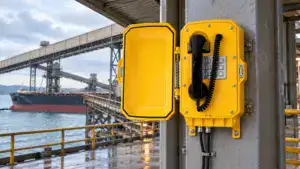
Joiwo’s Weatherproof Industrial Landline Phones with Loudspeaker JWAT309-K provides a handset-and-loudspeaker configuration to assess for selected mill locations. Test speech and incoming call recognition separately, and confirm the supplied assembly’s temperature limits, materials and interface.
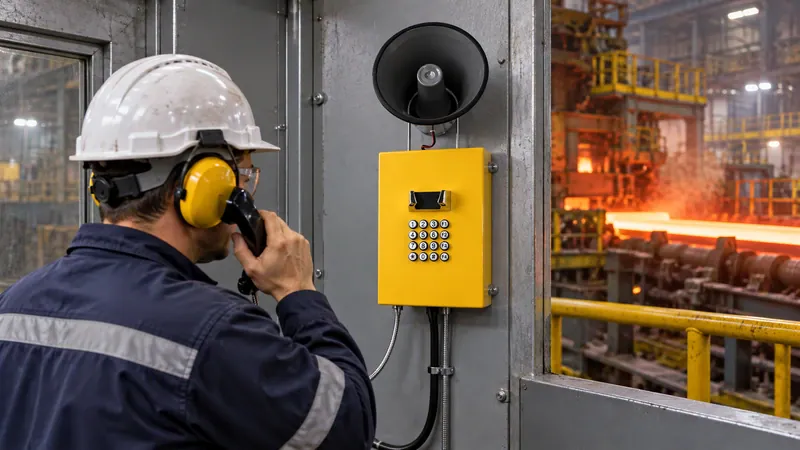
Arrange a trial during representative operation. Test both directions using equipment identifiers, short instructions and location descriptions. Ask the field worker and control room operator to repeat the information accurately. Record the mounting position, operating settings and protective equipment used, so the accepted configuration can be reproduced during installation.
Separate ringing from conversation
Incoming call recognition and speech clarity need separate checks. A visual indicator may help a worker recognize an incoming call when ringing is masked. The handset, microphone and installation position then determine whether a useful conversation follows. The site’s noise management procedures should guide any decisions about additional audible output.
Assess telephone hoods where a local acoustic arrangement could help. Check approach clearance, orientation and access for cleaning. Trials should include the hood and proposed telephone together, because performance depends on the complete arrangement. Hands-free options also need practical testing in the intended noise and reverberation conditions.
Specify heat at the mounting position
Ambient temperature ratings need to match the conditions around the installed equipment. A steel mill can expose a station to local radiant heat or intermittent hot air that differs from the general building temperature. Have engineering assess the actual location, including nearby process equipment and the expected operating cycle.
Moving the station to a more suitable position may improve serviceability and reduce thermal exposure. Check that workers can still reach it when needed. Where shielding or a shelter is proposed, review its effect on ventilation, access and maintenance. The final arrangement should be evaluated against the supplier’s stated limits and installation instructions.
Review all heat-sensitive components
Include cords, seals, keypads, cable insulation, power supplies and network equipment in the thermal review. An enclosure may remain intact while an exposed flexible component ages prematurely. Ask for the permitted operating and storage conditions of the supplied assembly, together with restrictions on installation near heat sources.
Avoid treating an explosion protection temperature classification as the telephone’s ambient operating range. These are different specification matters. If a particular area has a classified gas or dust hazard, the responsible engineer should review the required approvals separately. Steel plant equipment selection depends on the actual local hazard and exposure.
Manage dust and mechanical exposure
Dust can collect on housings, openings and mounting structures. Specify the relevant enclosure protection and describe the cleaning method. Ask how the handset, cradle and acoustic openings are inspected and maintained. Fine material accumulation can affect usability even where the enclosure continues to protect internal components.
Heavy industry communication also faces impact and vibration. Identify whether the proposed support is connected to vibrating machinery or exposed to vehicle movement. Where practical, consider a suitable independent support. Ask suppliers for mounting instructions and evidence relevant to the expected mechanical environment, with brackets and fasteners included in the review.
Cable management deserves equal attention. Protect routes from abrasion, repeated flexing and nearby maintenance work. Provide suitable support and strain relief within the approved installation design. Evaluate whether handset cords can snag or obstruct work. Clear access and deliberate routing can reduce avoidable damage throughout the equipment’s service period. For a JWAT309-K installation, include the handset cord and horn wiring in this review.
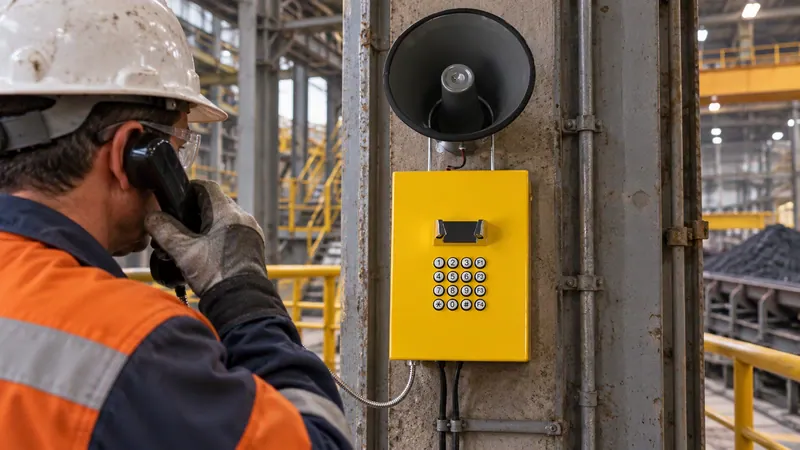
Plan routes through a large industrial site
Steel plant communication points may be separated by long buildings, outdoor yards and several production units. Measure actual routes and document intermediate equipment. Include the available cable infrastructure, condition of existing circuits and areas scheduled for reconstruction. A route plan helps buyers evaluate installation work alongside endpoint pricing.
For Ethernet equipment, confirm the limits of the selected cabling and network devices. Cisco’s industrial PoE guidance identifies distance and electrical interference as design considerations. A fiber backbone can be evaluated for longer connections, with suitable local equipment near the call points. The design also needs power, environmental protection and maintenance access at those intermediate locations.
For analog systems, verify the proposed telephone, line interface and circuit arrangement together. If gateways are required, include them in compatibility testing and fault analysis. Buyers can compare an extension of existing infrastructure with a migration plan using the same operating requirements, allowing installation cost and support capability to inform the decision.
Make the control room connection dependable
Give every station a location name recognized by operators. Align physical labels, drawings and the system directory. Decide which stations require a keypad, speed dialing or a direct call function. The interface should help workers reach the intended team with a manageable number of steps while wearing normal gloves.
Define busy and unanswered call behavior for each operating shift. A station used during overnight maintenance needs a destination that is staffed at that time. Ask suppliers to demonstrate the proposed routing and any supported transfer or escalation functions. Assign an owner for keeping the directory and operating instructions current.
For emergency communication, describe how the report reaches the responsible team and how wider notification is initiated. Keep procedures aligned with the plant’s emergency arrangements. Telephone calls, paging and alarm functions need clear roles and defined interfaces where they are combined. Include operators and maintenance staff in controlled acceptance exercises.
Reduce the work needed to restore service
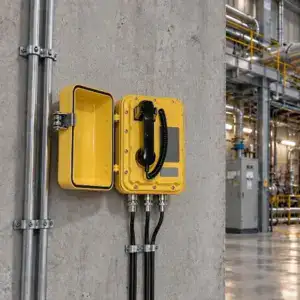
For a sheltered maintenance access point, Joiwo’s Rolled Steel Emergency Telephone JWAT307 provides an analog handset-and-keypad option to assess alongside loudspeaker-equipped stations. Confirm the local noise and thermal conditions, installation details and exchange compatibility. Ask which handset and cord spares are stocked and how technicians restore service within the site’s access and permit procedures.
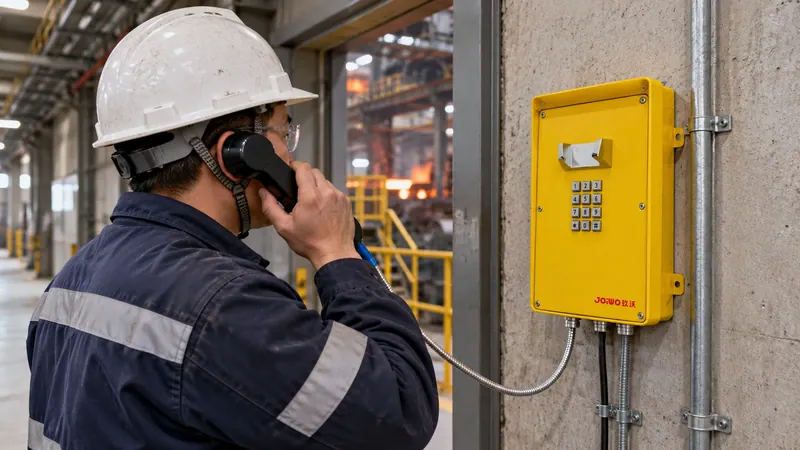
For configured network equipment, require a documented replacement and restoration process. Keep approved configurations and relevant drawings available to the maintenance team. Verify that a replacement endpoint receives its correct identity and call destination. Where several departments share responsibility, name the team that coordinates recovery and confirms the station is back in service.
Review power dependencies across the full call path. Agree which functions require backup power and how availability will be checked during an interruption. A protected endpoint still relies on its upstream equipment and receiving position. Demonstrate the agreed failure and recovery scenarios using test methods approved by plant operations.
Compare bids through measurable requirements
Provide bidders with a common schedule of station locations, noise conditions, heat exposure, dust, mounting arrangements and interface requirements. Ask each supplier to state assumptions, deviations and supporting evidence. Include accessories, installation documentation, commissioning, training and spare parts in the commercial scope so proposals cover comparable work.
Acceptance should verify the tasks the system was purchased to support. Confirm speech during representative production, routing on relevant shifts, clear location identification and the agreed recovery behavior. Check that the installed arrangement follows the approved documents. Retain the results as a baseline for future fault investigation and expansion.
A well-defined brief helps procurement focus on usable communication, practical installation and support over the service life.
Contact Us to discuss your steel plant communication requirements and Request a Quote for suitable industrial telephones and supporting equipment.