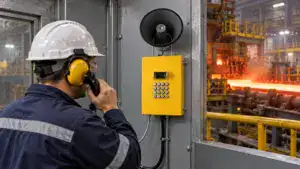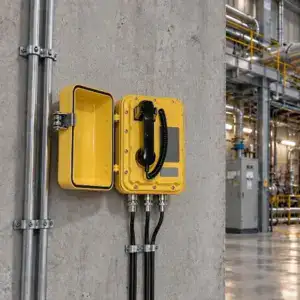
Chemical plant communication improves when buyers address the conditions that interrupt an actual conversation: chemical exposure, high noise, unsuitable call locations and unclear responsibility for answering. A practical specification connects those conditions to equipment evidence and operating procedures. The following approach helps procurement teams evaluate industrial communication equipment across production, storage, utilities and maintenance areas.
Map communication around the process
Start with the production workflow. Raw material unloading, reaction, separation, packaging and utility operations involve different people and different decisions. Identify where a field operator needs to contact the control room, where maintenance teams coordinate work and where contractors may need assistance. For each location, describe the task that requires communication.
Consider batch changes and temporary operating arrangements. During cleaning, maintenance or shutdown work, the usual access route or staffed destination may change. Ask operations to identify these exceptions before the station schedule is finalized. A useful chemical plant communication plan reflects the way the facility runs throughout its working cycle.
Record existing problems in concrete terms. Examples include a caller who cannot hear instructions beside a pump, a station with deteriorating seals or a call that rings in an empty office after shift change. Each observation can become a requirement that suppliers must address and demonstrate. This is more useful than asking every bidder for maximum durability.
Specify chemical exposure precisely
Corrosion resistance depends on the materials and the substances reaching them. Give suppliers the relevant chemical names, concentrations, exposure frequency and cleaning methods. Distinguish occasional splash, persistent vapor, washdown and ordinary indoor humidity. Include outdoor solar exposure and temperature variation where they affect the location.
Review the whole assembly. The enclosure, fasteners, hinges, handset cord, keypad and seals may use different materials and degrade at different rates. Ask for material information and evidence relevant to the stated exposure. A general description such as chemical resistant needs a defined basis before buyers can use it to compare offers.
Include cleaning in the review
Cleaning can expose equipment to conditions different from normal production. Describe the agents, application method and any pressure or temperature involved. Ask the supplier to confirm approved cleaning practices and identify restrictions. An ingress rating alone provides an incomplete basis for deciding whether a station can tolerate the site’s cleaning routine.
Installation details also affect durability. Avoid positions where liquid collects around entries or where maintenance work repeatedly strikes the handset. Review cable support, compatible fittings and access to the enclosure. The purchasing package should show how the equipment will be mounted and serviced, including any locally supplied components.
Resolve hazardous area requirements early
Some chemical processing locations require a hazardous area telephone with approvals appropriate to the classified area. Establish the site’s applicable requirements before asking suppliers to propose models. Gas and dust hazards, the substances involved and the ambient conditions all belong in the engineering review. Different rooms and process sections may require different equipment.
Request certification documents for the exact supplied version, together with installation instructions and any conditions of use. Check that accessories and entry arrangements fit the approved installation. Assign a responsible person to review technical deviations before the order is placed. Late changes to a gland, power arrangement or enclosure configuration can disrupt an otherwise complete procurement package.
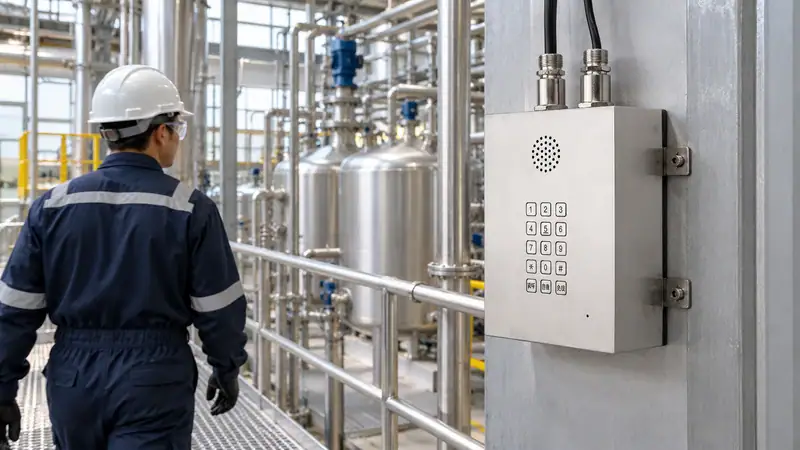
For locations where hands-free calling suits the task, consider Joiwo’s Explosion proof Wall Mounted Hands-Free Intercom JWBT813. Its stainless steel enclosure, integrated speaker and keypad provide a different interface from a handset station. Verify cleaning compatibility, speech performance and the exact approval documents for the supplied configuration before selecting it for a classified location.
Prove speech clarity during production
High noise makes two separate demands on a communication point: workers must recognize an incoming call and understand the conversation. Evaluate both under representative operating conditions. A loud ringer alone leaves speech performance unresolved, while clear audio in a quiet workshop says little about a location beside extraction fans or rotating equipment.
Use realistic test phrases, including chemical names, equipment tags and location descriptions that operators need to distinguish. Test both directions with normal hearing protection and gloves. Include workers who will use the system regularly, since microphone position and handset handling can influence the result. Record the configuration that passes the demonstration.
Choose the right user interface
A handset can offer a deliberate way to make a private two-way call. Hands-free operation may suit tasks where handling a receiver is inconvenient, provided that site trials confirm useful speech. Button size, labeling and dialing steps should match the user’s task. A simple emergency call function also needs an agreed destination and response procedure. For the JWBT813, include its hands-free speaker and keypad in this on-site usability trial.
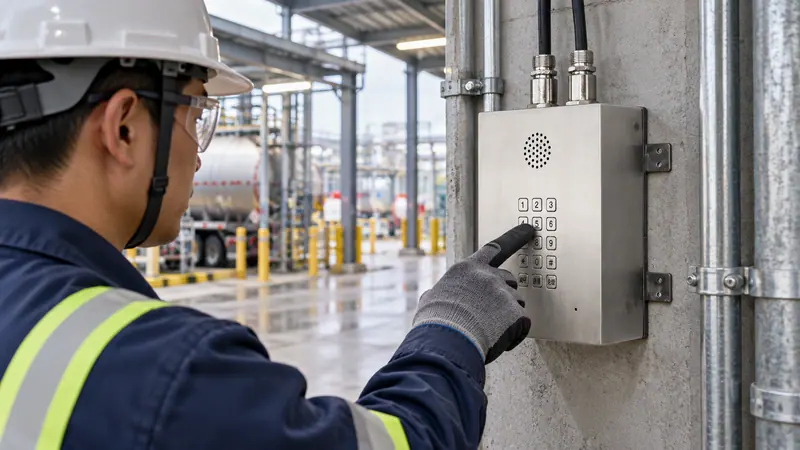
Where a telephone hood or external visual indicator is proposed, review the complete installation. Check access, sight lines and interaction with nearby equipment. Any accessory within a classified area needs appropriate review. Buyers should request evidence for the arrangement they will install, including the selected mounting position and operating configuration.
Make field calls actionable in the control room
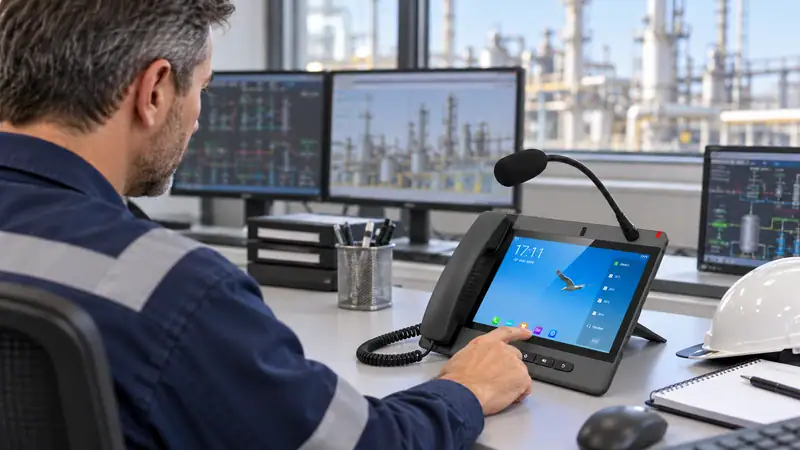
The control room needs to identify where a call originates and who should handle it. Joiwo’s Touch Screen Console IP Phone JWDTB18P offers a desktop SIP interface with a handset, touchscreen and gooseneck microphone. Test call handling on the proposed platform. Where analog JWBT813 field stations are connected through a gateway, include that complete path in the demonstration.
Define what happens when the first destination is busy, unanswered or temporarily unavailable. The escalation path may change outside normal working hours. Ask operations to approve the destinations and assign responsibility for future updates. Routing is an operating commitment shared by the plant and the communication system integrator.
Consider simultaneous activity during a process upset. Several workers may call while operators are already handling other tasks. Agree the required call capacity and how staff recognize urgent reports. Demonstrate the chosen behavior on the proposed platform. Features such as priority handling or call recording require specific support, configuration and operating rules.
Coordinate emergency communication
An emergency communication system needs a clear sequence from the first report to the responsible response team. Decide which events are reported by telephone, who receives them and who initiates wider notification. Establish how a caller confirms that the report has been understood. Include contractors and visiting maintenance teams in the training plan.
For projects subject to applicable United States employee alarm requirements, OSHA 1910.165 addresses recognizable and perceptible alarms, reporting methods and emergency message priority when the communication system also serves as the employee alarm system. The site’s applicable rules and emergency plan determine the design obligations. Keep telephone purchasing aligned with that wider review.
Run a controlled exercise using an illustrative spill report. Test whether the operator can identify the location, understand the caller, contact the response team and continue handling other calls. Agree the exercise boundaries so it cannot be confused with a live incident. Use the findings to refine labels, routing and training.
Design maintenance into the purchase
Plant maintenance teams need safe access, suitable spares and an accurate record of the installed configuration. Ask how seals, handsets and cords are inspected and replaced. Define which tasks require specialist personnel and which changes require further hazardous area review. Equipment that is easy to order can still be expensive to maintain in a difficult location.
Request a maintenance plan based on actual exposure and manufacturer instructions. Include checks for corrosion, damaged entries, obstructed audio openings and changes in call quality. Set a process for recording failures and assigning repairs. Inspection intervals should reflect site conditions and the applicable requirements, with responsibility established before handover.
For networked stations, include configuration backups, access controls and a tested replacement procedure. Verify that a replacement unit receives the correct directory identity and call destination. Review shared power and network dependencies so staff understand which areas are affected by a single cabinet fault or planned outage.
Give bidders a clear evidence schedule
Ask each supplier to return a location-by-location compliance response covering exposure, approvals, interfaces, audio requirements and installation scope. Separate confirmed capabilities from options and proposed customization. Include commissioning, training, documentation and spares in the commercial comparison. This creates a useful basis for comparing lifetime support as well as purchase price.
Good chemical plant communication brings together suitable equipment, intelligible speech and a receiving team prepared to act. A specification built around those tasks helps buyers direct spending toward the locations and functions that need it most.
Before expanding a successful pilot, confirm which conditions the trial actually represented. A station tested in a dry utility building provides limited evidence for a location exposed to cleaning chemicals. Group locations by comparable exposure and operating needs, then use the pilot results within those boundaries. Keep any remaining differences visible in the final supplier response.
Contact Us to discuss your chemical plant communication requirements and Request a Quote for suitable industrial telephones and supporting equipment.