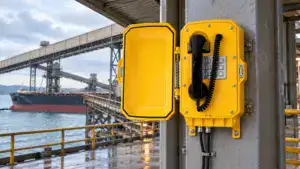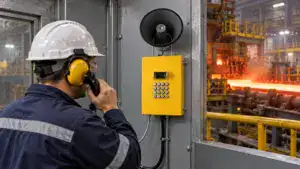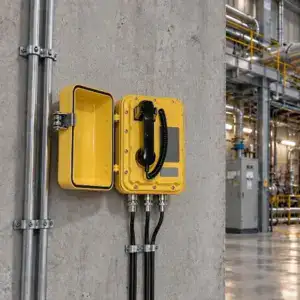
An effective oil and gas communication system connects each operating area to the people responsible for acting on its calls. For buyers, that means defining hazardous area requirements, speech clarity, call destinations and power resilience before selecting industrial telephones. This guide explains how to turn a refinery, processing plant or tank terminal layout into a practical purchasing specification.
Start with an area communication plan
A refinery combines process units, utility buildings, loading positions, storage tanks and administration areas. Their communication needs differ. A maintenance technician needs a clear conversation about equipment condition. A loading operator may need immediate access to a supervisor. A remote pump station needs an identified call destination that remains staffed during the relevant operating hours.
Mark proposed call points on the site drawing and assign an owner to each one. Record who uses the station, the likely reason for calling and the location receiving the call. Include normal production, maintenance shutdowns and reduced staffing periods. This exercise helps buyers avoid purchasing identical devices for locations with very different operating conditions.
Walk the actual routes between equipment and proposed stations. A short distance on a drawing can involve stairs, access restrictions or a long detour around process equipment. Locate stations where people can safely approach and use them, while preserving access for inspection. Any decision about placement within a classified area belongs in the site’s engineering review.
Match equipment to hazardous areas
Hazardous area communication requires a documented match between the installation and the selected equipment. Start with the approved area classification drawing and the substances present. In the United States, OSHA 1910.307 addresses equipment suitability for classified locations, including the relevant material properties and temperature marking. Projects elsewhere must establish their applicable approval framework with the responsible engineer.
For an explosion proof telephone, request the certificate and supporting schedule for the exact model and ordered configuration. Check the protection concept, gas or dust group, temperature classification, permitted ambient conditions and any installation restrictions. A supplier’s general certificate collection provides background; the purchasing record needs evidence tied to the equipment being supplied.
Review the complete installation
Cable entries, glands, stopping plugs and associated accessories need the same attention as the telephone enclosure. Ask the supplier to identify which items are included and which the installer must provide. Confirm entry thread details, cable compatibility and the required installation instructions before procurement releases the order.
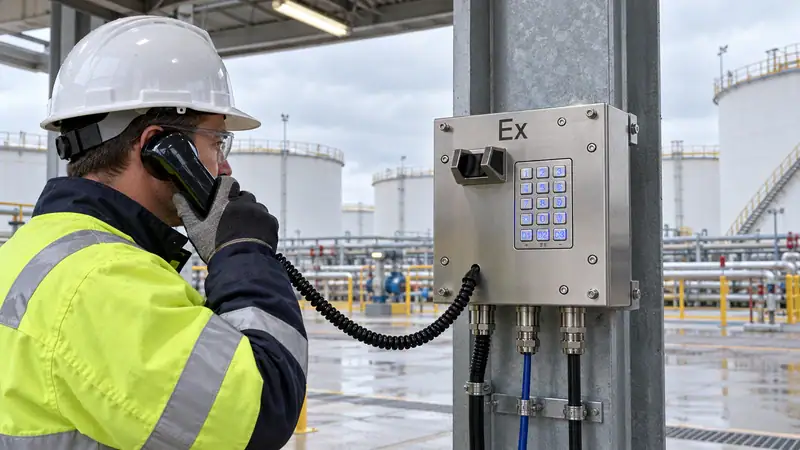
Keep weather protection and hazardous area approval as separate specification lines. An ingress protection rating describes particular enclosure protection characteristics. For an analog retrofit, Joiwo’s Analog Explosion Proof Telephone for Industrial Hazardous Area JWBT835 offers a stainless steel handset design with three programmable shortcut keys. Match the supplied version and certification documents to each installation point.

Design for noise and protective equipment
Refinery communication can become difficult beside compressors, pumps or ventilation equipment. Describe the noise conditions at each call point and arrange trials during representative operation. Ask workers to repeat realistic instructions, equipment identifiers and locations while wearing their normal personal protective equipment. Confirm speech in both directions; the control room’s ability to understand the caller is essential.
Separate incoming call notification from conversation quality. A conspicuous visual indicator may help workers recognize a call, while a suitable handset and microphone arrangement supports the conversation itself. The choice of alerting equipment, sound levels and placement should be coordinated with site noise and safety procedures.
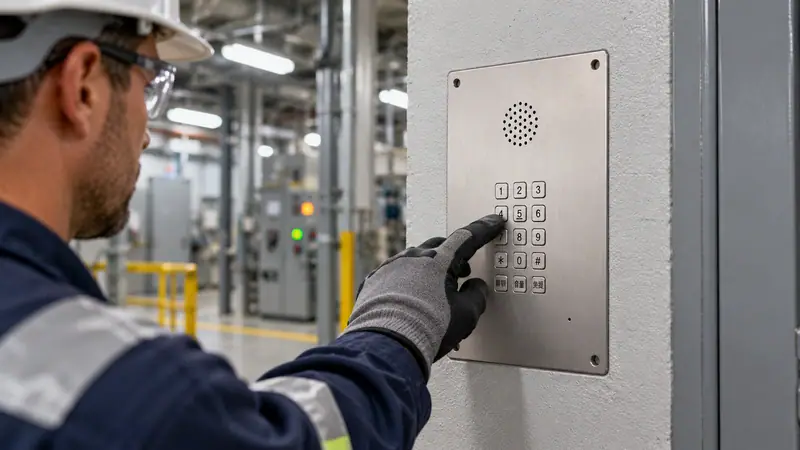
For an indoor location where hands-free calling suits the task, assess the flush-mounted Explosion Proof Emergency Telephone for Industrial Phone System JWBT812. Its stainless steel speaker-and-keypad panel offers an alternative to a handset station. Confirm speech in the actual noise conditions, mounting details and approval documents for the ordered version.
Define control room call handling
Oil refinery communication depends on consistent routing. Give each call point a unique location name that appears in the directory and, where supported, on the receiving operator’s display. Align names with the identifiers used by operations and emergency response teams. A recognizable pump station name is more useful than an unexplained extension number.
Decide which destinations require direct dialing, speed dialing or automatic connection. Simple access can help workers reach a responsible operator quickly, but it also requires a clear process for busy destinations and unanswered calls. Define the next destination, the permitted delay and the person responsible for maintaining the routing configuration.
Separate reporting and wider notification
A telephone conversation enables a worker to report a problem and receive instructions. Wider notification may require a separate paging or alarm function. Document how information passes between these functions, who authorizes a broadcast and which areas receive it. Any integration with an employee alarm system needs its own design and acceptance criteria.
Use an illustrative scenario in the supplier review: a technician at a tank transfer pump reports abnormal vibration, the first operator is occupied, and the call needs another staffed destination. Ask the integrator to demonstrate the sequence. This reveals configuration and staffing assumptions that a simple equipment list can conceal. For a JWBT835 station, include the configured shortcut keys in this routing test.
Choose interfaces around existing infrastructure
An industrial telephone may connect through an analog exchange, an IP system or a planned migration arrangement. Inventory existing equipment, available ports, cable condition and maintenance capability before choosing. An analog installation can make practical use of suitable existing circuits. An IP design may support centralized configuration and integration features when the selected endpoints and platform support them.
For SIP equipment, request a compatibility test with the proposed platform and software versions. Verify registration, calling, audio, dialing behavior and the specific features in the project scope. Include any gateway in the test. The presence of a protocol name on two datasheets leaves the actual operating configuration to be demonstrated.
Assess the route between remote areas and the control room. Cable length, electrical interference, outdoor exposure and available power influence the network design. For Ethernet and PoE links, check the actual cable and equipment limits. Long routes may require a fiber backbone and suitable local network equipment, with power and enclosure requirements defined at each location.
Trace power and failure dependencies
Describe which functions must remain available during a power interruption and for how long, based on the site’s risk assessment. Trace the entire call path: endpoint, local switch or line interface, backbone, exchange or server and operator position. A backed-up telephone alone provides limited value when a shared upstream component loses power.
Request a dependency drawing that shows shared cabinets, power circuits and cable routes. If redundant equipment is proposed, ask which failure it addresses and what happens to active and new calls during recovery. Separate routes and independent supplies may matter more than an additional device connected through the same vulnerable infrastructure.
Define responsibility for fault notifications. A communication fault should reach someone who can arrange repairs, with clear ownership across operations, IT and maintenance. Ask how staff distinguish an offline endpoint, a disconnected cable and an unavailable call destination. Include recovery procedures and configuration backups in the handover package.
Compare offers using acceptance evidence
Give bidders a common schedule covering location, environment, approval requirements, interface, call behavior, installation method and required accessories. Ask them to identify deviations explicitly. This makes it easier to compare the delivered scope and prevents a lower initial price from concealing missing glands, power supplies, configuration work or commissioning visits.
Plan factory checks around the intended behavior, then confirm performance on site. Useful demonstrations include calling every destination, identifying the originating location, handling an unanswered call and recovering from a planned network interruption. Agree safe test methods with plant operations. Keep hazardous area document review and installation inspection within the appropriate engineering responsibilities.
Evaluate maintenance over the expected service period. Request spare part availability, replacement procedures, training, warranty terms and support response arrangements. Consider the work needed to replace a handset or restore a configured endpoint. Equipment standardization can simplify spares where locations genuinely share the same requirements.
Build a specification operators can use
For phased refinery upgrades, include the cutover sequence in the tender. Identify temporary call destinations, the order in which areas will migrate and the checks required before old equipment is removed. Agree who can authorize rollback if a routing or compatibility issue appears. This helps operations understand the practical effect of the installation work and gives bidders a common basis for estimating commissioning effort.
The strongest purchasing brief joins area conditions to measurable operating tasks. It explains where each industrial telephone belongs, who answers it, how the call reaches that person and how the installation will be maintained. Buyers can then judge proposals against evidence instead of broad claims about ruggedness or reliability.
Contact Us to discuss your oil and gas communication requirements and Request a Quote for suitable industrial telephones and supporting equipment.