The true value of remote monitoring and maintenance is the combination of data collection and emergency response. When remote monitoring systems detect a fault in offshore wind turbines or chemical pumps, executing the actual remote maintenance requires dispatching technicians to harsh, physically demanding locations.
Without a rugged communication network, field teams cannot safely troubleshoot problems, consult off-site engineers, or coordinate timely maintenance.
This guide explores the benefits of remote monitoring when paired with mission-critical industrial telephones and how they help reduce downtime and streamline operation and maintenance.
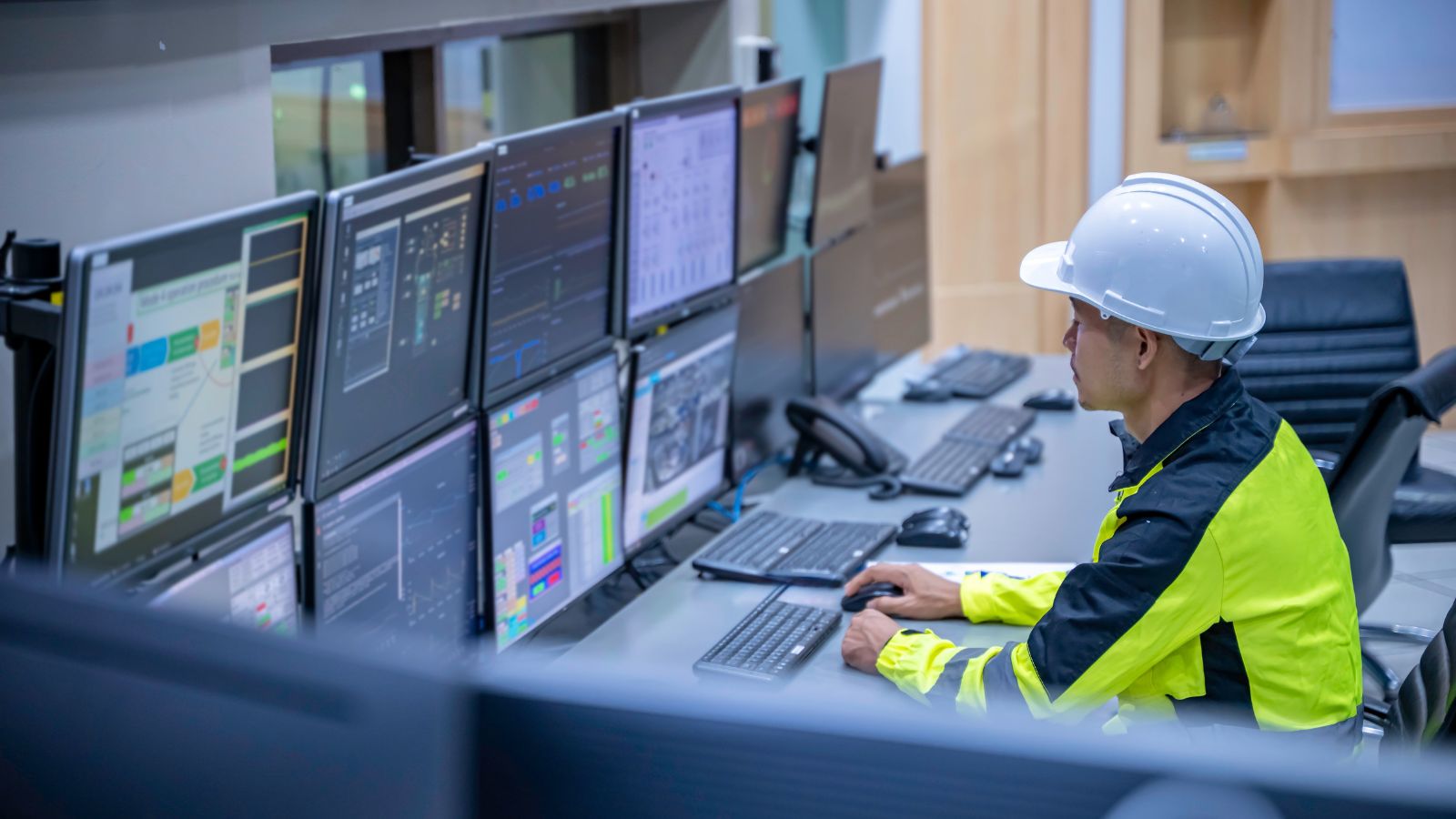
Benefits of Remote Monitoring and Proactive Maintenance
Constant monitoring shifts facilities from reactive repairs to a proactive approach. Predictive maintenance relies on real-time data to identify when a machine needs attention, ensuring assets keep running smoothly. But the transition from a digital alert to a physical repair introduces major logistical and safety challenges.
Closing the Gap Between Control Room and On-Site Workers
When condition monitoring spots abnormal vibrations in a pump, the control room can stay ahead of total equipment failure. However, to actually perform maintenance, the crew must confirm the health and performance of the machinery with operators. Standard cellular phones lack signal in deep tunnels and are strictly prohibited in explosive environments, complicating routine maintenance tasks.
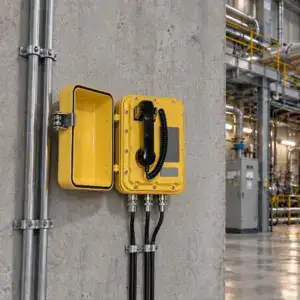
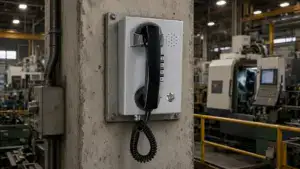
Rugged industrial telephones bridge this gap. By deploying VoIP or SIP devices right next to priority assets, technicians can coordinate lock-out/tag-out procedures safely, ensuring that the need for on-site visits results in fast, efficient fixes.
Faster Response Times with Industrial PA Systems
A digital alarm on a SCADA dashboard is useless if the workers near the failing machine don’t know about it. Integrating your alerts with an industrial PA system allows automated, real-time audio warnings to be broadcasted across the facility. Workers hear the alarm, use the nearest industrial intercom to report the physical condition, and isolate the fault to avoid massive production downtime.
Use Cases: Hardware for Extreme Equipment Maintenance
Different industrial sectors face unique environmental challenges. To truly monitor and manage these sites safely, selecting the right communication hardware is just as critical as selecting the right monitoring sensors.

Explosion-Proof Telephones for Hazardous Zones
In chemical plants, oil refineries, and underground mines, combustible dust and gases create highly explosive environments. To keep maintenance costs down while maintaining strict safety compliance, sites require ATEX-certified explosion-proof telephones.
These intrinsically safe devices allow maintenance teams to report on equipment health and collaborate with remote engineers without risking the ignition of ambient gases during complex maintenance tasks.
Weatherproof Solutions for Utilities and Wind Farms
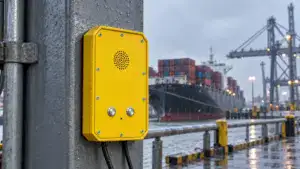
Distributed assets like offshore wind farms and remote water treatment facilities are exposed to heavy rain and salt spray. When proactive monitoring indicates a fault, technicians travel long distances to reach these unmanned sites.
Once there, they rely on weatherproof industrial telephones. These durable terminals guarantee that even in a heavy storm, field workers have a crystal-clear voice connection back to headquarters to properly plan maintenance and execute it safely.
Best Practices for Implementing Remote Monitoring Communication
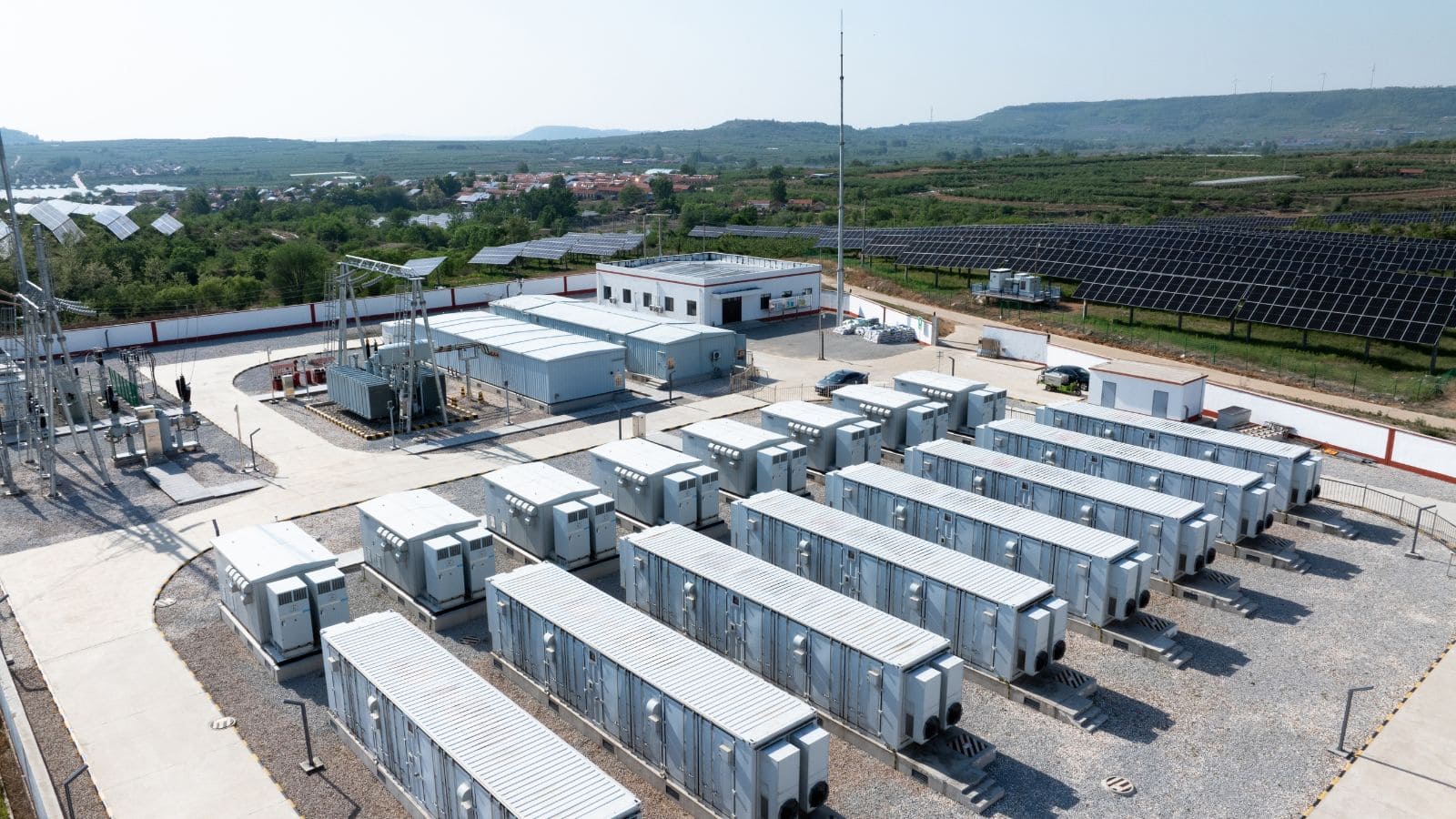
To maximize uptime and truly optimize your workflows, your communication infrastructure must be designed for industrial resilience.
- Install Hardware at the Edge: Place rugged SIP telephones or intercoms directly adjacent to high-value assets. Technicians shouldn’t have to walk five minutes away from a failing machine just to make a phone call to troubleshoot a problem.
- Design for Fail-Safes: Relying purely on wireless networks is risky in heavy industrial zones where steel structures block signals. Hardwired industrial telephones provide a fail-safe backup for workers when wireless connectivity drops.
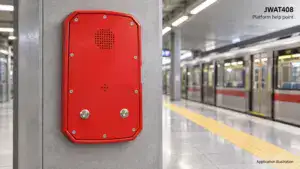
- Prioritize Hands-Free Capabilities: Maintenance technicians often wear heavy protective gloves. Using hands-free or heavy-duty intercoms ensures they can communicate without interrupting their workflow.
The ultimate goal of system monitoring is to catch issues early and resolve them safely. By ensuring your personnel are equipped with industrial-grade telecommunications gear, you protect both your expensive equipment and your frontline workers. Joiwo provides the rugged communication infrastructure that makes safe, efficient remote monitoring and maintenance a reality.
Upgrade Your Remote Maintenance Communication Today
Don’t let communication breakdowns undermine your investment in remote monitoring technology. Equip your field technicians with the rugged, reliable tools they need to respond to alerts and execute repairs safely in any environment.
Since 2011, Joiwo has been a trusted leader in integrated industrial communication, manufacturing high-performance equipment in our self-owned 20,000-square-meter facility. All our products undergo strict quality control to comply with major international standards (including CE, FCC, RoHS, and ATEX/IECEX) and are backed by a robust 2-year standard warranty and lifetime remote technical support.
Ready to build a fail-safe communication network for your harshest environments? Contact Joiwo today to consult with our engineering team and design a customized industrial telephone solution tailored to your facility’s unique operational hazards.
Frequently Asked Questions (FAQs)
How do industrial SIP telephones integrate with our existing remote monitoring or SCADA network?
While your SCADA system handles machine data, modern SIP-based industrial telephones integrate directly into your facility’s existing IP-PBX or unified communications network. They can be configured to work alongside your monitoring software—for example, automatically dialing the control room when a handset is lifted, or broadcasting automated warning messages over the PA system when a sensor triggers a critical alert.