Accidents in critical infrastructure, such as petrochemical plants, underground mines, and railway networks, can escalate in a matter of seconds. In these environments, an effective emergency response relies entirely on a robust emergency communication system.
Unlike standard office setups, industrial communication networks must rely on rugged, purpose-built hardware designed to withstand explosions, extreme weather, and deafening background noise.
This guide explores the essential hardware components, integration standards, and physical compliance requirements of the emergency communication system that facility owners and engineering contractors must consider.
Benefits of Emergency Communication System in Industrial Infrastructure
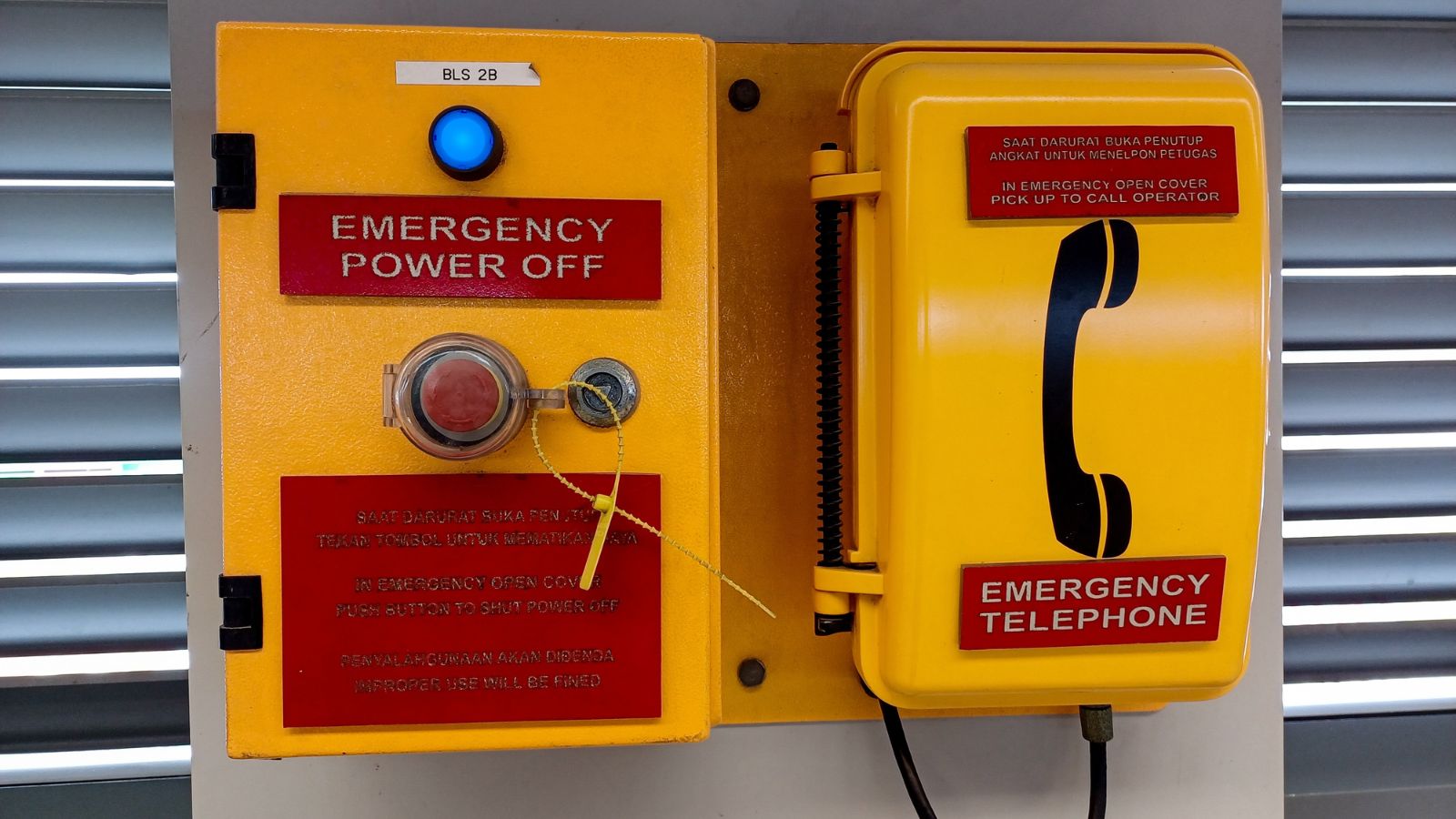
Critical infrastructure sites face hazards that render consumer-grade electronics useless. Meanwhile, the expansive nature of these sites makes workers spread across large, hard-to-reach areas where a standard cellphone cannot get a signal. They need equipment that will not ignite a spark or fail due to moisture ingress.
That is where an industrial communication network comes into play, as it relies on a seamless chain of rugged physical devices. At its core, the physical network is designed to provide guaranteed uptime so workers know exactly what actions to take.
Immediate Alerting and Two-Way Intercom Functions
An industrial emergency communication system combines high-visibility alerting with critical two-way communication. This ensures that field workers can actually hear the instructions over machinery noise, allowing them to evacuate safely and report their status back to the control room.
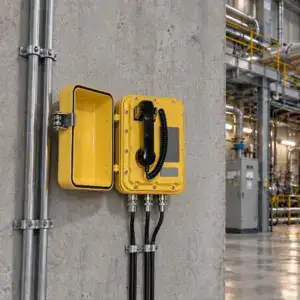
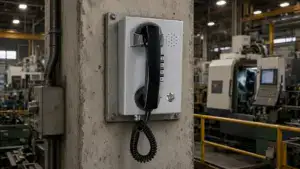
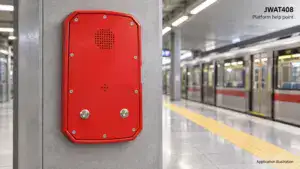
- Emergency Call Boxes: Heavy-duty telephones that connect directly to a central control room via a single button press.
- Visual and Audio Alerts: Industrial flashing beacons paired with high-decibel horn speakers that cut through heavy ambient noise.
- Public Address (PA) Systems: Zoned audio broadcasting that allows control centers to issue mass notification broadcasts to distinct areas of a plant.
The Superiority of Hardwired Networks
The infrastructure of heavy industry demands the unwavering reliability of hardwired connections, as thick concrete tunnels, deep underground mines, and dense steel refineries routinely block radio signals and wireless apps.
When first responders arrive on the scene, systems utilizing armored fiber optic cables or SIP/VoIP protocols ensure the connection remains open. Every responder needs a reliable data path when commercial cellular networks go down.
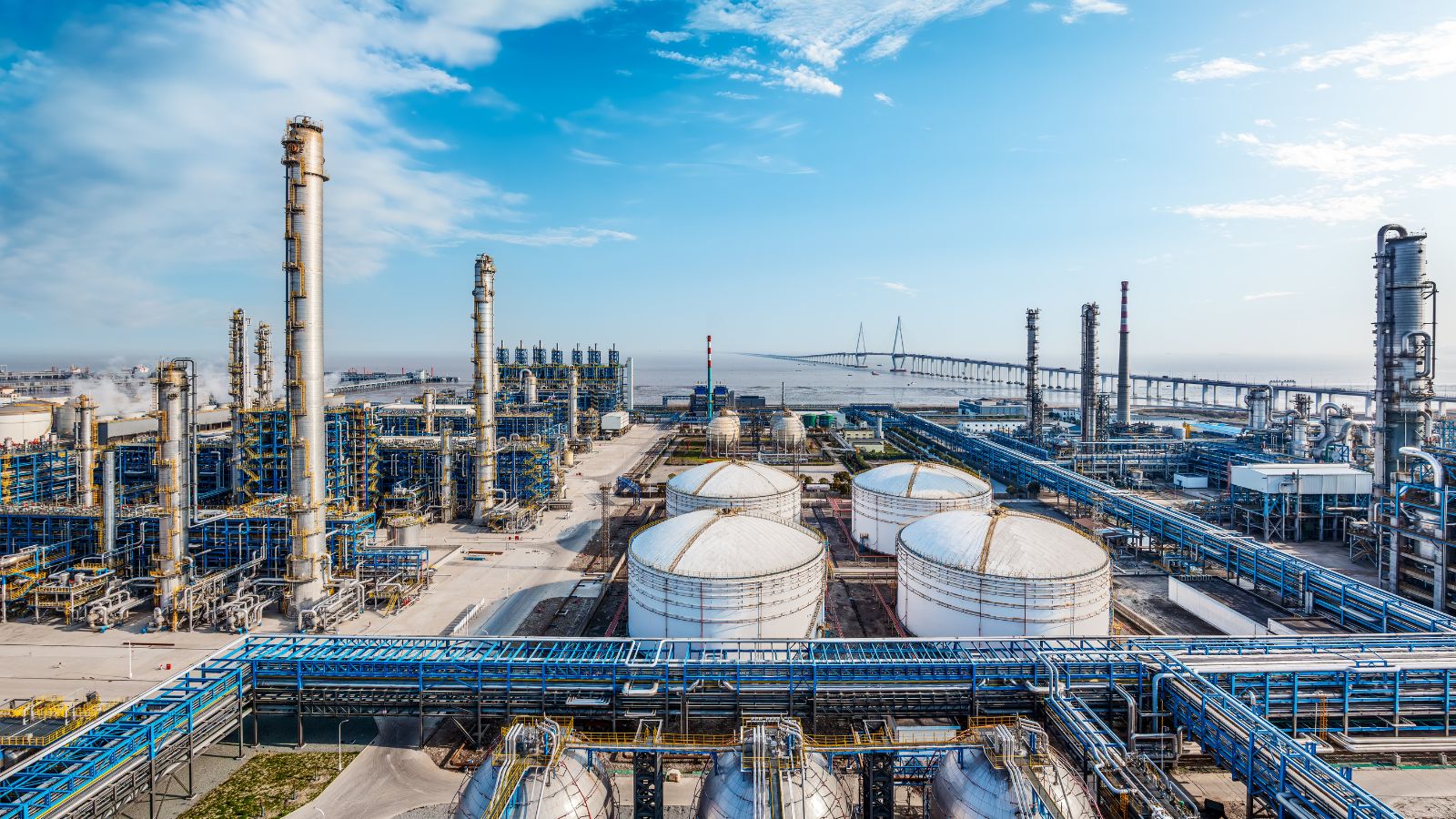
Core Hardware Architecture and Protocols
A functional industrial communication system bridges modern networking technology with indestructible physical enclosures. When project engineers implement these networks, they must select equipment that easily interfaces with existing central control platforms.
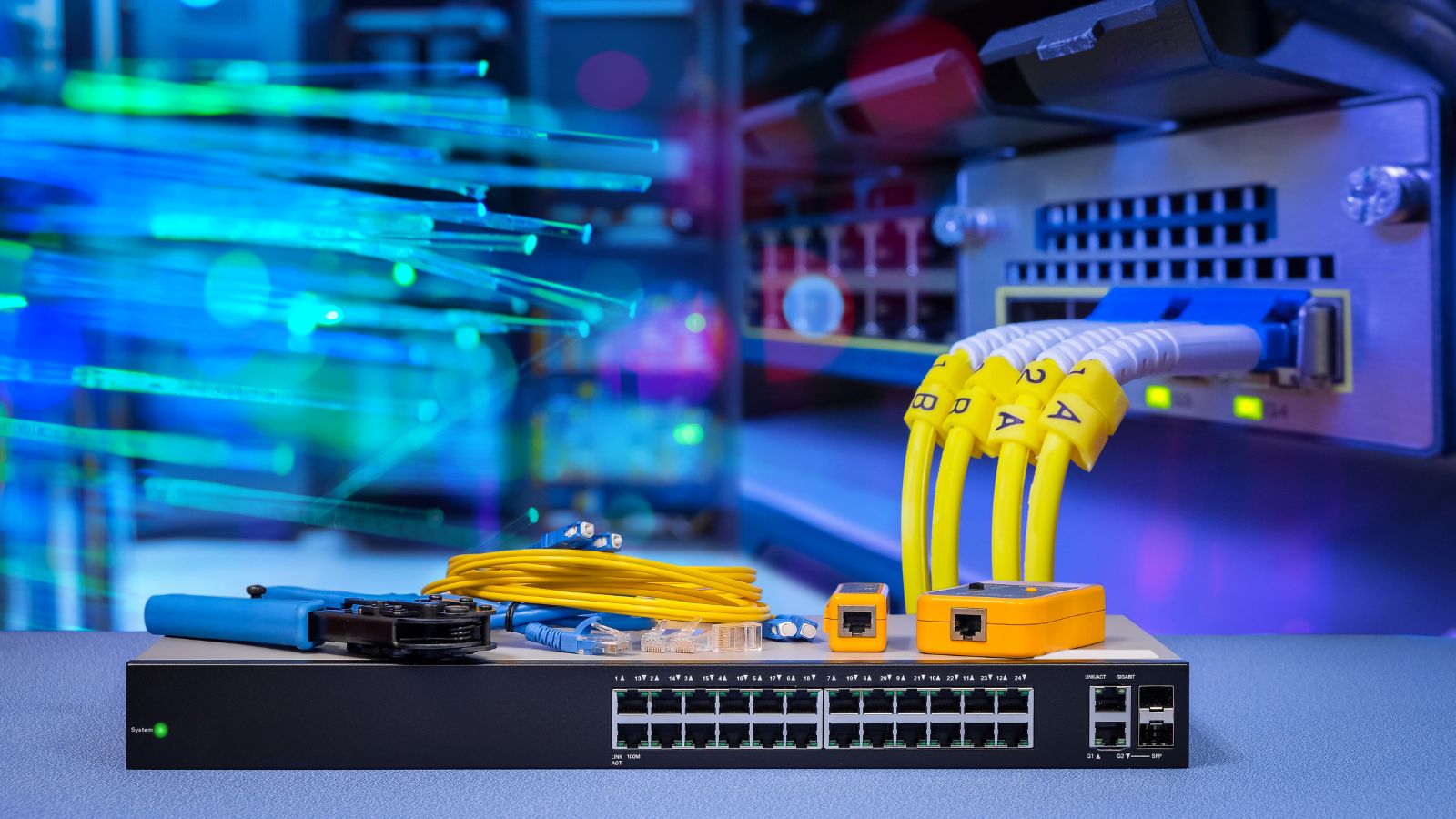
SIP, VoIP, and Analog PBX Integration
Modern facilities are increasingly moving towards IP-based infrastructure. SIP/VoIP telephones plug directly into a facility’s existing local area network. This allows every stakeholder, from IT managers to safety officers, to benefit from centralized management and real-time status monitoring.
However, many legacy plants still operate on traditional two-wire analog lines. A robust hardware manufacturer must provide both IP and analog versions of their emergency call boxes and phones, allowing engineers to upgrade their physical terminals without tearing out miles of copper wiring.
Essential Hardware Features for Industrial Deployment
When evaluating physical communication hardware for an industrial deployment, procurement teams should verify several critical technical specifications that consumer-grade devices lack:
| Feature | Industrial Benefit |
|---|---|
| Auto-Dial (Hotline) Buttons | Allows panicked or injured workers to connect to dispatch instantly without dialing numbers. |
| Relay Outputs | Enables the telephone to automatically trigger external flashing strobe lights or sirens when a call comes in. |
| Acoustic Enclosures (Hoods) | Physical phone booths that block out up to 25dB of ambient noise in extremely loud environments like turbine rooms. |
Certifications and Hardware Compliance
In the heavy industrial sector, deploying uncertified equipment in a hazardous zone is a severe regulatory violation. Following safety best practices, facility owners must ensure their equipment selection aligns with international standards so that notification systems perform reliably under pressure.

Explosion-Proof Standards (ATEX and IECEx)
For any facility processing chemicals, oil, or gas, ATEX (Europe) and IECEx (International) certifications are mandatory. These prove the telephone is physically incapable of releasing enough electrical or thermal energy to ignite the surrounding hazardous atmosphere.
Ingress Protection (IP Ratings)
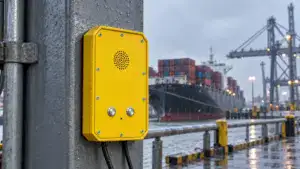
The IP rating system defines how well a device keeps out solids and liquids. Heavy industrial sites exposed to marine environments or heavy wash-downs require IP67-rated devices, which can withstand temporary complete submersion in water without suffering electrical faults.
IK Impact Ratings and Temperature Tolerances
Beyond water and dust, public safety and heavy industry devices must survive physical abuse and extreme weather. Vandal-resistant telephones should carry a high IK rating (such as IK09 or IK10), ensuring they can withstand direct blows from heavy objects. Additionally, the internal circuitry must be rated for extreme temperature fluctuations, typically functioning reliably from -40°C to +70°C (-40°F to 158°F).
System Reliability and Remote Diagnostics
Testing equipment during an annual safety drill is important, but a system that sits idle for years must work flawlessly the exact second it is needed.
Automated Fault Detection
Modern SIP/VoIP platforms feature self-diagnostic capabilities. The central server can continuously ping every connected device on the network. If a handset is left off the hook or a microphone fails, the system immediately alerts the maintenance team, ensuring emergency communications are always online.
Low-Maintenance Durability
The goal of industrial hardware is to be installed and forgotten until an emergency strikes. By utilizing materials like 304/316 stainless steel and sealed magnetic hook switches, industrial terminals drastically reduce the need for ongoing maintenance, ensuring maximum uptime for life-safety operations.
Investing in Proven Industrial Communication
From ATEX-certified explosion-proof telephones to heavy-duty SIP intercoms, the physical hardware is the backbone of your site’s safety response. Ensuring your equipment meets strict IP ratings, integrates with legacy PBX or modern SIP networks, and features ruggedized components will ultimately save lives and reduce long-term maintenance costs.
Ready to upgrade your facility’s safety infrastructure? Explore Joiwo’s complete range of explosion-proof telephones and rugged industrial communication systems, or contact our engineering team today to discuss custom hardware solutions for your specific environment.
Frequently Asked Questions (FAQ)
How do I choose between a SIP/VoIP system and a traditional Analog PBX system?
The choice largely depends on your existing infrastructure and future needs:
- Analog Systems: If your facility already operates on legacy copper wire networks and you are looking for a straightforward, cost-effective replacement, analog telephones are a reliable choice.
- SIP/VoIP Systems: If you are building a new facility or undergoing a digital transformation, VoIP is the superior option. It runs on standard Ethernet, simplifies cabling, supports HD audio quality, and features remote system diagnostics, which significantly reduces long-term maintenance costs.
What is the difference between the ATEX and IECEx certifications mentioned, and are they mandatory?
Both are internationally recognized explosion-proof certification standards. ATEX is a mandatory directive specifically for the European Union, while IECEx is a global certification framework developed by the International Electrotechnical Commission. If your facility (e.g., oil and gas refineries, chemical plants, underground mining) contains explosive gas or dust environments (such as Zone 1 or Zone 2 hazardous areas), deploying explosion-proof telephones with these certifications is an absolute necessity for both legal compliance and life safety.
What exactly do the IP66 or IP67 ratings of industrial telephones mean?
The IP (Ingress Protection) rating indicates a device’s ability to resist dust and water penetration.
- IP66 means the telephone is completely dust-tight and protected against powerful water jets (ideal for outdoor areas facing heavy storms or facilities requiring high-pressure washdowns).
- IP67 means the unit is dust-tight and can survive temporary immersion in water without sustaining damage. Joiwo’s weatherproof telephones are built to meet these rigorous protection ratings.