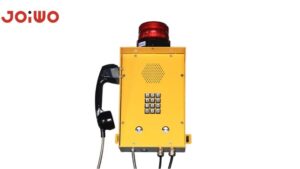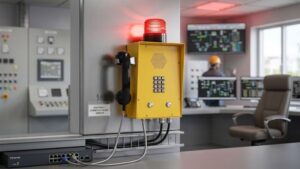
Industrietelefone verbessern die Kommunikation in Fertigungsbetrieben, indem sie zuverlässige Sprachverbindungen an Orten bereitstellen, an denen Büro- und Mobiltelefone schwer zu benutzen sind. Ein gut geplantes Kommunikationssystem verbindet Produktionsmitarbeiter, Wartungstechniker, Lagerpersonal, Sicherheitsteams und Leitstellen über fest installierte, leicht auffindbare und schnell erreichbare Endpunkte.
Jeder Anlagenbereich stellt andere Anforderungen an die Kommunikation. An Produktionslinien treten Maschinenlärm und Vibrationen auf, Wartungsbereiche sind Öl und Metallstaub ausgesetzt, Übergabebereiche werden stark frequentiert und Prozessräume können einen Schutz für explosionsgefährdete Bereiche erfordern. Geeignete Industriekommunikation stimmt Telefongehäuse, Audiotechnik, Montage und Netzwerkanschluss auf den jeweiligen Standort ab und bindet jeden Anruf in einen klaren Reaktionsablauf ein.
Warum Fertigungsbetriebe speziell ausgelegte Kommunikation benötigen
Fertigungsabläufe erfordern schnelle Entscheidungen zwischen Personen, die durch Wände, Maschinen, Sicherheitsbarrieren und mehrere Arbeitsbereiche voneinander getrennt sein können. Bei einer Maschinenstörung müssen möglicherweise innerhalb weniger Minuten Bediener, Linienleiter, Elektriker, Qualitätsingenieure und Lagerpersonal zusammenarbeiten. Der Mobilfunkempfang kann in der Nähe von Metallkonstruktionen unzuverlässig sein, private Geräte können verboten sein und gewöhnliche Bürotelefone sind auf der Produktionsfläche möglicherweise schlecht hörbar oder leicht beschädigt.
Fest installierte Industrietelefone schaffen definierte Anrufstellen mit vorhersehbarer Vermittlung. Mitarbeitende können eine Störung in jeder Schicht vom selben Standort melden; die Leitstelle kann den Endpunkt identifizieren und die zuständige Gruppe kontaktieren. Das Telefon wird so zu einem sichtbaren, wartungsfreundlichen Bestandteil des Betriebsablaufs, der sowohl für die tägliche Koordination als auch für Notfälle bereitsteht.
Kommunikationsbedarf nach Anlagenbereich
| Standort | Hauptbedarf | Typische Anforderungen an die Ausrüstung |
| Produktionslinie und Maschinenzelle | Schnelle Meldungen trotz Lärm, Vibrationen und häufiger Nutzung | Robuster Hörer, Tastenfeld, lauter Klingelton, sichere Wandmontage |
| Wartungsbereich | Koordination bei Inspektion und Reparatur mit belegten Händen | Wetterfestes Telefon, klare Audioübertragung, geschütztes Kabel, zugängliche Ersatzteile |
| Lager- und Übergabebereich | Kontakt zwischen Produktion, Lager, Wareneingang und Logistik | Gut sichtbarer Endpunkt, Stoßfestigkeit, Staubschutz, klare Anrufvermittlung |
| Explosionsgefährdeter Prozess- oder Versorgungsraum | Notfallkontakt bei möglichem Auftreten von Gas, Dämpfen oder Staub | Zertifiziertes explosionsgeschütztes Telefon, abgedichtete Bedienelemente, priorisierter Anrufweg |
| Leitwarte | Vermittlung, Priorisierung, Alarmierung und Reaktionskoordination | IP-PBX- oder Gegensprechplattform, Bedienplätze, Protokollierung, Notstromversorgung |
Produktionslinien und Maschinenzellen
Produktionsmitarbeiter müssen Linienleiter, Wartung, Qualitätswesen und Materialversorgung erreichen können, ohne einen laufenden Prozess zu verlassen. Ein fest installiertes Telefon an einer Maschinenzelle bietet eine definierte Anrufstelle, wenn Mobilgeräte verboten oder schwer hörbar sind. Tastenfeld und Hörer ermöglichen eine vertraute Zweiwegekommunikation. Ein lauter Klingelton oder optischer Alarm macht auf eingehende Anrufe neben Pressen, Förderanlagen, Kompressoren oder Bearbeitungszentren aufmerksam.
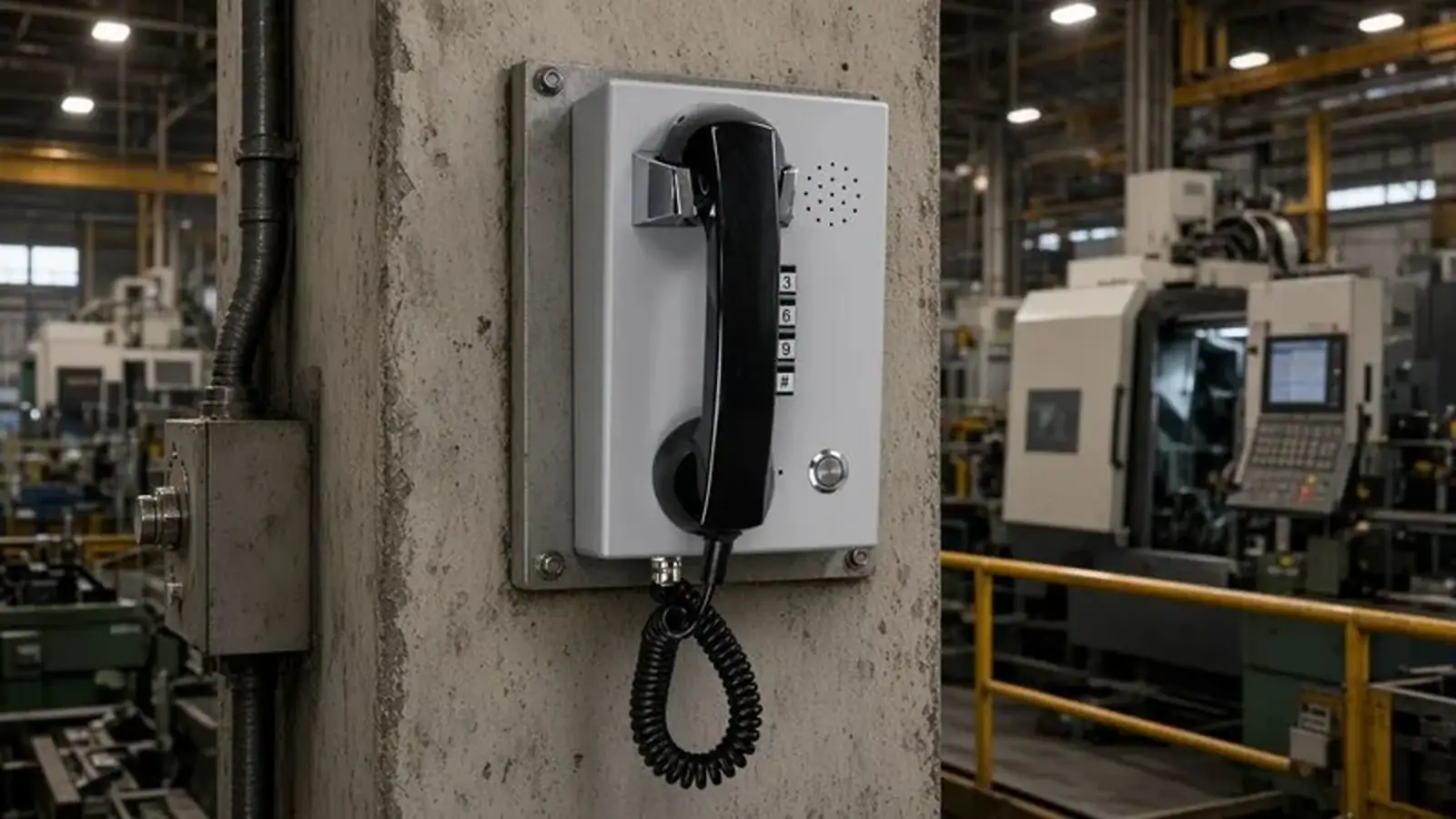
Das wetterfeste VoIP-Telefon aus kaltgewalztem Stahl JWAT303P ist ein geeignetes Beispiel für einen Endpunkt an der Produktionslinie. Sein robustes Gehäuse, Hörer, Tastenfeld und die SIP-Funktion können ein Werksnetz unterstützen, sofern die gewählte Konfiguration zu Lärmpegel, Montageposition, Stromversorgung und erforderlicher Schutzart passt.
Wartungs- und Versorgungsbereiche
Wartungstechniker wechseln zwischen Maschinenschränken, Werkbänken, Pumpen, Motoren und Versorgungsanlagen. Mit Handschuhen und Schutzkleidung müssen sie möglicherweise einen Abschaltschritt bestätigen, ein Ersatzteil anfordern oder einen defekten Bauteil melden. Ein fest installiertes Telefon in der Nähe des Arbeitsbereichs verkürzt Wege und bindet den Kommunikationsweg an einen eindeutig bekannten Standort.
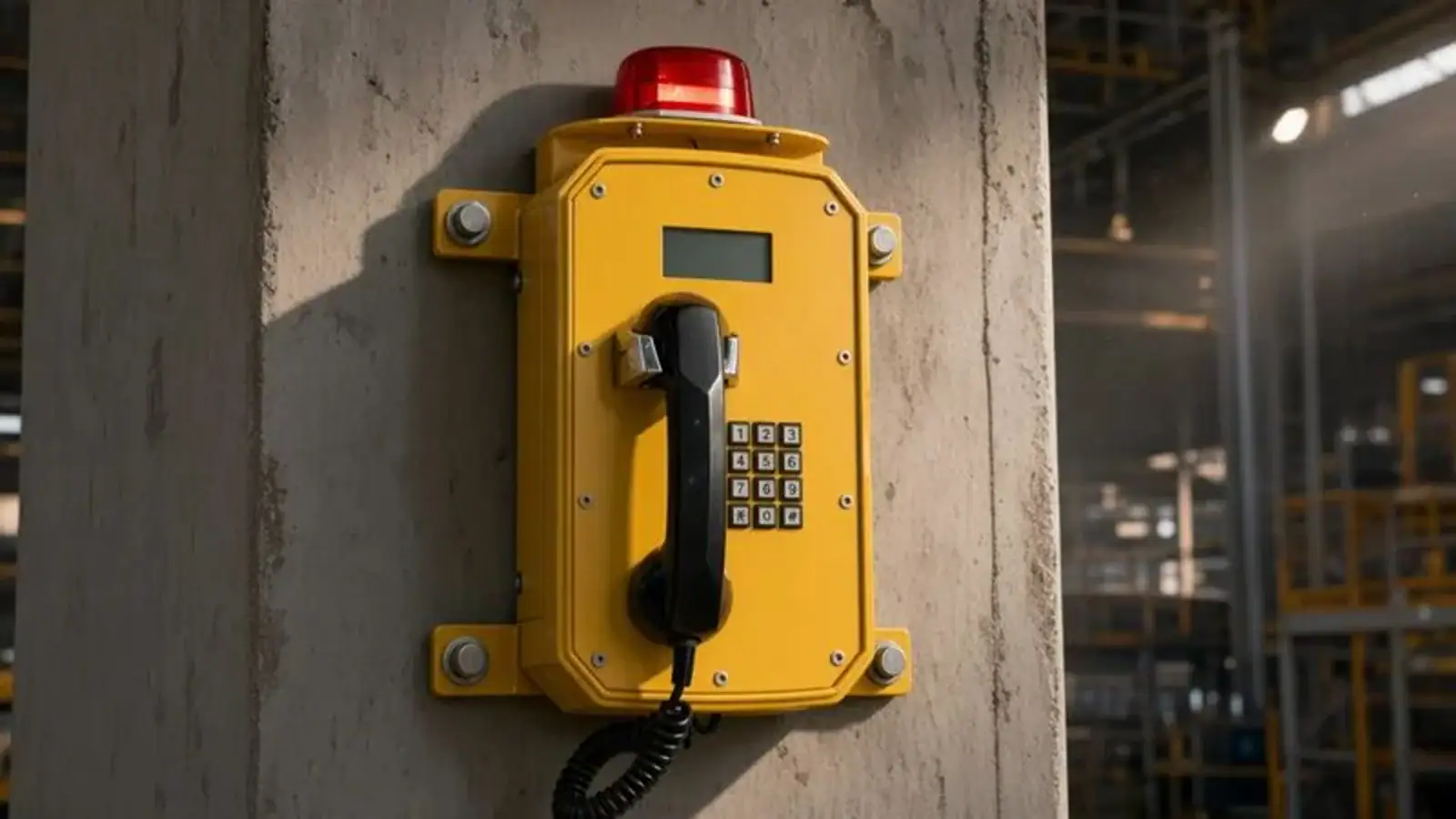
Das wetterfeste industrielle IP-Telefon mit LCD-Display JWAT305P vereint Hörer, Tastenfeld, Display und robustes Gehäuse in einer wandmontierten Ausführung. Das Display kann Technikern helfen, Nebenstellen- oder Anrufinformationen zu prüfen. Klären Sie vor der Auswahl die erforderliche IP-Schutzart, den Temperaturbereich, die Kabeleinführung, Stromversorgung, das Netzwerksegment und den Wartungszugang.
Explosionsgefährdete Prozess- und Notfallbereiche
Lackierkabinen, Bereiche für den Umgang mit Lösungsmitteln, chemische Prozesszonen und manche Versorgungsräume können Geräte für klassifizierte Bereiche erfordern. Ein industrielles Notruftelefon an solchen Standorten sollte eine direkte Sprachverbindung zu einer besetzten Leitstelle, eine klare Priorisierung und eine im Vorfall schnell bedienbare Funktion bieten. Gehäuse und Zertifizierung müssen der Standortklassifizierung und den Installationsvorschriften entsprechen.
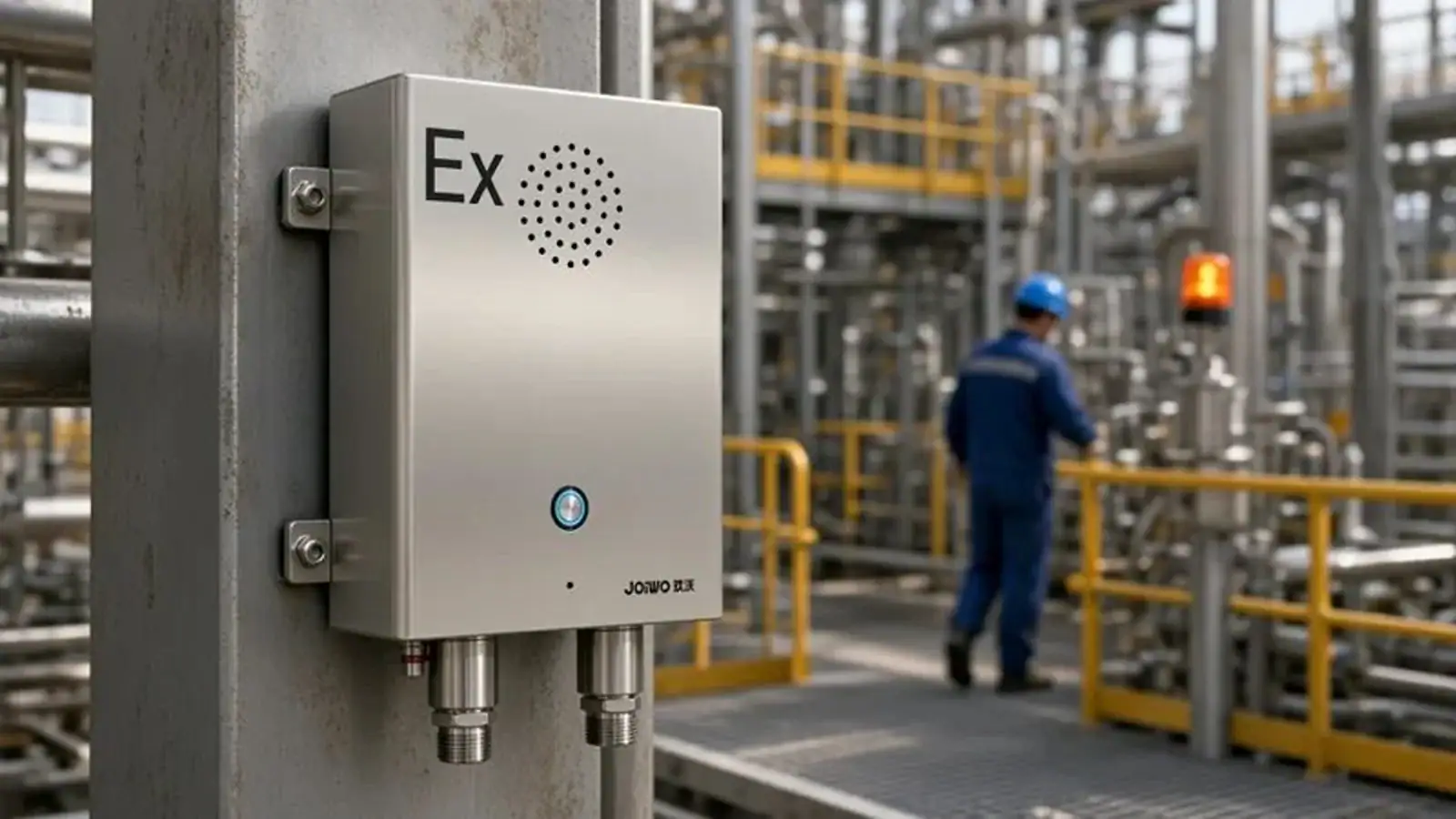
Das SIP-Notruf-Freisprechtelefon JWBT831P in explosionsgeschützter Ausführung ist ein Beispiel für die freihändige Notfallkommunikation in explosionsgefährdeten Prozessbereichen. Die Ausführung mit Lautsprecher und Taste ermöglicht einen schnellen Anruf. Für das konkrete Projekt sind jedoch Zertifizierung, Bereichsklassifizierung, Netzwerkversorgung, Anrufpriorität und zugelassene Installationsmethode zu prüfen.
So funktioniert ein Kommunikationssystem für Fertigungsbetriebe
Industrietelefone für Routine- und wichtige Anrufe
Industrietelefone bieten Bedienern und Technikern vertraute Sprachkommunikation. Analoge Endpunkte eignen sich möglicherweise für eine bestehende PBX, während SIP-Endpunkte das Werksnetz für zentrale Konfiguration, Gruppenanrufe, Überwachung und flexible Vermittlung nutzen können. Die Wahl des Protokolls sollte sich nach vorhandener Infrastruktur, Ausfallsicherheitskonzept, Stromversorgung, Cybersicherheitsrichtlinien und erwarteter Nutzungsdauer richten.
Für jeden Endpunkt sollten Nebenstelle, Standortname, Anrufgruppe und Ausweichziel dokumentiert sein. Prüfen Sie bei der Inbetriebnahme den vollständigen Verbindungsweg vom Feldtelefon bis zum Annahmeplatz und stellen Sie sicher, dass der Bediener genügend Standortinformationen für eine Entscheidung erhält.
Notruftelefone schaffen einen direkten Hilfeweg
Ein industrielles Notruftelefon sollte den Weg zwischen einem Vorfall und dem zuständigen Team verkürzen. Ein Anruf aus einer Produktionszelle muss möglicherweise die Leitstelle und den Wartungsleiter erreichen, während ein Anruf aus einem explosionsgefährdeten Bereich an das Sicherheitspersonal und eine Notfallgruppe gehen sollte. Prioritätsregeln, Vermittlung unbeantworteter Anrufe, Endpunktidentifizierung und Ausweichziele sind vor der Installation festzulegen.
Über die Zweiwege-Sprachverbindung kann der Bediener Standort und Lage erfragen, sofortige Anweisungen geben und den Anrufer verbunden halten, während weitere Unterstützung entsandt wird. Bei Bedarf kann der Anruf über die Kommunikationsplattform mit einer Signalleuchte oder Beschallungszone verknüpft werden.
Beschallung erreicht Teams schnell
Telefone ermöglichen Einzelgespräche. Beschallungsanlagen übertragen eine Nachricht an eine ausgewählte Produktionszone, Werkstatt, Lagerhalle oder an den gesamten Standort. Nach einem Anruf aus dem Feld kann die Leitstelle eine Anweisung zum Maschinenstopp, eine Evakuierungsdurchsage, einen Wartungshinweis oder eine Prozessinformation übertragen.
Verstärker, Lautsprecher, Durchsagekonsole und Telefon- oder Gegensprechplattform müssen als zusammenhängende, kompatible Kette ausgelegt sein. Lautsprecherlast, Kabellänge, Zoneneinteilung, Lautstärke, Prioritätsverhalten und Notstromversorgung beeinflussen das Ergebnis. Ein Telefonendpunkt oder SIP-Server kann einen passiven Lautsprecher ohne passenden Verstärker und entsprechende Schnittstelle nicht ansteuern.
Server und Konsolen koordinieren die Reaktion
Die zentrale Plattform verwaltet Endpunktregistrierung, Nummerierung, Anrufgruppen, Prioritäten, Aufzeichnungen oder Protokolle sowie Bedienerziele. Eine Leitstellenkonsole kann aktive Anrufe ordnen und Wartungsteams dabei helfen, ausgefallene Endpunkte zu identifizieren. Bei größeren Anlagen sind Netzwerkredundanz, lokaler Notbetrieb, Zeitsynchronisierung und Notstromversorgung als Bestandteile des Kommunikationssystems zu prüfen.
Wichtige Beschaffungskriterien
Klare Audioübertragung bei starkem Lärm
Messen Sie den Lärm während des normalen Betriebs und testen Sie das Telefon mit dem Gehörschutz, den Handschuhen und der sonstigen Schutzausrüstung, die Bediener tatsächlich verwenden. Prüfen Sie Mikrofonleistung, Hörerausgabe, gegebenenfalls Freisprechaudio, Klingeltonlautstärke, optische Signale und die Lage des Endpunkts zu abgesicherten Maschinen. Testen Sie die gesamte Installation unter repräsentativen Betriebsgeräuschen.
Robustheit und Umweltschutz
Legen Sie Gehäusematerial, Schutzart, Stoßfestigkeit, Korrosionsschutz, Betriebstemperatur, Feuchtigkeit, Öl- oder Chemikalienbelastung, Vibration, Kabeleinführung, Hörerkabel und Befestigungselemente fest. Maschinenzellen im Innenbereich, Reinigungsbereiche, Übergabepunkte im Freien und explosionsgefährdete Räume erfordern jeweils unterschiedliche Nachweise und Installationsdetails.
Verfügbarkeit und Störungsplanung
Prüfen Sie Notstromversorgung, Netzwerkredundanz, Leitungsüberwachung, Alarmmeldungen, alternative Bedienerziele, Ersatzteile und Wiederherstellungsverfahren. Das Kommunikationssystem sollte für die Betriebs- und Wartungsteams, die es über viele Jahre testen, verständlich bleiben.
Integration und Lebenszyklustauglichkeit
Klären Sie die Kompatibilität mit Analog- oder SIP-Systemen, PoE- oder lokaler Stromversorgung, VLAN-Design, Kabelschirmung, Erdung, Codec-Unterstützung, Aufzeichnungsschnittstellen, Cybersicherheitsmaßnahmen und Zuständigkeit für die Konfiguration. Standardisierte Befestigungen und Ersatzteile können Ausfallzeiten verkürzen; klare Kennzeichnungen und regelmäßige Testanrufe erleichtern die Fehlersuche.
Führen Sie vor der endgültigen Freigabe Werks- und Abnahmeprüfungen am Standort durch, die reale Abläufe abbilden: einen Anruf bei Produktionsstillstand, eine Wartungsanforderung aus einer Maschinenzelle, einen Notruf aus einem explosionsgefährdeten Bereich, einen Ausfallalarm eines Endpunkts, eine Weiterleitung an einen anderen Bediener und eine zonale Durchsage. So zeigt sich, ob einzelne Komponenten als zuverlässiges Kommunikationssystem zusammenarbeiten.
Das System an realen Betriebsszenarien ausrichten
Beginnen Sie mit einer Standortbegehung und einem Anrufablaufplan. Kennzeichnen Sie alle Produktionslinien, Maschinenzellen, Wartungsbereiche, Lagerübergabepunkte, explosionsgefährdeten Prozessbereiche, Annahmeplätze, Notrufziele und Beschallungszonen. Stimmen Sie anschließend Telefonformat, Audiofunktion, Gehäuse, Montage und Netzwerkanschluss auf jeden Standort ab.
Die Übersicht zu industriellen Kommunikationslösungen kann als Grundlage für ein erstes Gespräch über Endpunkttypen und Systemarchitektur dienen. Eine detaillierte Angebotsanfrage sollte Umgebungsbedingungen, Stückzahlen, Netzwerkdesign, vorhandene PBX- oder IP-Plattform, Notfallabläufe und erforderliche Zertifizierungen enthalten.
Kontaktieren Sie uns , um Ihre Kommunikationsanforderungen im Fertigungsbetrieb zu besprechen und ein Angebot für passende Industrietelefone und ergänzende Ausrüstung anzufordern.