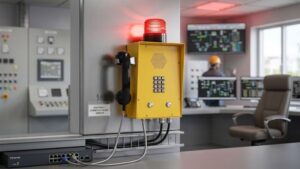
Industrieanlagen sind kompromisslose Umgebungen. Herkömmliche Kommunikationssysteme für gewerbliche und industrielle Gebäude, die in Bürohäusern einwandfrei funktionieren, fallen schnell aus, wenn sie den rauen Bedingungen einer Produktionsanlage, den unterirdischen Bereichen eines Bergwerks oder einer Offshore-Plattform ausgesetzt sind.
Für ein äußerst stabiles und skalierbares Notfallkommunikationssystem müssen Ingenieure und Sicherheitsverantwortliche die spezifischen Umweltbelastungen am Standort berücksichtigen.
Dieser Leitfaden erläutert die häufigsten Herausforderungen der Notfallkommunikation und bietet gezielte Industrielösungen sowie Hinweise zur Geräteauswahl.
1. Laute Umgebungen und Umgebungsgeräusche
In Anlagen wie Verdichterstationen, Presswerken und auf aktiven Fertigungshallen kann der Hintergrundlärm leicht 90 bis 100 Dezibel (dB) überschreiten.
In diesen lauten Umgebungen gehen herkömmliche Telefone und Massenbenachrichtigungssysteme vollständig im Lärm unter. Dadurch werden Koordination und der Umgang mit Notfällen erheblich erschwert.
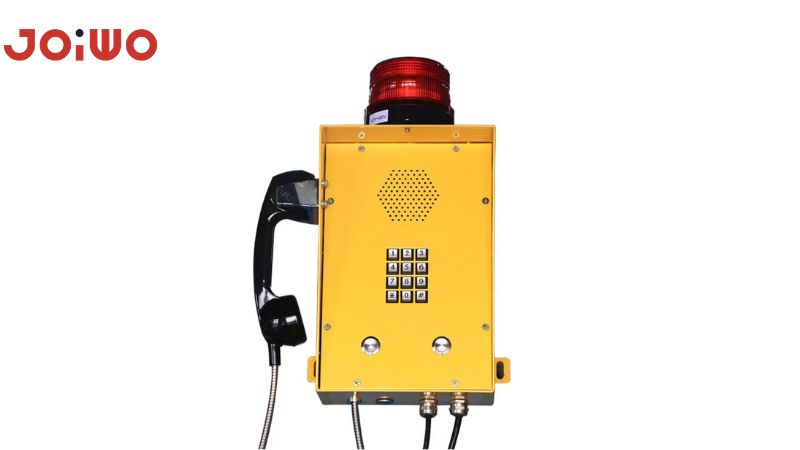
- Die Lösung: Setzen Sie Alarmierungslösungen ein, die für hohe Schalldruckpegel ausgelegt sind. Als Richtwert sollte das Signalhorn oder die Durchsage 10 bis 15 dB lauter sein als der maximale Umgebungsgeräuschpegel, damit Sprache verständlich bleibt.
- Hinweise zur Geräteauswahl:
- Endgeräte: Wählen Sie Industrietelefone mit geräuschunterdrückenden Mikrofonen.
- Durchsagen: Installieren Sie leistungsstarke IP-Lautsprecher und PA-Hornlautsprecher anstelle herkömmlicher Konuslautsprecher.
- Akustische und optische Alarmierung: In Bereichen, in denen starker Gehörschutz erforderlich ist, sollten Telefone mit Blitzleuchten und LED-Warnleuchten vorgeschrieben werden. Diese sind mit dem Alarmsystem synchronisiert und bieten einen klaren optischen Alarm.
2. Staub, Partikel und Feuchtigkeit
Bergwerke, Zementwerke und Lebensmittelbetriebe setzen Geräte ständig Staub in der Luft, Spritzwasser und korrosivem Salznebel aus. Diese Stoffe dringen leicht in herkömmliche Elektronik ein und verursachen Kurzschlüsse.
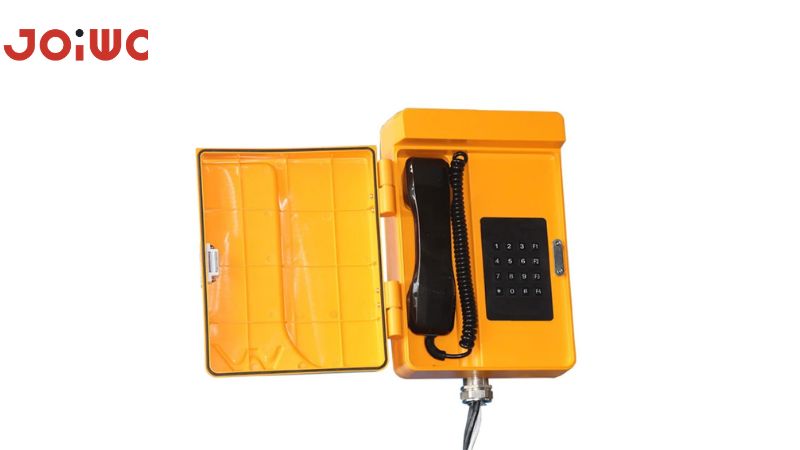
- Die Lösung: Richten Sie ein abgedichtetes Kommunikationsnetzwerk ein, in dem jedes Endgerät physisch gegen das Eindringen von Fremdkörpern geschützt ist. So bleibt eine nahtlose Kommunikation bei einem Industrienotfall gewährleistet.
- Hinweise zur Geräteauswahl:
- Wählen Sie wetterfeste Telefone mit IP66, IP67 oder höher. Das Außengehäuse sollte aus korrosionsbeständiger Aluminiumlegierung, verstärktem technischem Kunststoff oder Edelstahl bestehen.
3. Extreme Temperaturschwankungen
Industrieanlagen wie Gießereien können extremer Hitze ausgesetzt sein, während Außenanlagen in kalten Regionen mit Frost und rauem Wetter zurechtkommen müssen. Extreme Kälte kann LCD-Bildschirme einfrieren lassen, während große Hitze zum vollständigen Ausfall der Elektronik führt.
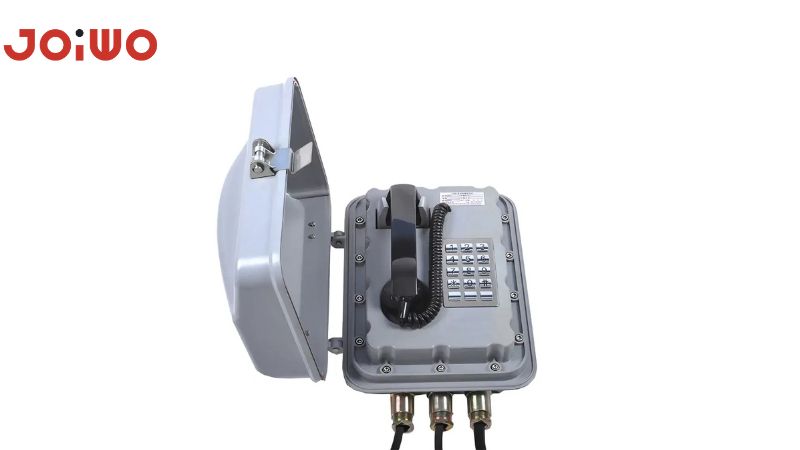
- Die Lösung: Setzen Sie robuste Telefone ein, die für einen großen Temperaturbereich von -40°C bis +70°C ausgelegt sind.
- Hinweise zur Geräteauswahl:
- Vermeiden Sie Kunststoffe in Verbraucherqualität. Achten Sie darauf, dass alle Anschlusskabel für extreme Temperaturen zugelassen sind, damit ihre Isolierung im Notfall nicht reißt.
4. Große Anlagen, Übertragung über weite Entfernungen und Abdeckung mehrerer Gebäude
Tunnel, Pipelines und große Raffinerien erstrecken sich häufig über mehrere Kilometer und haben daher eine große Fläche. Herkömmliche analoge Kupferleitungssysteme leiden über diese Entfernungen unter erheblichen Signalverlusten.
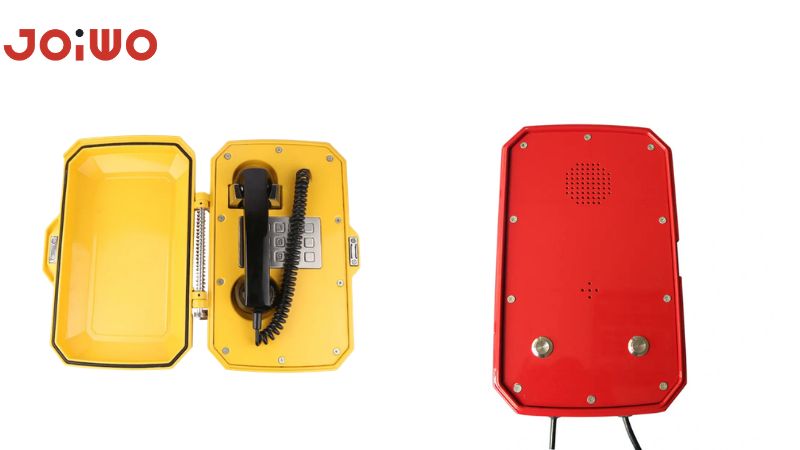
- Die Lösung: Stellen Sie von älteren Verkabelungen auf moderne IP-basierte Systeme oder Glasfasernetzwerke um, um eine gebäudeübergreifende Abdeckung zu erreichen.
- Hinweise zur Geräteauswahl:
- SIP-/VoIP-Telefone: Verwenden Sie SIP-kompatible Industrietelefone, die über Ihr vorhandenes Netzwerk betrieben werden. IP-Telefone sind nicht durch die Entfernung begrenzt und können alle erreichen, solange die Netzwerkverbindung besteht.
- Glasfaser-Backbones: Verwenden Sie in großen Anlagen Glasfaser-Sprechanlagen. Glasfaser überträgt Sprache und Daten als Licht über 20 Kilometer ohne Signalverlust.
5. Elektromagnetische Störungen (EMI)
Umspannwerke und Fabriken mit großen Motoren erzeugen starke elektromagnetische Felder. Diese EMI verursacht statische Störungen und Signalverluste in herkömmlichen Kommunikationskabeln.
- Die Lösung: Isolieren Sie das Kommunikationssignal, um eine nahtlose Verbindung sicherzustellen.
- Hinweise zur Geräteauswahl:
- Verwenden Sie Glasfaser für Sicherheitssysteme (unempfindlich gegenüber EMI) oder stellen Sie sicher, dass alle Analog- und Cat6-Kabel stark geschirmt (STP/FTP) und ordnungsgemäß geerdet sind.
6. Gefahrenbereiche und explosionsfähige Atmosphären
In petrochemischen Anlagen schaffen brennbare Gase eine hochgradig explosionsfähige Atmosphäre. Schon ein winziger Funke kann während einer Evakuierung eine katastrophale Explosion auslösen.
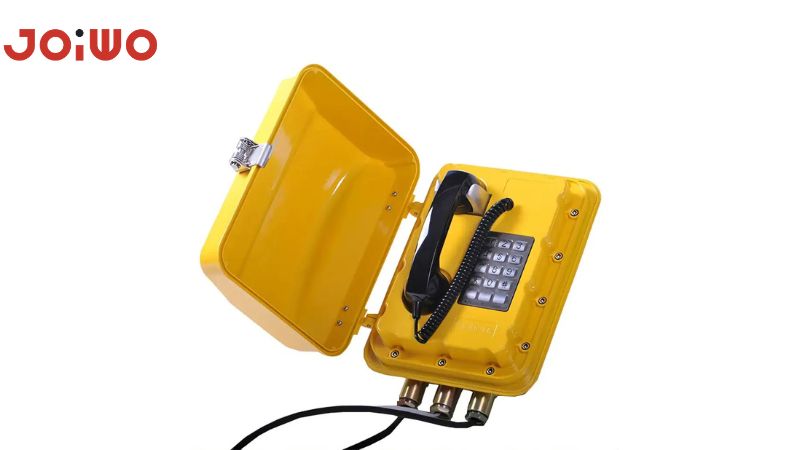
- Die Lösung: Setzen Sie ausschließlich konforme explosionsgeschützte Industrietelefone ein, die garantiert die umgebende Atmosphäre nicht entzünden.
- Hinweise zur Geräteauswahl:
- Zertifizierung ist vorgeschrieben: Spezifizieren Sie ausschließlich Geräte, die den regionalen Vorschriften und Brandschutzvorschriften entsprechen und Zertifizierungen wie ATEX, IECEx oder UL/CSA besitzen.
- Hersteller wie Joiwo sind auf explosionsgeschützte Telefone für Gefahrenbereiche spezialisiert. Werden diese in die anlagenweite Brandmeldeanlage integriert, entsteht eine ausfallsichere Notfallreaktion.
7. Integration von Massenbenachrichtigungen in die vorhandene Infrastruktur
Neben robuster Hardware muss ein wirksames Notfallbenachrichtigungssystem reibungslos in die vorhandene Infrastruktur und das WLAN integriert werden. Bei kritischen Ereignissen müssen Bediener in der Leitstelle alle Personen schnell benachrichtigen vor Ort können.
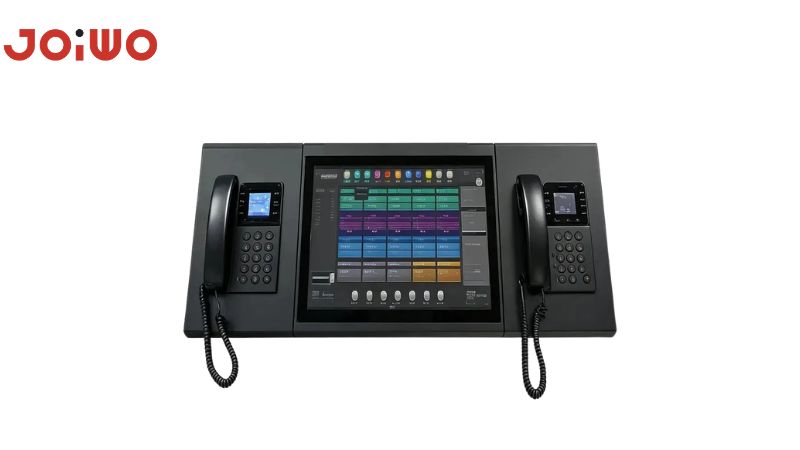
- Umfassende Alarmierung: Moderne Systeme zur Massenbenachrichtigung im Notfall kombinieren bidirektionale Sprechanlagen mit Bedienkonsolen, digitaler Beschilderung, Desktop-Benachrichtigungen und SMS, um redundante Notfallmeldungen bereitzustellen.
- Reaktionen automatisieren: Werden Sensoren wie ein Brandmelder oder Gasdetektor mit dem System verbunden, lassen sich Abläufe optimieren. Die Automatisierung beschleunigt die Evakuierung von Beschäftigten und verringert Verzögerungen für Einsatzkräfte und Personal vor Ort.
Modernisieren Sie Ihre industrielle Notfallkommunikation für diese Herausforderungen
Wenn Ihre Projekte geräuschunterdrückende Sprechanlagen, explosionsgeschützte Telefone oder ein vollständig integriertes IP-Massenbenachrichtigungssystem benötigen, können Sie auf Joiwo zählen. Unser Produktportfolio reicht von einzelnen Endgeräten bis zu speziell für die Industrie entwickelten Systemlösungen.
Sicherheit und Konformität stehen bei Joiwo im Mittelpunkt. Unsere Produkte werden streng geprüft und besitzen ein vollständiges Portfolio internationaler Sicherheitszertifizierungen, darunter ATEX, IECEx, CE, FCC und RoHS.
Kontaktieren Sie noch heute das Expertenteam von Joiwo, um eine individuelle Bewertung anzufordern. Wir helfen Ihnen, die passenden zertifizierten Lösungen auszuwählen, damit Ihr Personal vor Ort geschützt, regelkonform und verbunden bleibt.
Häufig gestellte Fragen
Kann ich ein neues industrielles Notfallkommunikationssystem in unsere bestehende Infrastruktur integrieren?
Ja. Moderne Industrielösungen wie SIP-kompatible Telefone und IP-Lautsprecher lassen sich nahtlos in Ihr vorhandenes Netzwerk und IP-PBX-Systeme integrieren. Dank dieser Abwärtskompatibilität können Sie die Massenbenachrichtigung modernisieren und die Abdeckung erweitern, ohne die gesamte vorhandene Verkabelung Ihrer Anlage herauszureißen und zu ersetzen.
Was ist der Unterschied zwischen wetterfesten und explosionsgeschützten Kommunikationsgeräten für die Industrie?
Wetterfeste Geräte (üblicherweise mit IP66 oder IP67) sind dicht verschlossen und schützen die interne Elektronik vor Staub, Feuchtigkeit und Hochdruckwasserstrahlen. Sie eignen sich daher für Außenbereiche und Orte mit regelmäßiger Nassreinigung.
Explosionsgeschützte Geräte werden dagegen speziell gegossen und zertifiziert, zum Beispiel nach ATEX oder IECEx. Sie schließen interne elektrische Funken ein und verhindern so, dass brennbare Gase oder Stäube in explosionsgefährdeten Atmosphären entzündet werden.
Wie stellen wir sicher, dass Notfallmeldungen in lauten Umgebungen wahrgenommen werden?
In besonders lauten Bereichen wie einer Fertigungshalle oder einem Verdichterraum reicht Audio allein oft nicht aus.
Erstens muss das Signalhorn oder die PA-Durchsage mindestens 10 bis 15 Dezibel lauter als der maximale Umgebungsgeräuschpegel eingestellt werden.
Zweitens empfehlen die OSHA- und NFPA-Richtlinien, leistungsstarke akustische Signale mit optischen Warnsignalen wie synchronisierten Blitzleuchten und LED-Warnleuchten zu kombinieren. So werden Beschäftigte vor Ort, die starken Gehörschutz tragen, sofort auf einen Notfall aufmerksam gemacht.