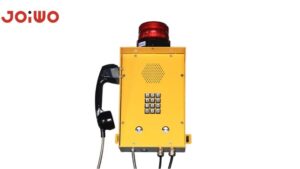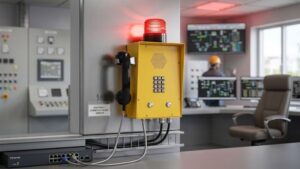
Los teléfonos industriales mejoran la comunicación en las plantas de fabricación al proporcionar puntos de voz fiables en lugares donde resulta difícil utilizar teléfonos de oficina y dispositivos móviles. Un sistema de comunicación de fábrica bien planificado conecta a los operarios de producción, los técnicos de mantenimiento, el personal de almacén, los equipos de seguridad y el personal de la sala de control mediante terminales fijos fáciles de localizar y de contestar rápidamente.
Cada zona de la planta presenta un reto de comunicación diferente. En las líneas de producción se combinan el ruido y las vibraciones de las máquinas; en las zonas de mantenimiento hay aceite y polvo metálico; las áreas de transferencia registran un tráfico frecuente; y las salas de proceso pueden requerir protección para áreas peligrosas. Los buenos equipos de comunicación industrial adaptan la envolvente del teléfono, el diseño de audio, el método de montaje y la conexión de red a cada ubicación, y mantienen cada llamada vinculada a un flujo de respuesta claro.
Por qué las plantas de fabricación necesitan equipos de comunicación específicos
Las operaciones de fabricación dependen de decisiones rápidas entre personas que pueden estar separadas por paredes, maquinaria, barreras de seguridad y distintas zonas de trabajo. Un fallo de una máquina puede requerir la intervención de un operario, un supervisor de línea, un electricista, un ingeniero de calidad y el equipo de almacén en cuestión de minutos. La cobertura móvil puede ser poco fiable alrededor de estructuras metálicas, puede estar restringido el uso de dispositivos personales y los teléfonos de oficina convencionales pueden resultar difíciles de oír o dañarse fácilmente en la planta de producción.
Los teléfonos industriales fijos crean puntos de llamada conocidos y con un enrutamiento predecible. Un trabajador puede informar de una parada desde el mismo lugar en cada turno, mientras que la sala de control puede identificar el terminal y contactar con el grupo de respuesta adecuado. El teléfono pasa a formar parte del proceso operativo: está visible, se puede mantener y está listo tanto para la coordinación rutinaria como para las comunicaciones de emergencia.
Necesidades de comunicación según la ubicación en la planta
| Ubicación | Necesidad principal | Prioridad habitual del equipo |
| Línea de producción y célula de máquinas | Avisos rápidos con ruido, vibración y uso repetido | Auricular robusto, teclado, timbre de alto volumen, montaje mural seguro |
| Zona de mantenimiento | Coordinación con las manos ocupadas durante la inspección y la reparación | Teléfono resistente a la intemperie, audio claro, cable protegido, repuestos accesibles |
| Almacén y zona de transferencia | Contacto entre producción, almacén, recepción y logística | Terminal visible, resistencia a impactos, protección contra el polvo, enrutamiento claro de llamadas |
| Zona de proceso o sala de servicios peligrosa | Contacto de emergencia donde puede haber gas, vapor o polvo | Teléfono antideflagrante certificado, controles sellados, ruta de llamada prioritaria |
| Sala de control | Enrutamiento, priorización, alarmas y coordinación de respuestas | Plataforma IP-PBX o de intercomunicación, puestos de operador, registro, alimentación de respaldo |
Líneas de producción y células de máquinas
Los operarios de producción necesitan comunicarse con los responsables de línea, mantenimiento, calidad y manipulación de materiales sin abandonar un proceso en marcha. Un teléfono fijo en una célula de máquinas proporciona un punto de llamada conocido cuando los dispositivos móviles están restringidos o cuesta oírlos. El teclado y el auricular permiten una conversación bidireccional familiar, mientras que un timbre de alto volumen o un aviso visual ayuda al personal a detectar una llamada entrante junto a prensas, cintas transportadoras, compresores o centros de mecanizado.
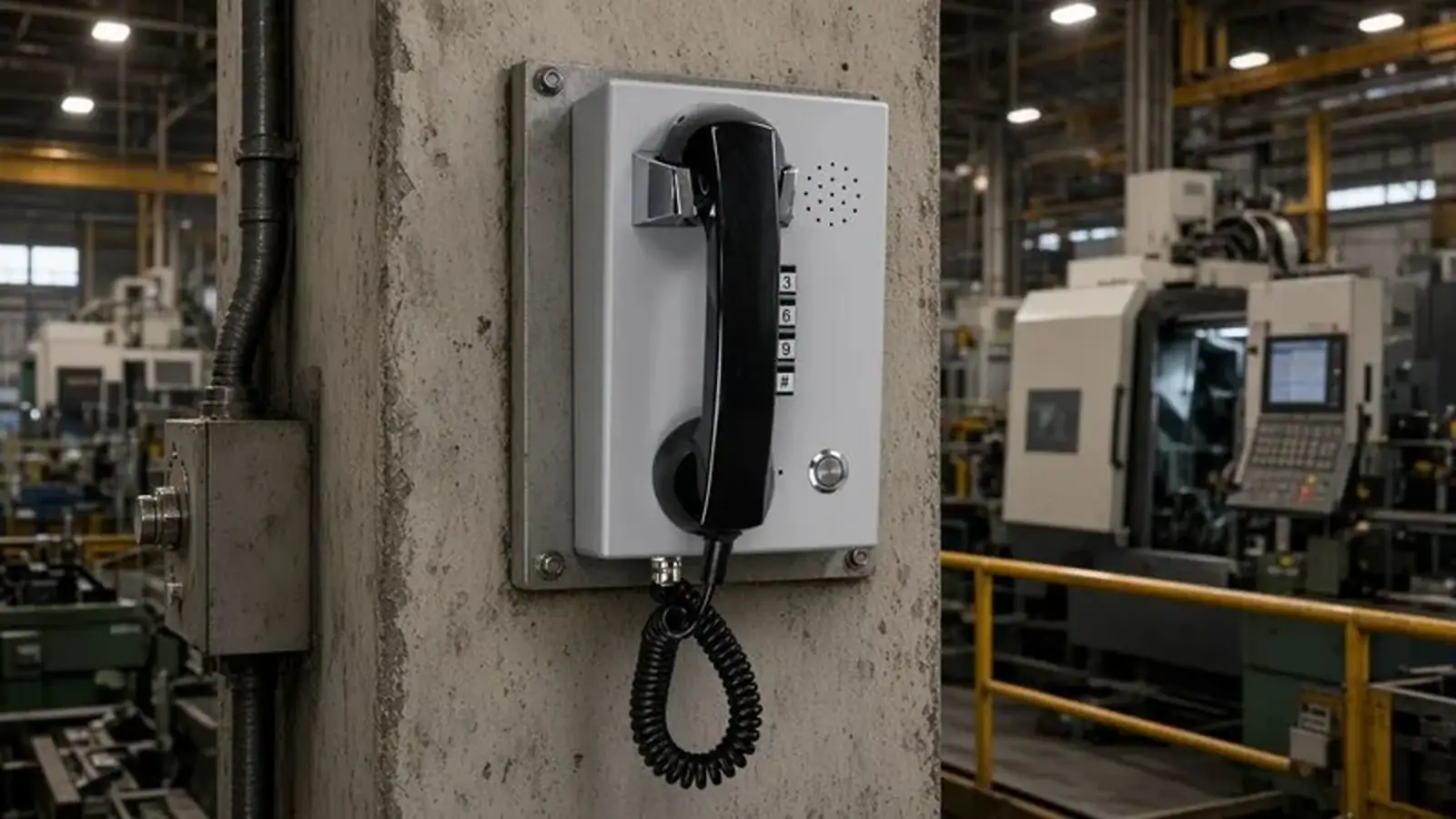
El teléfono VoIP resistente a la intemperie de acero laminado en frío JWAT303P es una referencia adecuada para un terminal de línea de producción. Su envolvente robusta, el auricular, el teclado y la capacidad SIP pueden ser adecuados para una red de fábrica si la configuración elegida se ajusta al nivel de ruido, la posición de montaje, el método de alimentación y el grado de protección requerido.
Zonas de mantenimiento y salas de servicios
Los técnicos de mantenimiento se desplazan entre armarios de máquinas, bancos de herramientas, bombas, motores y paneles de servicios. Puede que necesiten confirmar un paso de aislamiento, solicitar un repuesto o informar de un componente averiado mientras llevan guantes y ropa de protección. Un teléfono fijo cerca de la zona de trabajo reduce los desplazamientos y mantiene la comunicación vinculada a una ubicación física conocida.
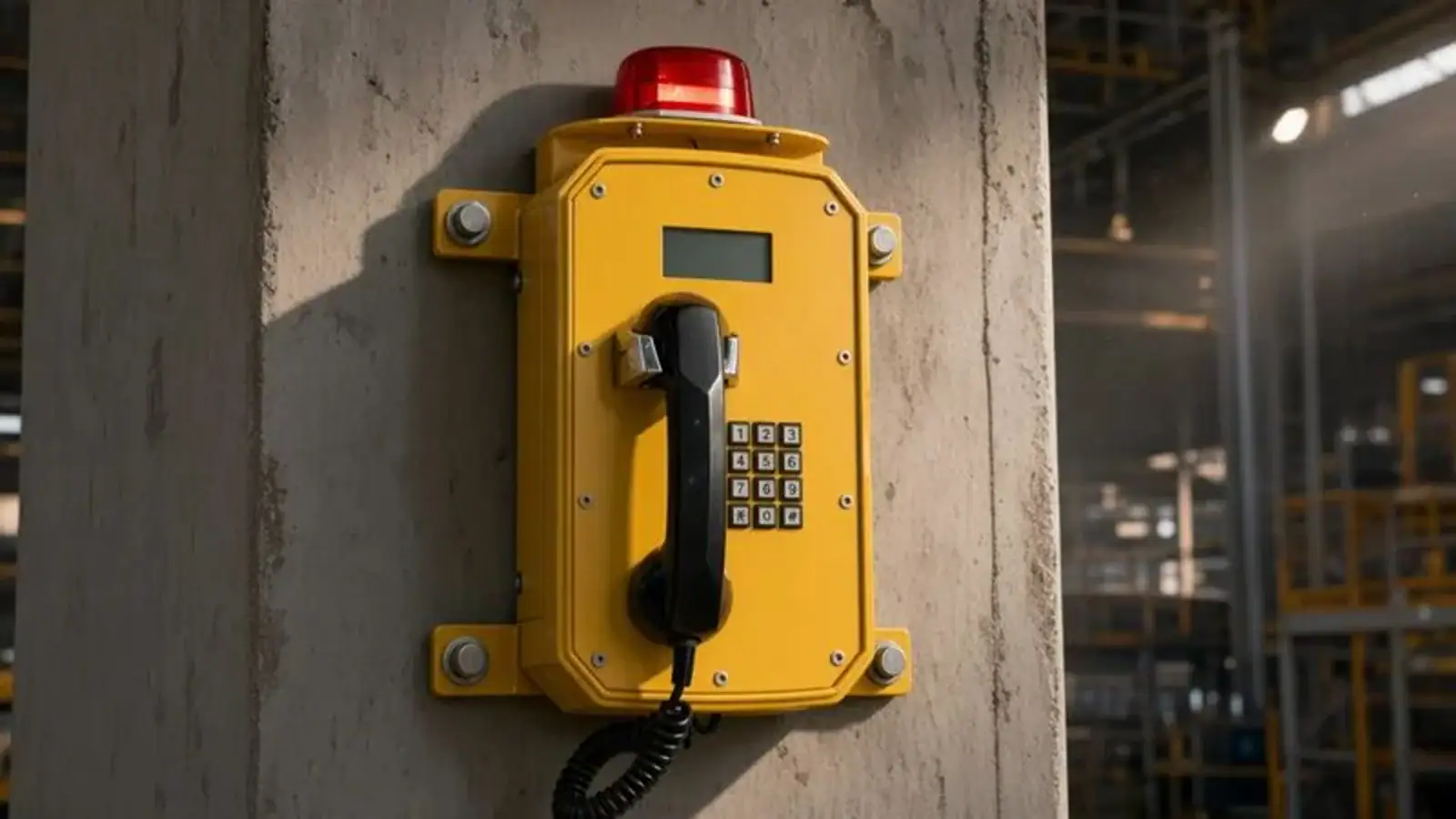
El teléfono IP industrial resistente a la intemperie con pantalla LCD JWAT305P combina un auricular, un teclado, una pantalla y una envolvente robusta en un formato de montaje mural. La pantalla puede ayudar a los técnicos a confirmar la extensión o la información de la llamada. Antes de especificarlo, confirme el grado de protección IP requerido, el rango de temperatura, la entrada de cables, la fuente de alimentación, el segmento de red y el acceso para el mantenimiento.
Zonas de proceso peligrosas y áreas de emergencia
Las salas de pintura, las zonas de manipulación de disolventes, las zonas de procesamiento químico y algunas salas de servicios pueden requerir equipos diseñados para un entorno clasificado. Un teléfono de emergencia de fábrica instalado en esos lugares debe proporcionar una ruta de voz directa a un puesto de control atendido, un tratamiento claro de prioridad y un modo de funcionamiento que los trabajadores puedan utilizar rápidamente durante un incidente. La envolvente y la certificación deben corresponder a la clasificación del emplazamiento y a las normas de instalación.
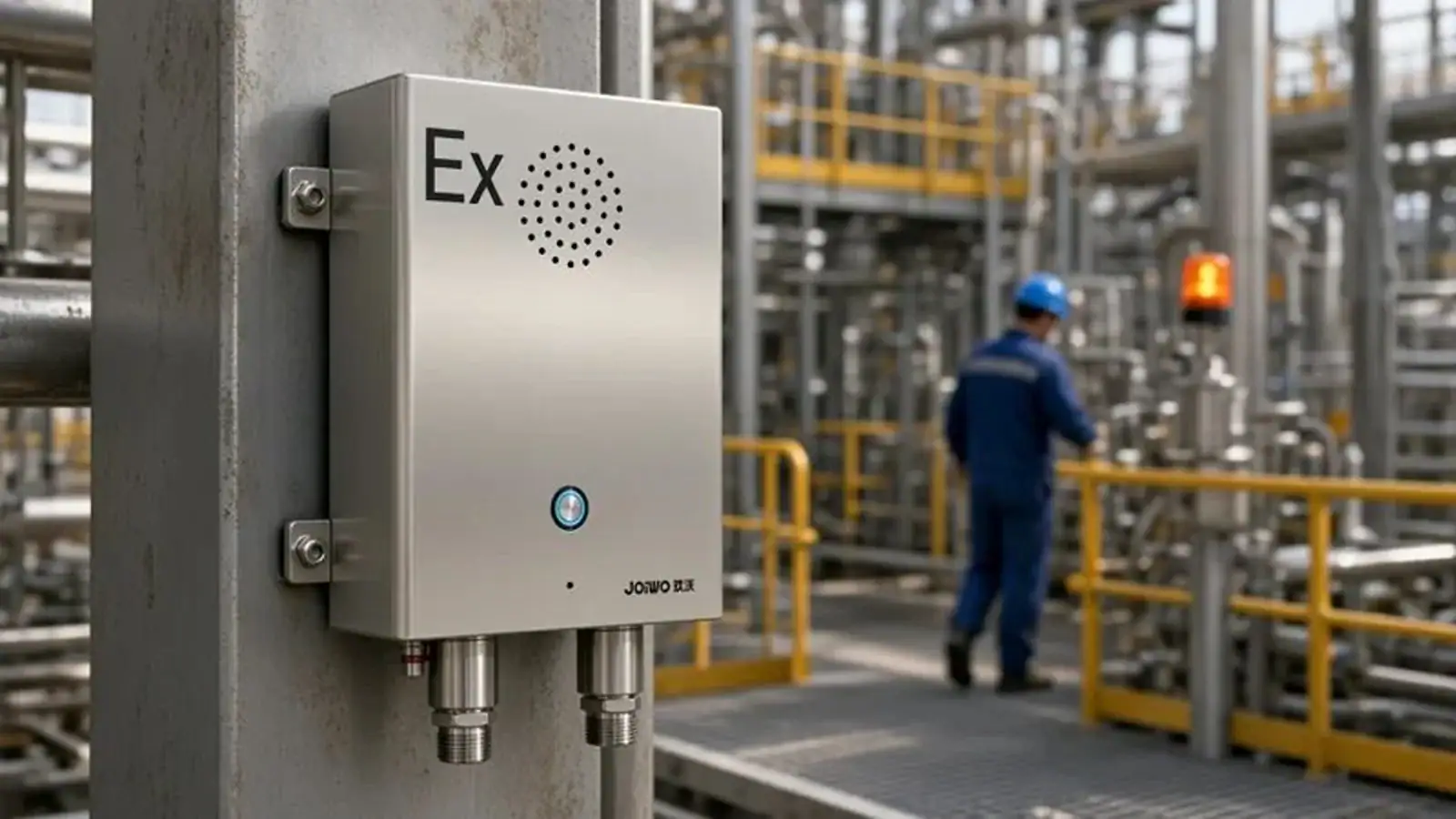
El teléfono antideflagrante SIP manos libres de emergencia JWBT831P muestra una posible solución de comunicación de emergencia manos libres para una zona de proceso peligrosa. El formato de altavoz y botón permite iniciar una llamada rápidamente, pero el proyecto definitivo debe verificar la certificación, la clasificación de la zona, la alimentación de red, la prioridad de la llamada y el método de instalación aprobado.
Cómo funciona un sistema de comunicación en una planta de fabricación
Los teléfonos industriales gestionan las llamadas rutinarias y críticas
Los teléfonos industriales proporcionan una comunicación de voz familiar para operarios y técnicos. Los terminales analógicos pueden ser adecuados para una centralita PBX existente, mientras que los terminales SIP pueden utilizar la red de la planta para la configuración centralizada, las llamadas de grupo, la supervisión y el enrutamiento flexible. La elección del protocolo debe basarse en la infraestructura actual, el plan de resiliencia, la disponibilidad de alimentación, la política de ciberseguridad y el ciclo de vida previsto.
Cada terminal debe tener una extensión, un nombre de ubicación, un grupo de llamadas y un destino alternativo documentados. Durante la puesta en servicio, pruebe la ruta completa desde el teléfono de campo hasta el puesto que responde y confirme que el operador recibe suficiente información sobre la ubicación para tomar una decisión.
Los teléfonos de emergencia crean una ruta directa para pedir ayuda
Un teléfono de emergencia de fábrica debe acortar la distancia entre un incidente y el equipo responsable. Puede que una llamada desde una célula de producción deba llegar a la sala de control y al supervisor de mantenimiento, mientras que una llamada desde un área peligrosa puede requerir la intervención del personal de seguridad y de un equipo de respuesta ante emergencias. Las reglas de prioridad, el enrutamiento de llamadas sin respuesta, la identificación del terminal y los destinos de respaldo deben definirse antes de la instalación.
La comunicación de voz bidireccional permite que el operador pregunte por la ubicación y el estado, dé instrucciones inmediatas y mantenga la llamada conectada mientras se envía ayuda adicional. Cuando sea necesario, la plataforma de comunicación puede vincular la llamada a una baliza o a una zona de megafonía.
Los equipos de megafonía permiten avisar rápidamente a los equipos
Los teléfonos permiten conversaciones individuales. Los equipos de megafonía distribuyen mensajes a una zona de producción, un taller, un almacén o un grupo de toda la planta seleccionados. Tras recibir una llamada de campo, la sala de control puede emitir una instrucción para detener una máquina, un mensaje de evacuación, un aviso de mantenimiento o una actualización del proceso.
El amplificador, los altavoces, la consola de avisos y la plataforma de telefonía o intercomunicación deben diseñarse como una cadena compatible. La carga de los altavoces, la longitud del cable, la zonificación, el nivel de sonido, el comportamiento de prioridad y la alimentación de respaldo influyen en el resultado final. Un terminal telefónico o un servidor SIP no puede accionar un altavoz pasivo sin el amplificador y la interfaz adecuados.
Los servidores y las consolas coordinan la respuesta
La plataforma central gestiona el registro de terminales, la numeración, los grupos de llamadas, las prioridades, la grabación o el registro y los destinos de los operadores. Una consola de sala de control puede organizar las llamadas activas y ayudar a los equipos de mantenimiento a identificar terminales averiados. En las plantas grandes, la redundancia de red, la continuidad local del servicio, la sincronización horaria y la alimentación de respaldo deben evaluarse como parte del sistema de comunicación de la planta de fabricación.
Prioridades clave de compra
Audio claro con niveles de ruido elevados
Mida el ruido durante la producción normal y pruebe el teléfono con la protección auditiva, los guantes y los demás equipos de protección individual que utilizan realmente los operarios. Revise el rendimiento del micrófono, el volumen del auricular, el audio manos libres cuando corresponda, el volumen del timbre, los avisos visuales y la ubicación del terminal en relación con la maquinaria protegida. Pruebe toda la instalación con niveles de ruido representativos del funcionamiento real.
Durabilidad y protección ambiental
Especifique el material de la envolvente, el grado de protección contra la penetración, la resistencia a impactos, la protección contra la corrosión, la temperatura de funcionamiento, la humedad, la exposición al aceite o a productos químicos, las vibraciones, la entrada de cables, el cable del auricular y el tipo de elementos de fijación. Las células de máquinas interiores, las zonas de lavado, los puntos de transferencia al aire libre y las salas peligrosas requieren pruebas y detalles de instalación distintos.
Disponibilidad y planificación ante fallos
Revise la alimentación de respaldo, la redundancia de red, la supervisión de líneas, la notificación de alarmas, los destinos alternativos de los operadores, las piezas de repuesto y los procedimientos de recuperación. El sistema de comunicación debe resultar comprensible para los equipos de operaciones y mantenimiento que lo prueban durante muchos años.
Integración y adecuación al ciclo de vida
Confirme la compatibilidad analógica o SIP, PoE o alimentación local, el diseño de VLAN, el apantallamiento de los cables, la puesta a tierra, la compatibilidad con códecs, las interfaces de grabación, los controles de ciberseguridad y la propiedad de la configuración. Los soportes y repuestos estandarizados pueden reducir el tiempo de inactividad, mientras que las etiquetas claras y las llamadas de prueba periódicas facilitan la detección de fallos.
Antes de la aprobación definitiva, realice pruebas de aceptación en fábrica y en las instalaciones que reproduzcan los flujos de trabajo reales: una llamada por parada de producción, una solicitud de mantenimiento desde una zona de máquinas, una llamada de emergencia desde un área peligrosa, una alarma de terminal averiado, una transferencia a otro operador y un aviso por zonas. Estos escenarios muestran si los distintos componentes funcionan conjuntamente como un sistema de comunicación de fábrica fiable.
Diseñe el sistema en función de situaciones operativas reales
Empiece con una inspección del emplazamiento y un plan de flujo de llamadas. Marque cada línea de producción, célula de máquinas, zona de mantenimiento, punto de transferencia del almacén, área de proceso peligrosa, puesto de respuesta, destino de emergencia y zona de megafonía. A continuación, adapte a cada ubicación el formato del teléfono industrial, la función de audio, la envolvente, el método de montaje y la conexión de red.
La descripción general de las soluciones de comunicación industrial puede servir de base para una conversación inicial sobre los tipos de terminales y la arquitectura del sistema. Una oferta detallada debe incluir las condiciones ambientales, las cantidades, el diseño de red, la centralita PBX o la plataforma IP existente, el flujo de trabajo de emergencia y las certificaciones requeridas.
Póngase en contacto con nosotros para hablar de sus requisitos de comunicación en la planta de fabricación y solicitar un presupuesto de teléfonos industriales adecuados y los equipos complementarios.