Industrial telecommunication systems in high-risk facilities do not fail at convenient times, and that necessitates a structured industrial telephone system maintenance program.
This complex maintenance system, with the industrial telephones at its core, includes fiber optic backbones, IP PBX controllers, PA amplifiers, field speakers, and more. In this blog, we will explain how and why industrial telephone system maintenance reduces malfunctions and operational costs.
What an Industrial Telephone System Maintenance Program Must Cover
A solid maintenance program accounts for the full communication chain, not just the visible handset. That means identifying the greatest failure risk and applying different maintenance standards accordingly.
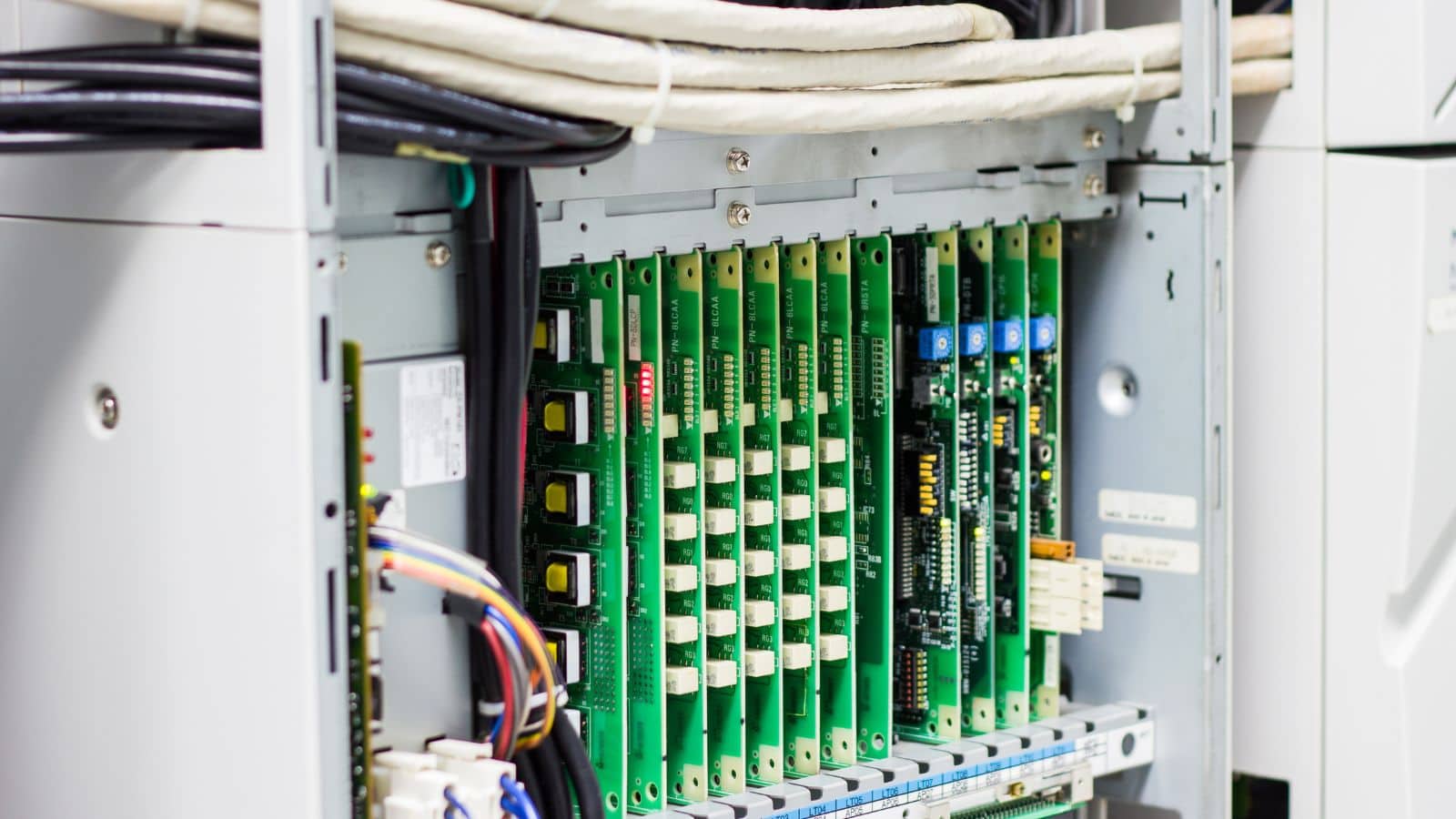
Core Assets Within an Industrial Communication System
An industrial communication system typically includes multiple hardware and software layers that all require attention.
Core assets to document and maintain include:
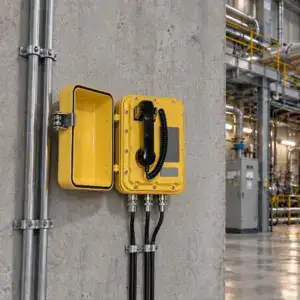
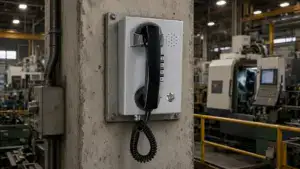
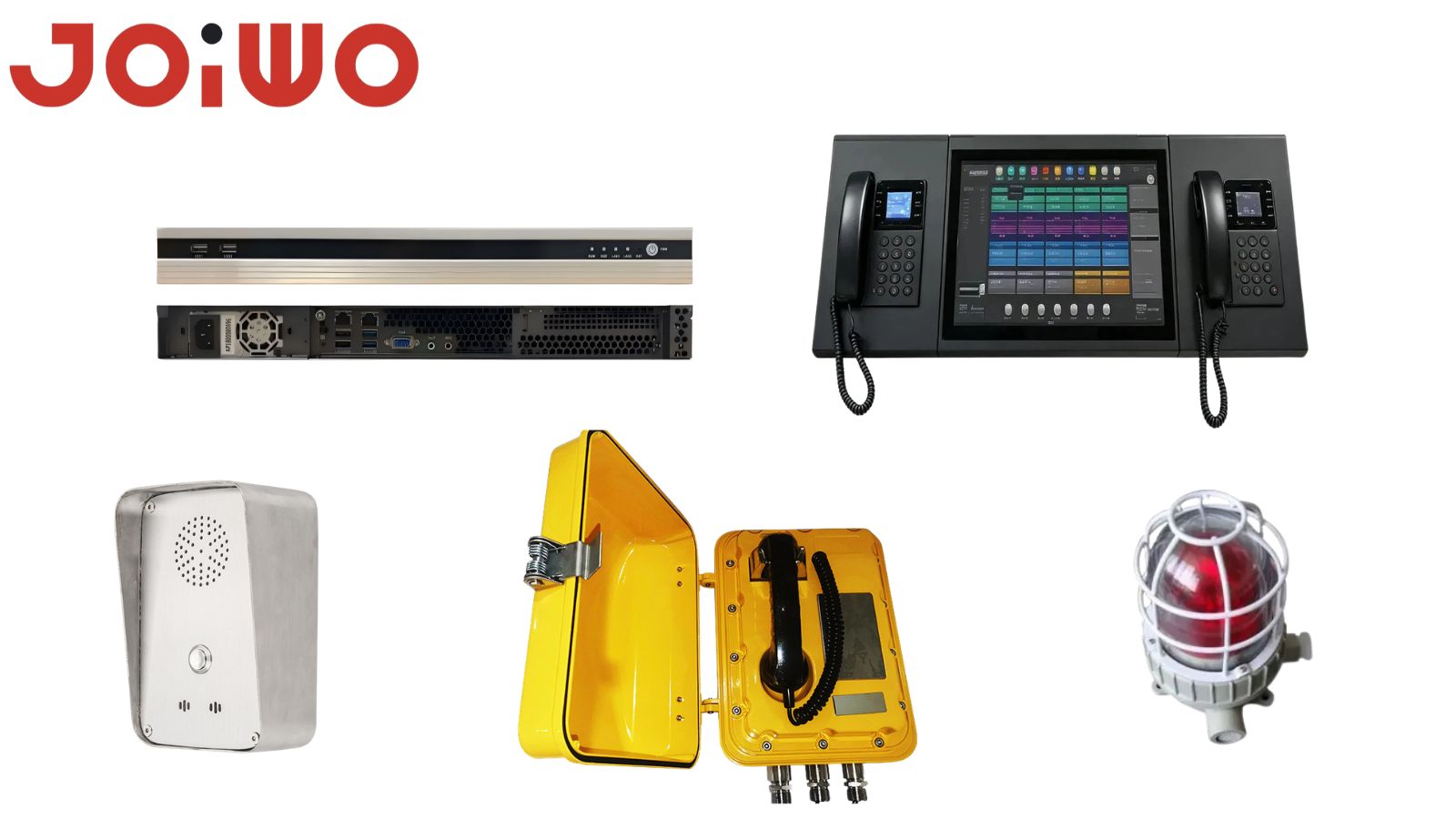
- Rugged Endpoints: Weatherproof, vandal-resistant, and explosion-proof VoIP telephones (ATEX/IECEx certified) deployed in hazardous areas.
- Backend Infrastructure: The IP PBX servers, network switches, and gateways that manage emergency call routing.
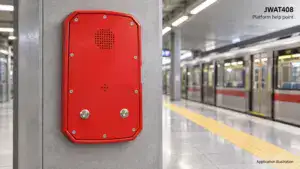
- Audio & Visual Alerting: Public Address (PA) speakers, broadcasting horns, flashing beacons, and acoustic hoods used in high-noise environments.
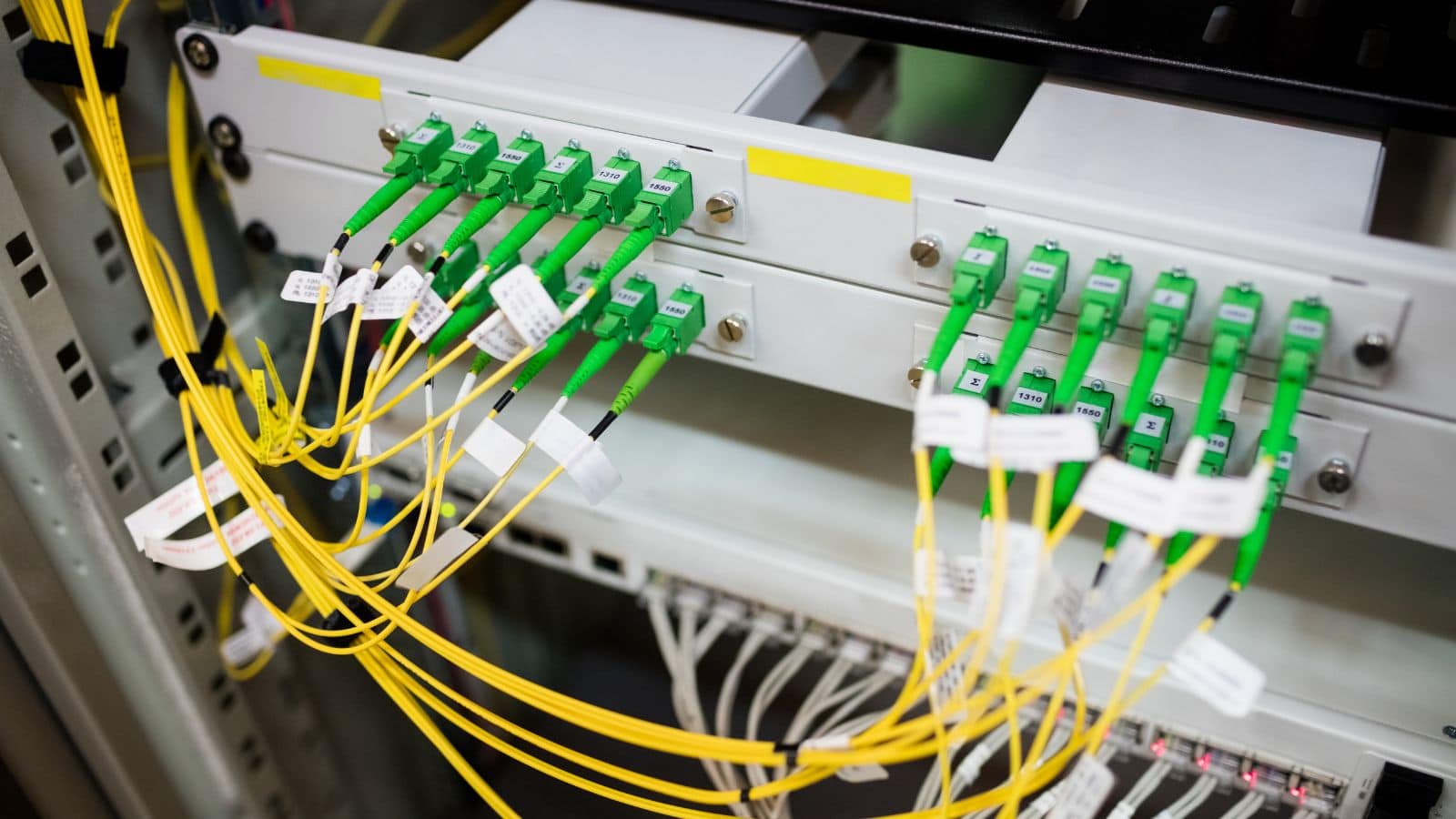
- Power & Cabling: Armored communication cables, junction boxes, and Uninterruptible Power Supplies (UPS) ensuring uptime during power outages.
Each asset class has its own maintenance frequency, failure mode profile, and documentation requirement. A business telephone system in a climate-controlled office and an explosion-proof industrial telephone mounted on an offshore rig require fundamentally different maintenance approaches.
Critical Failure Points In Harsh Environments
Harsh industrial environments constantly attack communication equipment. However, failure points can be identified during inspection once a team understands where environmental stress concentrates.
The most common failure points include:
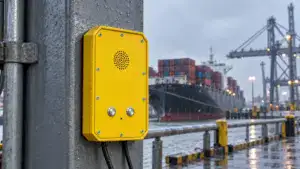
- Moisture & Dust Ingress: Degraded rubber gaskets or poorly sealed cable glands allowing water, steam, or conductive dust to short-circuit internal electronics.
- Chemical Corrosion & Wear: Constant exposure to chemical vapors, salt spray, or extreme UV radiation breaking down enclosures, keypads, and handset cords.
- Vibration & Thermal Stress: Heavy machinery vibrations loosening internal terminal blocks and physical connections, or extreme temperature fluctuations causing component failure.
How Maintenance Goals Differ Between Emergency And Routine Communications
Emergency voice communications, fire fighter telephone circuits, and public safety intercom systems carry a different maintenance obligation than routine business phone systems. Emergency circuits must be ready to operate on demand, often after extended idle periods, and must comply with relevant safety codes and facility regulations.
Routine telephone circuits tolerate short outages with modest impact. Emergency communication systems do not. Maintenance schedules, test frequencies, and spare parts holdings should reflect this distinction clearly. Emergency circuits typically require more frequent functional testing, tighter response time targets for fault repair, and formal documentation of every test and result.
Checklist for Industrial Telephone System Maintenance & Inspection
This streamlined 6-step checklist ensures your facility’s emergency telephones and PA systems are always ready for action.
1. Physical Integrity & Enclosure Seals
Inspect housings for physical damage, chemical corrosion, or signs of tampering. Pay special attention to gaskets and cable glands—small seal failures are a common root cause of moisture and conductive dust ingress.
2. Stations, Handsets, Cords & Keypads
During site walks, check each field station (including your emergency phone and intercom stations) for cracked handset shells, loose hook-switches, and keypad buttons that stick or fail to register.
Confirm that the weatherproof telephone rating remains intact if the location requires an ingress-protected unit. For hazardous-area units, look closely for cord wear, as these often escalate into intermittent audio faults.
3. Cable, Grounding & Entry Points
Verify cable gland tightness, connector condition, and grounding/bonding integrity at terminal points. Track cable wear by zone over time so you can identify deterioration trends before they become failures.
4. Emergency Call & Audio Clarity Testing
Initiate test calls to the control room to confirm correct routing, stable two-way audio, and intelligibility under real background noise. If PA/broadcast is part of the system, verify message clarity at the far end of each zone.
5. Alert Coverage (Audio + Visual)
Trigger PA horns and beacons and confirm coverage in high-noise, low-visibility, or complex areas (tunnels, offshore decks, underground spaces). Ensure there are no dead zones where staff cannot reliably hear or see an alarm.
6. Power, Backend Registration & Basic System Health
Confirm power/UPS status, PoE delivery, and that IP endpoints are actively registered (no silent drop-offs). Where cleaning is part of the maintenance window, follow equipment-appropriate sealing practices—especially for harsh sites that use rugged models like the industrial weatherproof telephone for construction communications. Also keep acoustic paths clear by cleaning grilles and ports on hygiene-sensitive stations such as cleanroom intercom systems.
Remote Monitoring, Diagnostics, and Software Control
Remote monitoring helps industrial communication systems move from reactive repairs to proactive uptime management—especially across large, distributed sites where frequent walkdowns are costly and slow.
Use centralized monitoring to track alarms and performance trends (such as power issues, network link faults, dropped registrations, or degraded audio quality) so maintenance teams can identify problems early and prioritize the most critical circuits.
To support fast recovery after failures, keep IP PBX and managed switch configurations backed up and restorable, and maintain disciplined software/firmware hygiene: review vendor releases, schedule updates during maintenance windows, and apply basic cybersecurity practices, such as removing default credentials and disabling unused services.
In short, remote visibility plus controlled configuration and updates reduces surprise outages and shortens time-to-repair when incidents occur.
Repair Response, Lifecycle Planning, and Service Support
When faults occur, repair response must be structured, not improvised, and lifecycle planning must account for the full service life of industrial communication equipment rather than managing faults reactively from year to year.
How To Triage Faults And Reduce Downtime
Effective fault triage starts with a clear classification system that assigns every reported fault to a priority tier. Here is a workable triage approach:
- Priority 1 (immediate response): Any fault affecting emergency telephones, fire fighter communication circuits, or safety-critical intercom stations in an active hazardous area
- Priority 2 (same shift): PA broadcast faults affecting a populated zone, single points of failure on a critical network segment, or power supply faults leaving field devices on battery only
- Priority 3 (next business day): Routine telephone faults in non-safety-critical areas where alternate communication is available
- Priority 4 (scheduled): Minor aesthetic damage, single speaker faults in zones with adequate coverage remaining, or non-critical configuration changes
Each priority tier should have a defined response time target, a named responsible technician or team, and an escalation path if the target is not met. Documenting fault events, response times, and repair outcomes builds the operational data needed for lifecycle planning.
When To Repair, Refurbish, Replace, or Upgrade
Damage to business phone systems and industrial telephones cannot always be avoided, and the repair-or-replace decision has real cost and availability implications and should be treated properly.
| Condition | Recommended Action |
|---|---|
| Minor physical damage, electronics intact | Repair and return to service |
| Enclosure integrity compromised but electronics serviceable | Refurbish with new enclosure components |
| PCB failure on equipment under warranty | Claim warranty repair or replacement |
| Equipment approaching end of certified service life | Plan replacement, pre-position spares |
| Technology obsolescence affecting integration | Evaluate upgrade to current IP platform |
| Explosion-proof certification expired or inapplicable | Replace immediately; do not return to service in hazardous area |
Refurbishment is a legitimate option for expensive industrial telephone enclosures and housings where the structural components are sound but internal components have failed.
Many manufacturers and integrators offer refurbishment services that restore full functionality at lower cost than new unit procurement.
Working With OEM, ODM, And After-Sales Support Partners
A reliable after-sales support relationship reduces the operational risk that comes with maintaining industrial telephone systems. OEM and ODM partners that manufactured the original equipment are typically the best for supplying compatible replacement parts, providing technical guidance on field repairs, and delivering firmware or configuration support.
When evaluating or structuring a support relationship, maintenance supervisors should confirm:
- Parts availability and lead times for high-wear components such as handsets, gaskets, keypads, and power supply modules
- Warranty terms covering defects in materials and workmanship, and the process for submitting a warranty claim or return for repair
- Remote technical support availability for configuration issues, firmware questions, and fault diagnosis
- On-site support capability for systems requiring physical intervention beyond what the facility’s internal team can provide
For facilities managing systems across multiple harsh-environment sites, having a direct relationship with the manufacturer and integrator simplifies both routine support and emergency fault response considerably.
Confirming these support terms before procurement, and revisiting them at each annual audit, keeps the maintenance program grounded in realistic expectations about what happens when equipment fails in the field.
Choose Joiwo for Hassle-Free Industrial Phone System Maintenance
Joiwo is both a manufacturer and a telecom integrator; we provide a full range of after-sales services that include:
- 2-year standard warranty on Joiwo industrial telephone products
- Lifetime remote technical support via email, video call, or phone—so your team can restore service faster without waiting for on-site visits
- Structured return & repair process for confirmed hardware defects, with clear fault verification and turnaround handling
If you want a maintenance plan that’s easier to execute—and a support partner that stays with you after commissioning—contact Joiwo to discuss your site environment and system requirements.