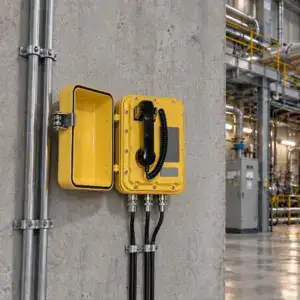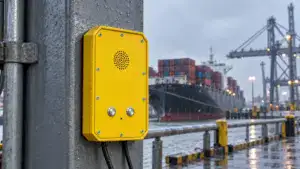
Large industrial plants operate as complex communication environments. A well-designed industrial communication system ties together voice, data, and safety signaling across every zone of a facility reliably under heat, dust, vibration, electromagnetic interference, and hazardous atmosphere classifications.
Plant engineers and system integrators increasingly treat industrial communication as infrastructure, not an afterthought. In this blog, we will discuss how an industrial communication system is designed for emergency response, process control, and daily operations.
What a Plant-Wide Industrial Communication Network Includes
A plant-wide industrial communication system combines several distinct subsystems, each handling a specific function, into one coordinated architecture. The integration of IP PBX telephony, fiber optic backbone, public address, and field devices through a common network infrastructure is what separates a functional system from a patchwork of isolated tools.
Industrial Telephones and Emergency Call Points
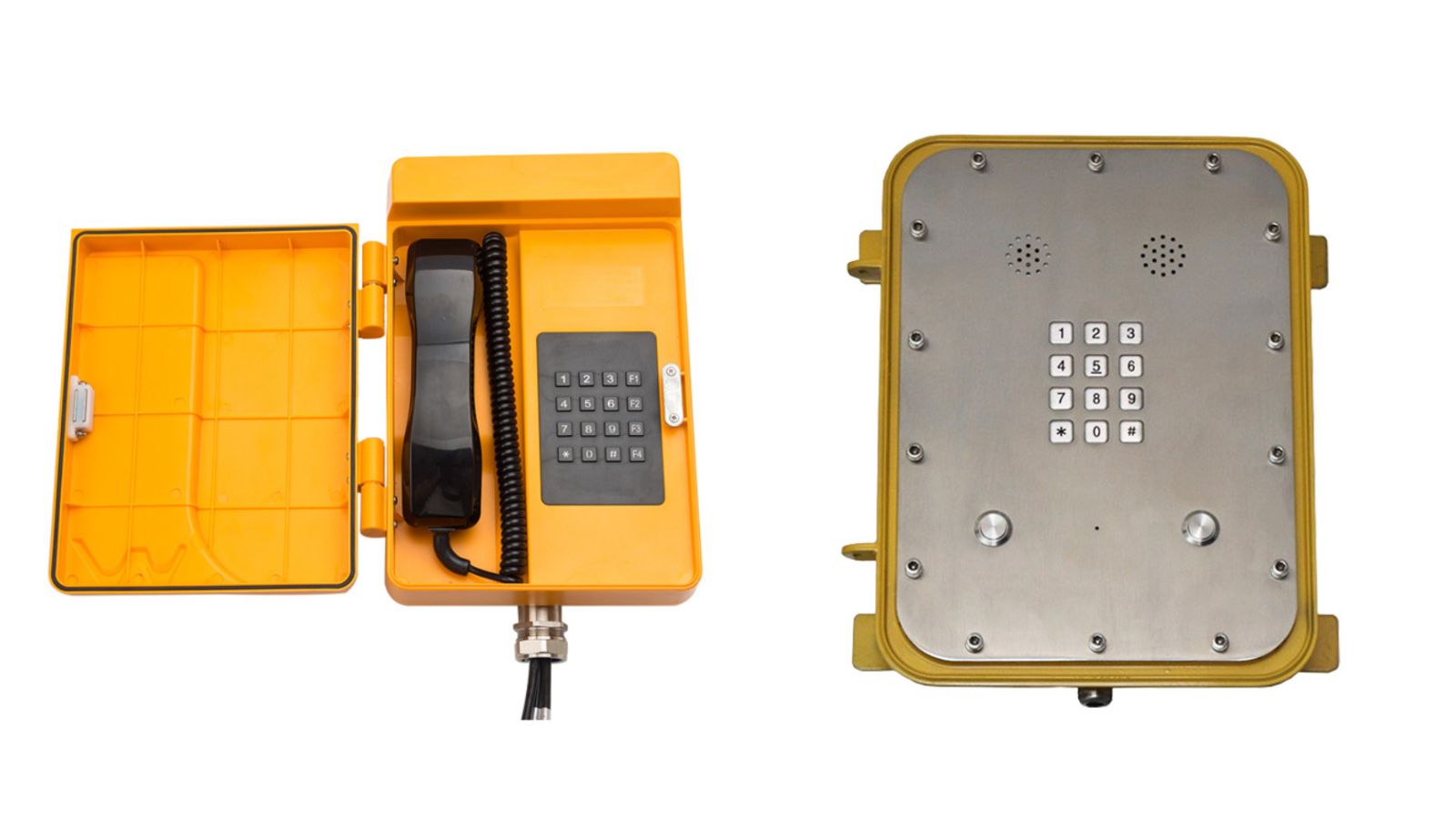
Industrial telephones serve as the primary point-to-point voice layer at the field level. In hazardous zones, explosion-proof telephones with heavy-duty housings are required to meet ATEX, IECEx, or CNEX classifications, depending on the jurisdiction.
Emergency call points are distinct from general-purpose telephones. They are typically single-function devices that connect directly to a control room or dispatch station when activated, requiring minimal user interaction under stress.
- Placement: direct sightlines and high-visibility marking
- Noisy areas: acoustic hoods to improve usability
- Purpose: simple, quick activation when time matters
A communications port at each device location allows field technicians to connect test equipment or swap out handsets without dismantling the housing. Ruggedized housings rated to IP66 or higher are standard for outdoor and underground installations.
Public Address, Broadcasting, And Speakers
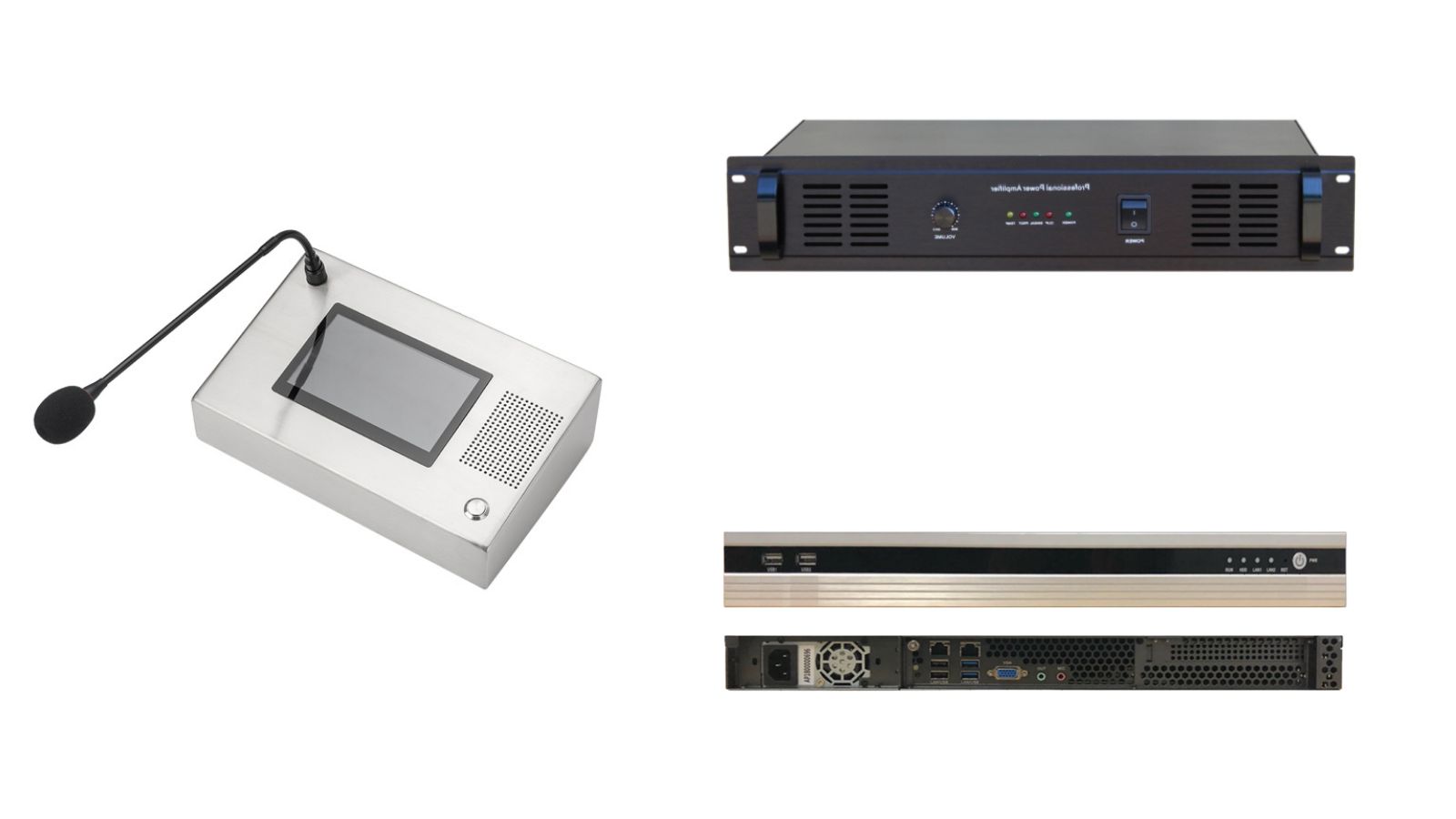
A public address system carries broadcast audio across process areas, warehouses, and open yards. In large manufacturing plants, the system includes both general paging and emergency voice evacuation functions, which are often required to meet life-safety codes.
Zoned amplifier racks allow operators to direct announcements to specific plant areas rather than broadcasting plant-wide for every message.
- Dedicated amplifier circuits for emergency paths
- Battery backup to remain operational during power disturbances
- Supervision signaling to alert operators to speaker line faults
IP PBX, Dispatch, and Control Room Integration
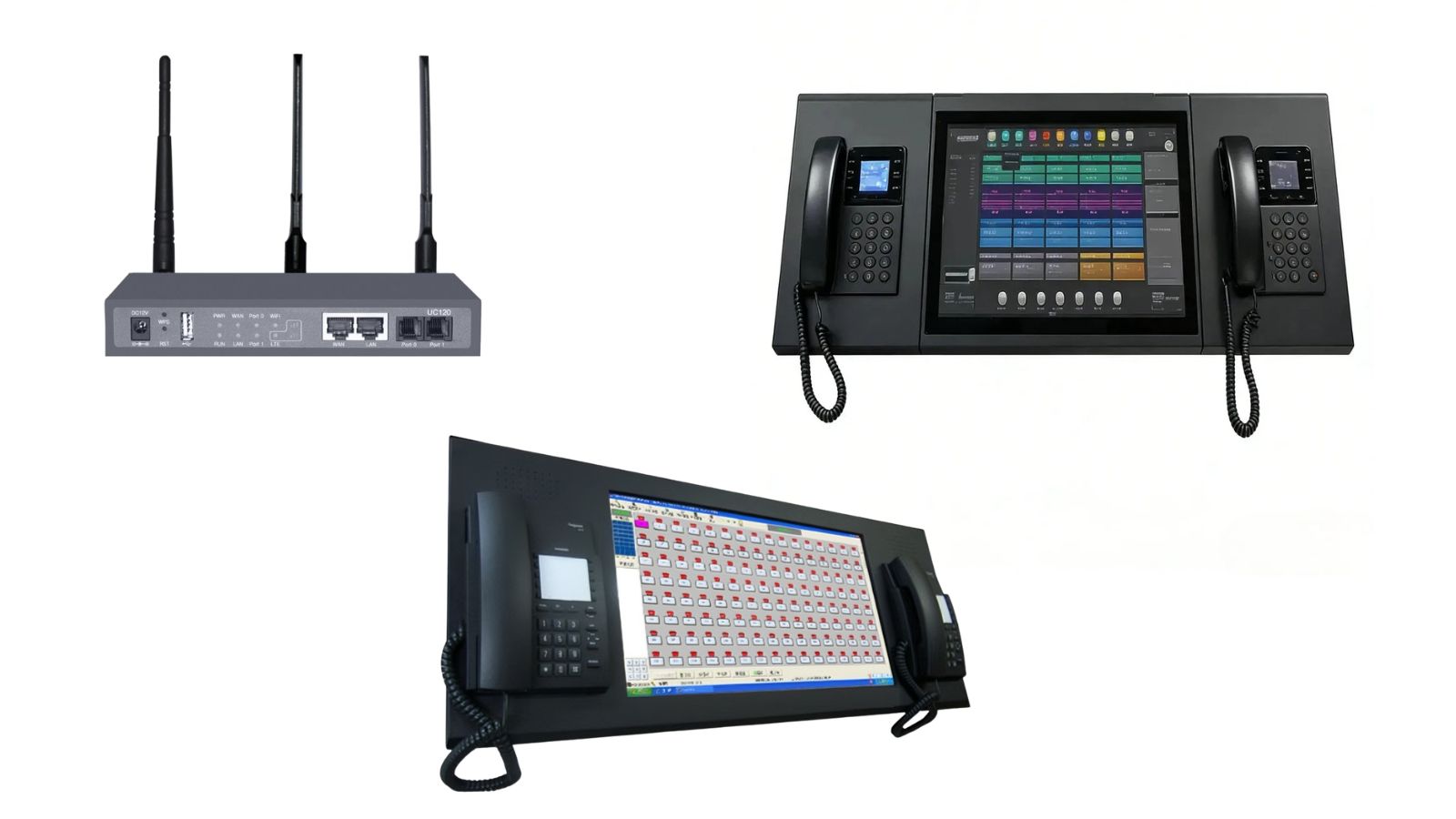
An IP PBX serves as the telephony switching core, routing calls between field stations, control rooms, administration buildings, and external lines. Modern IP PBX platforms support SIP trunking, which allows integration with corporate phone systems and remote dispatch centers over a standard TCP/IP network.
The dispatch console in a control room aggregates incoming calls from field telephones and emergency call points, giving operators a single interface for voice coordination. Integration with SCADA and process control systems allows call activity to be logged alongside process events, which is valuable for incident investigation.
A gateway device handles protocol translation between legacy analog or digital telephone circuits and the IP network. This is especially relevant for retrofit projects where existing copper infrastructure is being gradually replaced.
Fiber Optic Backbone and Edge Devices
Fiber optic cabling forms the backbone of most large manufacturing plants communication networks. It supports long cable runs without signal degradation, is immune to electromagnetic interference from motors and transformers, and can carry both voice and data traffic on a single physical infrastructure.
- Distance: supports long runs without signal degradation
- EMI immunity: stable performance near motors, transformers, and switchgear
- Consolidation: carries voice and data over one physical backbone
Edge devices such as managed switches and media converters terminate the fiber backbone and provide copper Ethernet connections to local field equipment clusters. A router at each major plant section manages traffic between network segments. In underground or remote areas, fiber extends the reach of the system where copper would be limited by distance or EMI.
Fiber optic cabling eliminates the distance and EMI limitations of copper. Both types (Single-mode/Multimode) are immune to electromagnetic interference, making fiber the preferred medium in heavy motor loads or high-voltage areas.
How The Architecture Is Organized
Plant communication architecture follows a layered model that separates field-level devices from process control systems and enterprise networks. The specific arrangement of those layers, and how traffic flows between them, determines latency, reliability, and maintainability across the lifecycle.
Core, Distribution, and Edge Network Layers
Voice, Data, and Safety Signal Paths
Voice traffic, process data, and safety signals should travel on logically separate paths even when sharing the same physical infrastructure. This separation is achieved through VLAN tagging and traffic prioritization rules enforced at the managed switch level.
In some designs, safety-critical voice circuits are kept on physically separate cabling entirely, particularly in facilities where functional safety standards such as IEC 61508 apply.
Design Factors For Harsh And High-Risk Environments
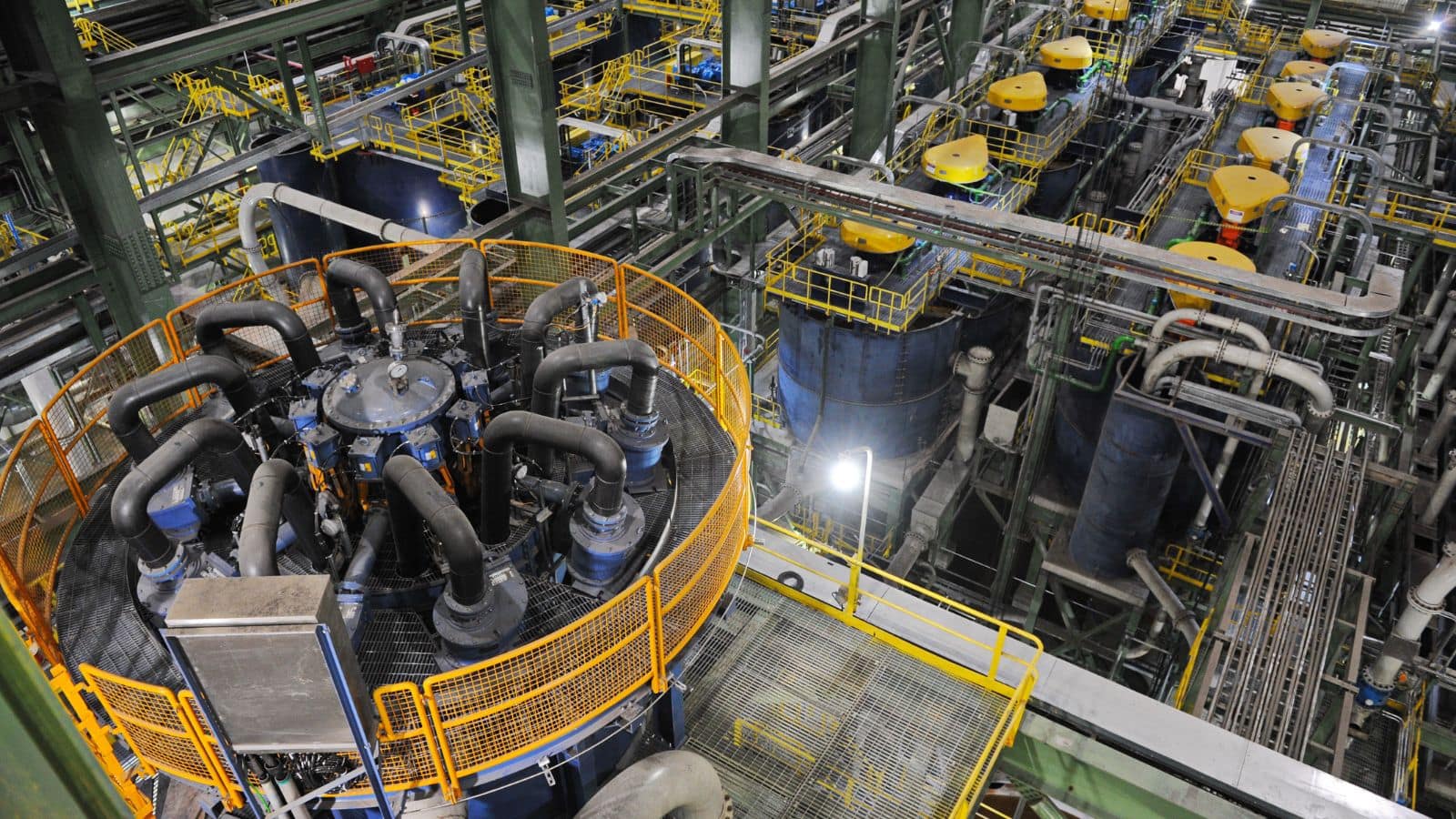
Building a communication system that performs reliably under industrial conditions requires going beyond standard commercial network design. Real-time communication in high-noise, high-temperature, or classified hazardous areas places specific demands on every layer of the architecture.
Coverage, Zoning, And Intelligibility In Noisy Areas
Achieving adequate coverage in a large manufacturing plant starts with a noise survey. Ambient sound pressure levels in process areas often exceed 85 dB, which renders standard speaker output levels inadequate. Horn speakers or high-output line array speakers are typically required in compressor halls, turbine buildings, and open process decks.
- Run a noise survey to identify areas where standard output is insufficient.
- Select speaker types (e.g., horn or high-output arrays) to match the measured conditions.
- Define zones so announcements target the right areas without unnecessary plant-wide broadcasting.
- Validate intelligibility using the STI (Speech Transmission Index) metric.
- Monitor continuously using supervision signaling to detect faults at the circuit level.
Real-time monitoring of speaker line integrity and amplifier status allows operators to identify coverage faults before they become a safety gap. Supervision signaling at the amplifier rack provides fault detection down to the individual speaker circuit level.
Ingress Protection, Hazardous Areas, And Equipment Placement
Equipment placed in outdoor, underground, or wash-down areas requires an appropriate IP rating. IP65 is generally the minimum for outdoor industrial equipment; IP66 or IP67 is preferred for locations subject to water jets or temporary immersion.
- Hazardous area compliance: ATEX and IECEx define permitted equipment by gas group and temperature class.
- Correct certification: explosion-proof devices must match the classification of the zone where they are installed.
- Practical placement: plan for maintenance access, cable entry direction, and protection from vehicle impact or handling damage.
Equipment placement should consider maintenance access, cable entry direction, and the risk of physical damage from vehicles or materials handling. Telephone hoods and protective enclosures reduce exposure to water, UV, and impact in areas where full explosion-proof housing is not required.
Redundancy, Availability, And Fault Tolerance
Redundancy is a design requirement, not an optional feature, in safety-critical communication systems. The primary failure modes to address are power loss, single cable path failure, and hardware component failure.
Dual power feeds with automatic transfer, uninterruptible power supplies (UPS) for control and amplifier racks, and ring topology fiber networks are standard redundancy measures. Ring topologies using protocols such as RSTP or MRP recover from a single cable cut in under 50 milliseconds, which is imperceptible during a voice call.
Critical nodes such as the IP PBX server, dispatch console, and PA system controller should be deployed in redundant pairs with automatic failover. Documenting the recovery time objective (RTO) for each subsystem during the design phase ensures that redundancy measures are matched to operational requirements.
Managed industrial Ethernet switches are rated for extended temperature ranges, support redundancy protocols such as RSTP or MRP, and can be configured for VLAN segmentation.
Choose Joiwo for Your One-Stop Industrial Communication System Solutions
Ningbo Joiwo is a specialized manufacturer and solution provider, supporting projects from design and integration to installation and maintenance, with a comprehensive product catalog including industrial telephones, video intercoms, public broadcasting / emergency communications, fiber optic communication systems, and related IT/networking products.
If you’d like help scoping the right architecture for your site, you can start by sending an inquiry to Joiwo’s engineering teams and share your project basics.
Frequently Asked Question
How does an industrial communication system connect to the automation system (PLCs, sensors, and actuators)?
In most plants, field devices such as sensors and actuators connect to programmable logic controllers (PLCs) at the control level, and the PLCs then exchange status and alarms with a control system (such as SCADA or a distributed control platform).
The communication layer that links these zones is typically an industrial communication network designed for real-time priorities, so critical alarms and operator actions are delivered predictably even when routine traffic increases.
This is where good segmentation and traffic engineering matter most, because they protect control traffic while still enabling integration and visibility.
Which communication protocols are commonly used, and when would you use a gateway?
Plants rarely use a single standard end-to-end. It’s common to see legacy fieldbus systems (for example PROFIBUS) operating alongside modern industrial ethernet protocols such as PROFINET or EtherCAT, while higher-level data sharing is increasingly done via OPC UA for secure data exchange.
When older devices cannot speak the same interface as the IP network, a gateway is typically used to bridge different communication protocols and keep modernization incremental rather than disruptive.
How do Industry 4.0 and IIoT change network requirements?
As Industry 4.0 initiatives expand, plants add more monitoring points and push more data into analytics platforms for predictive maintenance and smart manufacturing. This trend—often described as the industrial internet of things (IIoT)—increases overall data volumes and makes data transmission patterns more bursty.
The practical design goal is to preserve high availability and deterministic behavior for control and safety traffic, while still supporting scalable connectivity for new data-driven applications.