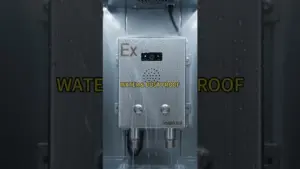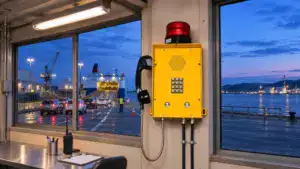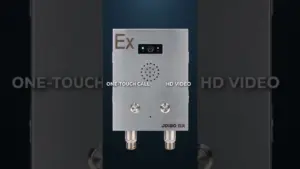
Reliable power plant communication connects field observations to the people responsible for operating and maintaining the asset. The design needs usable speech, recognizable call locations and a supported route between equipment areas and the control center. Buyers should specify those tasks alongside environmental exposure, electrical interfaces and maintenance access before choosing industrial communication equipment.
Start with operating and maintenance tasks
Map the work that creates a need to communicate. Routine inspection, equipment testing, maintenance coordination and reporting an abnormal condition can involve different teams. Identify who initiates each call and which position receives it. Include auxiliary buildings and remote assets where staff cannot simply approach the control room for clarification.
Power plants and substations have different operating arrangements. A continuously staffed generating station may have several departments on site, while a substation may receive periodic maintenance visits. Document those differences in the station schedule. The same telephone hardware can require different routing, instructions and support arrangements depending on the people available to answer.
Coordinate communication planning with the asset owner’s operating rules. A telephone can support a conversation, while switching authority, isolation, work permits and protection functions remain governed by their own procedures. Keep that boundary clear in the tender. Any integration with operational systems needs a defined scope and review by the responsible specialists.
Match field equipment to its location
Describe the actual installation environment for each power station industrial telephone. Relevant conditions may include indoor noise, outdoor weather, dust, condensation or local temperature exposure. Record whether the station is sheltered and how it will be cleaned. Specify mounting access and the work required to maintain the installation throughout its service life.
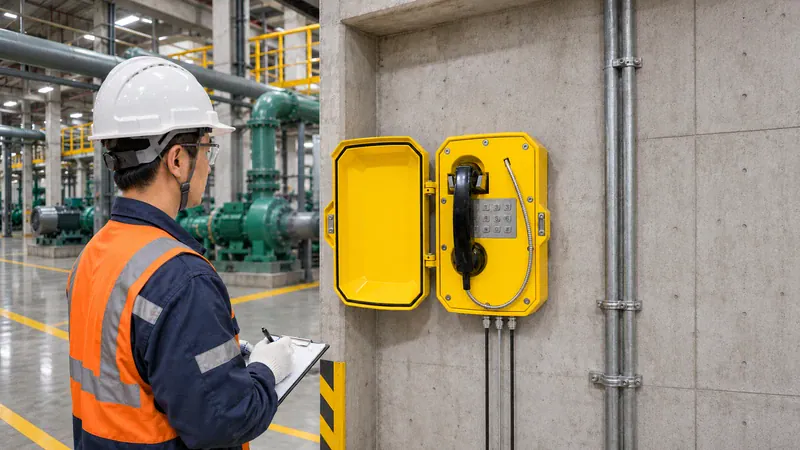
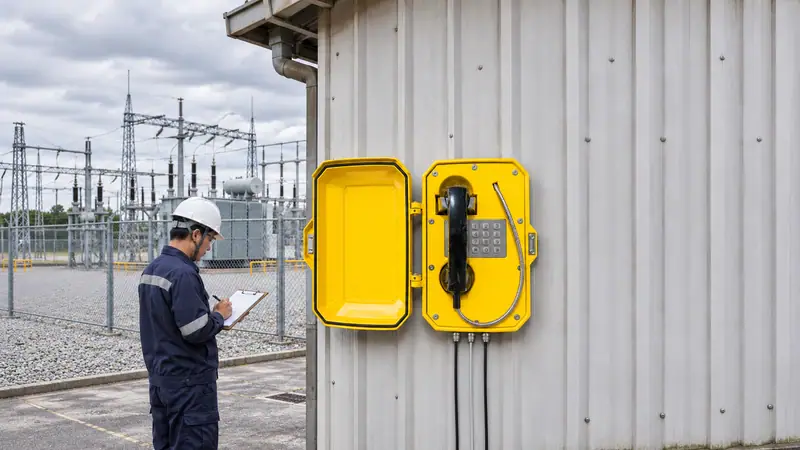
Joiwo’s Industrial Weatherproof Wall Speaker Phone JWAT306-K provides a protective door and handset interface. Assess the supplied assembly for an auxiliary service location, with the exact interface and accessories confirmed by the supplier. Verify audio performance and installation requirements against the intended site conditions.
Separate call indication and conversation
A loud area creates two questions: can workers recognize an incoming call, and can they understand the subsequent conversation? Test these separately. Use representative operating noise and normal protective equipment. The receiving operator’s ability to understand equipment tags and locations is as important as the field user’s ability to hear instructions.
If a horn or visual indicator is included, define its behavior and purpose. Check coverage, sight lines where relevant and interaction with other site signals. Ask the supplier to identify required interfaces and power supplies. Agree acceptable settings through the site’s noise and operating procedures instead of selecting the highest available output by default.
Define the substation communication system
A substation communication system may support operational telephony alongside separate protection, control and data networks. Establish ownership and boundaries before connecting new endpoints. Identify which existing infrastructure can be used, which interfaces are permitted and which changes need approval. The communication design should remain understandable to both operations and the supporting technical teams.
Record physical routes between call points, local cabinets and the receiving position. Consider access constraints, planned construction and the consequences of damage to a shared route. Confirm the environmental limits of intermediate switches, line interfaces and power equipment. A protected telephone offers limited benefit if another component in its call path is unsuitable for the location.
Review electrical interference and bonding
Have the project’s electrical and communication specialists assess cable separation, earthing, bonding and surge protection. Copper connections between different parts of an electrical facility require attention to the site’s electrical design. Evaluate fiber links where appropriate, while recognizing that endpoint equipment still needs suitable local power and installation arrangements.
Avoid adopting one universal routing rule for every facility. The responsible engineers need the actual cable type, route, interfaces and electrical conditions. Ask bidders to show their assumptions and the documents governing installation. Include the selected arrangement in the commissioning records so future maintenance changes preserve the intended design.
Give the control center a usable interface
Receiving operators need a practical way to identify calls, contact field stations and pass information to the appropriate team. Define the location names and call groups they use during daily work. Review the number of destinations and how frequently staff need them. A clear directory and consistent naming convention reduce unnecessary searching during a busy operating period.
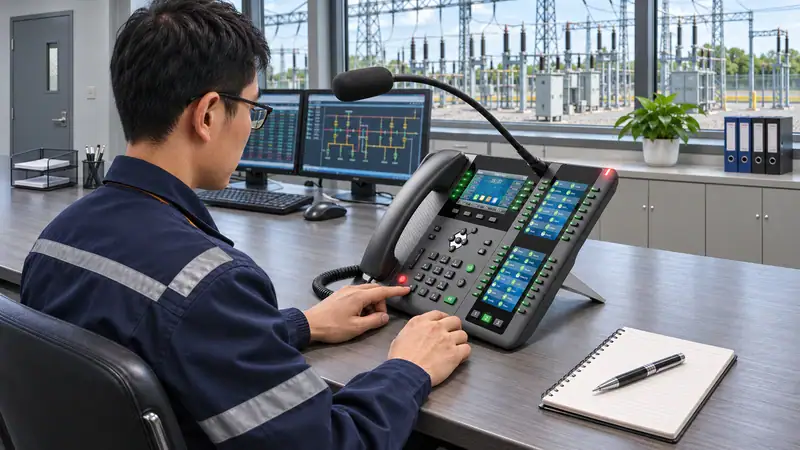
The Visualization Paging Console Phone JWDTB16 provides a desktop SIP console with programmable keys and a gooseneck microphone. Evaluate it on the proposed platform using the required calling tasks. If field stations use analog interfaces, include the exchange or gateway in the test. Paging and other functions depend on the complete configured system.
Confirm receiving responsibilities
Agree which team answers each type of call and what happens when the first destination is busy. Include maintenance visits outside normal staffing hours. Test any transfer, group calling or escalation function required by the scope. The final configuration should reflect an approved operating arrangement, with a named owner responsible for future changes.
Use station names aligned with asset records and work orders. A receiving operator should recognize the building, equipment area or substation from the available call information. Check the actual display behavior with the chosen host and endpoint. Document any limitation that requires the caller to provide additional location information verbally.
Support inspections and fault reporting
Field calls often carry detailed observations that need to be understood accurately. Use realistic equipment identifiers and short reports in audio trials. Ask both participants to repeat the important information. Include the expected protective equipment, speaking position and local machinery conditions. Keep the tested settings available for installation and future troubleshooting.
At a sheltered substation service building, the JWAT306-K can illustrate a fixed contact point for visiting maintenance staff. Locate it where users can communicate from an approved safe area. Review the door, handset cord, cable entries and approach clearance. Any station inside an electrical yard needs placement approval within the site’s access and electrical design.
For a reported equipment fault, define who receives the observation and who decides the next action. The communication system should support the approved reporting procedure. It should not introduce informal authorization paths for switching or isolation. Include communication availability and alternatives in work planning whenever personnel depend on a remote receiving team.
Trace power and network dependencies
Decide which communication functions require availability during a supply interruption and for how long, based on the project assessment. Trace every component in the path: telephone, access equipment, backbone, host and receiving position. Include the load and backup arrangements of any gateway or local switch rather than focusing only on the central server.
Ask suppliers to explain proposed redundancy in terms of specific failures. Two hosts may share a cabinet, power source or cable route. Document what remains available after each agreed interruption scenario and how the system returns to normal. Verify recovery behavior using test methods approved by plant operations and the technical owners.
Fault reporting needs a recipient and a restoration process. Establish how an unavailable station or host is detected, who investigates and how operations is informed. Where remote monitoring is proposed, confirm it on the actual configuration. Keep instructions for planned outages and alternative contact methods accessible to visiting maintenance teams.
Purchase equipment that can be maintained
Request spare part availability, replacement instructions and training for the selected equipment. Review access to enclosures and the time required to restore a configured endpoint. Ask how the correct location name and destination are re-established after replacement. Consider support responsibilities across the communication supplier, site IT team and electrical maintenance contractor.
Give bidders a common schedule covering locations, environment, interface, call behavior, mounting accessories and documentation. Require explicit deviations. Include factory configuration, site commissioning and handover in the commercial scope. This makes the comparison reflect the work needed to deliver useful communication rather than the price of disconnected components.
Acceptance should follow the field user’s task through to a staffed receiving position. Verify speech, location recognition, unanswered-call handling and the agreed recovery scenarios. Record final software versions, configuration backups and drawings. A complete handover allows the asset owner to maintain a predictable communication service as staffing and infrastructure evolve.
Include an agreed process for later changes to receiving positions and station names. A new maintenance contractor or revised staffing arrangement can make an old destination unsuitable even when the hardware remains functional. Require authorization, a configuration record and a verified test call for each update. Keep the current directory available to visiting teams and remove superseded instructions. This helps the asset owner preserve the operating logic established during commissioning.
Contact Us to discuss your power plant and substation communication requirements and Request a Quote for suitable industrial telephones and supporting equipment.