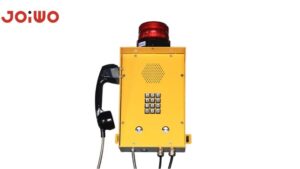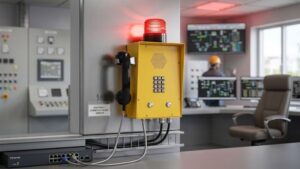
Las grandes plantas industriales funcionan como entornos de comunicación complejos. Un sistema de comunicación industrial conecta de forma fiable la voz, los datos y las señales de seguridad en todas las zonas de una instalación, incluso con calor, polvo, vibraciones, interferencias electromagnéticas y clasificaciones de atmósferas peligrosas.
Los ingenieros de planta y los integradores de sistemas consideran cada vez más las comunicaciones industriales como una infraestructura esencial. En este artículo explicamos cómo se diseña un sistema de comunicación industrial para la respuesta ante emergencias, el control de procesos y las operaciones diarias.
Qué incluye una red de comunicación industrial para toda la planta
Un sistema de comunicación industrial para toda la planta combina varios subsistemas, cada uno con una función específica, en una arquitectura coordinada. La integración de la IP-PBX telefonía, una troncal de fibra óptica, la megafonía y los dispositivos de campo mediante una infraestructura de red común distingue a un sistema funcional de un conjunto descoordinado de herramientas aisladas.
Teléfonos industriales y puntos de llamada de emergencia
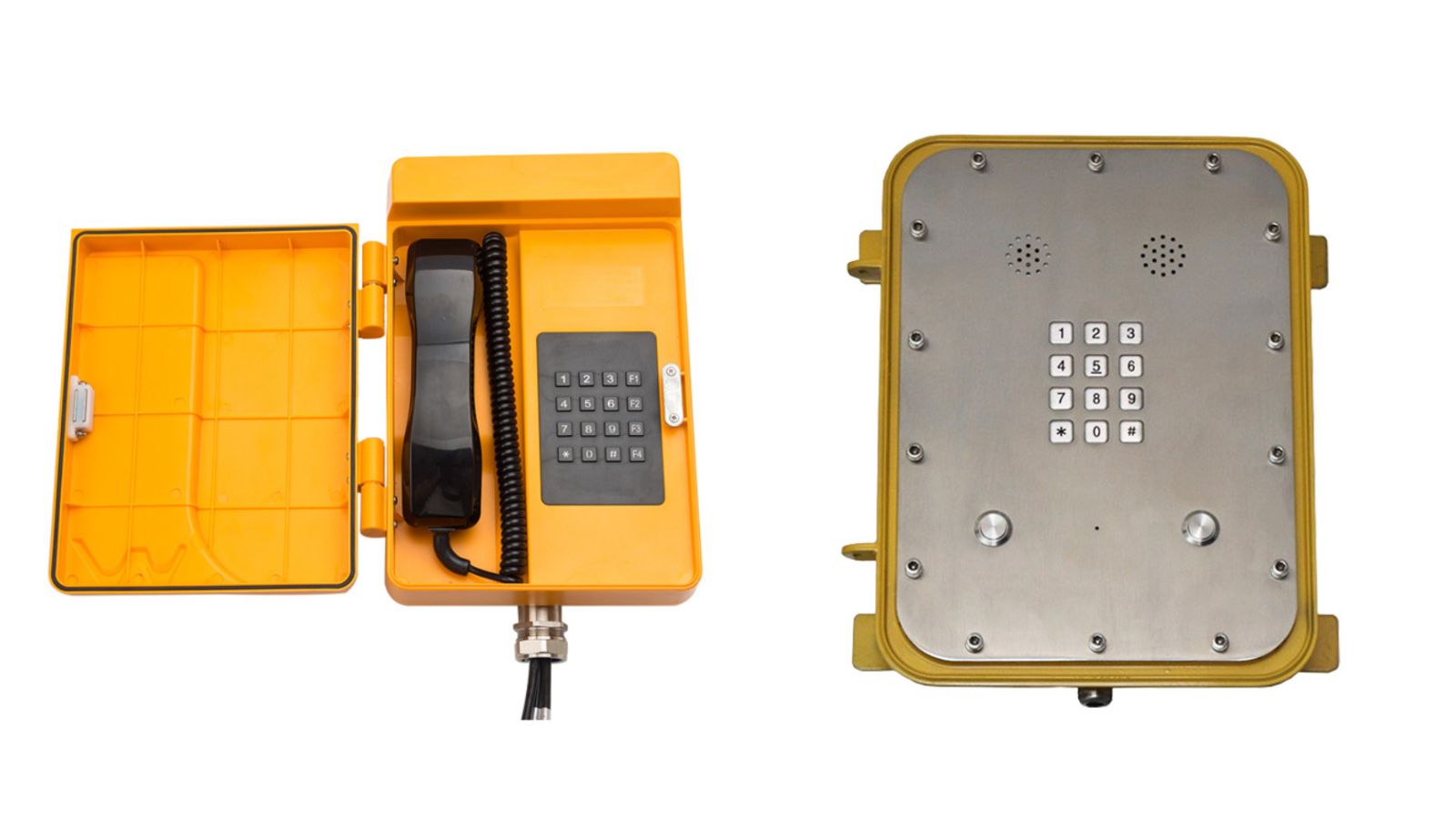
Los teléfonos industriales son la principal capa de comunicación de voz punto a punto en campo. En zonas peligrosas, se necesitan teléfonos antideflagrantes con envolventes de alta resistencia que cumplan las clasificaciones ATEX, IECEx o CNEX, según la jurisdicción.
Los puntos de llamada de emergencia son distintos de los teléfonos de uso general. Normalmente son dispositivos de una sola función que, al activarse, se conectan directamente con una sala de control o una estación de despacho y requieren una interacción mínima por parte del usuario bajo presión.
- Ubicación : líneas de visión directas y señalización muy visible
- Zonas ruidosas : capotas acústicas para facilitar el uso
- Finalidad : activación sencilla y rápida cuando cada segundo cuenta
Un puerto de comunicaciones en cada ubicación permite a los técnicos de campo conectar equipos de prueba o sustituir auriculares sin desmontar la carcasa. En instalaciones exteriores y subterráneas son habituales las envolventes reforzadas con grado IP66 o superior.
Megafonía, difusión y altavoces
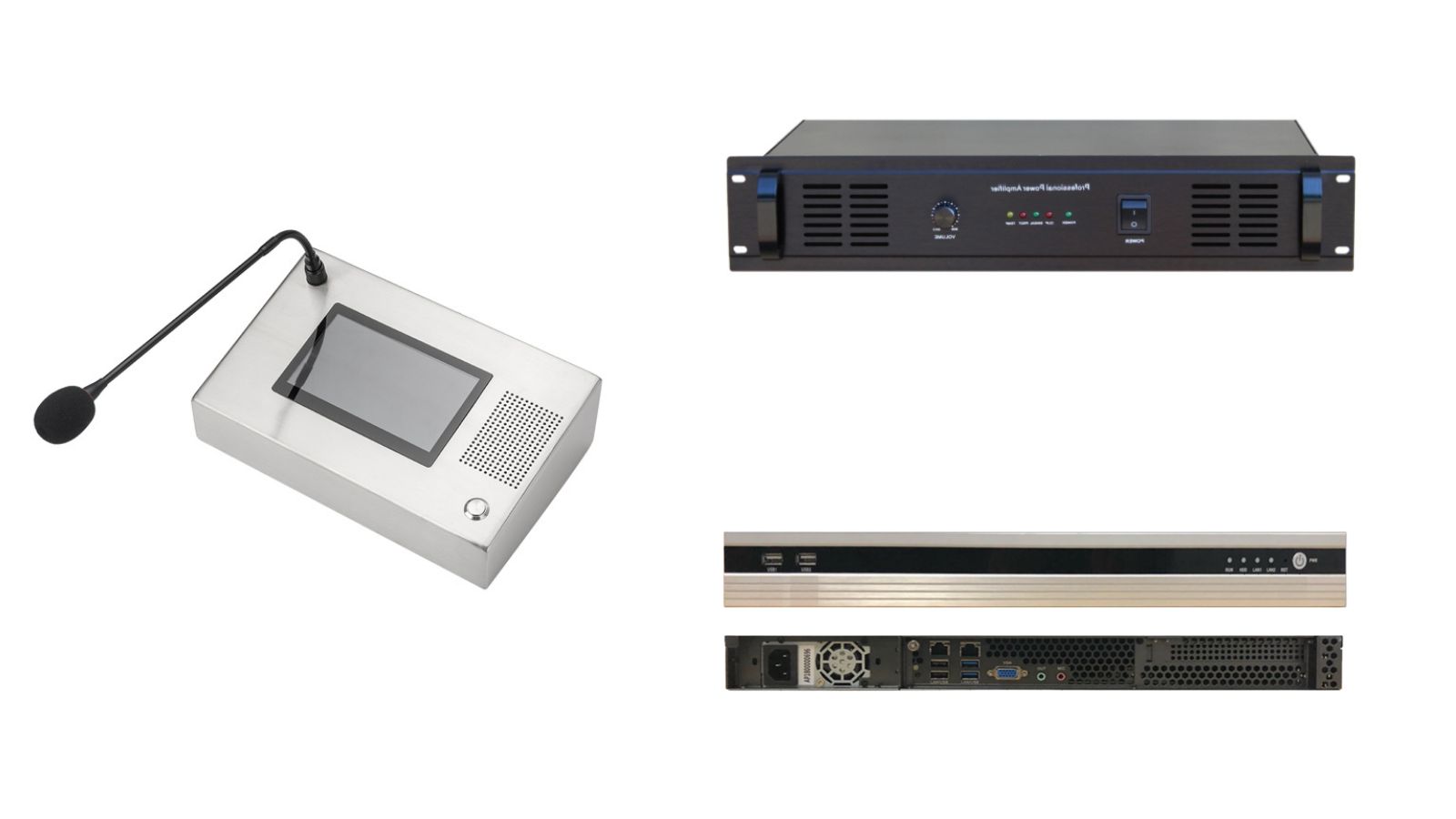
Un sistema de megafonía distribuye audio por las zonas de proceso, los almacenes y los patios exteriores. En las grandes plantas de fabricación, el sistema incluye funciones de avisos generales y de evacuación por voz en caso de emergencia, que suelen ser necesarias para cumplir los códigos de seguridad vital.
Los bastidores de amplificadores por zonas permiten dirigir los avisos a áreas concretas de la planta, en lugar de emitir todos los mensajes a toda la instalación.
- Circuitos de amplificador dedicados para rutas de emergencia
- Batería de respaldo para mantener el funcionamiento durante perturbaciones de la alimentación
- Señalización de supervisión para avisar a los operadores de fallos en las líneas de altavoces
Integración de IP-PBX, despacho y sala de control
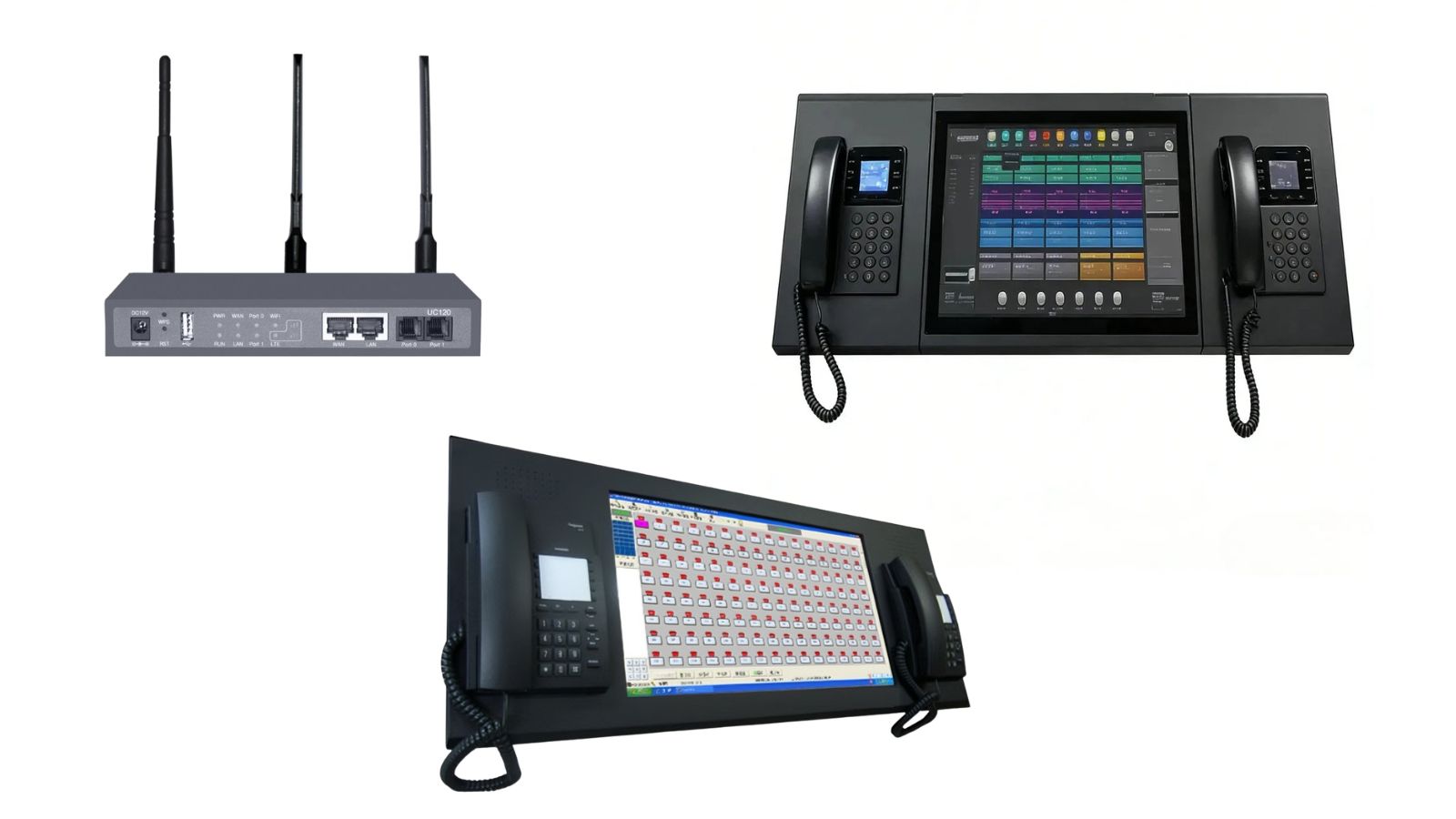
Una IP-PBX funciona como núcleo de conmutación telefónica y enruta las llamadas entre estaciones de campo, salas de control, edificios administrativos y líneas externas. Las plataformas IP-PBX modernas admiten troncales SIP, lo que permite integrarse con los sistemas telefónicos corporativos y los centros de despacho remotos a través de una red TCP/IP estándar.
La consola de despacho de una sala de control reúne las llamadas entrantes de los teléfonos de campo y de los puntos de llamada de emergencia, y ofrece a los operadores una interfaz única para coordinar las comunicaciones de voz. La integración con SCADA y los sistemas de control de procesos permite registrar la actividad de las llamadas junto con los eventos del proceso, algo útil para investigar incidentes.
Un pasarela gestiona la traducción de protocolos entre circuitos telefónicos analógicos o digitales heredados y la red IP. Esto es especialmente pertinente para proyectos de modernización en los que se sustituye gradualmente la infraestructura de cobre existente.
Troncal de fibra óptica y dispositivos de borde
El cableado de fibra óptica constituye la troncal de la mayoría de las redes de comunicación de grandes plantas de fabricación. Permite tendidos largos sin degradación de la señal, es inmune a las interferencias electromagnéticas de motores y transformadores y puede transportar voz y datos en una sola infraestructura física.
- Distancia : permite tendidos largos sin degradación de la señal
- Inmunidad a la EMI : rendimiento estable cerca de motores, transformadores y equipos de conmutación
- Consolidación : transporta voz y datos por una única troncal física
Los dispositivos de borde, como los conmutadores gestionados y los convertidores de medios, terminan la troncal de fibra y proporcionan conexiones Ethernet de cobre para los grupos locales de equipos de campo. Un router en cada sección principal de la planta gestiona el tráfico entre segmentos de red. En zonas subterráneas o remotas, la fibra amplía el alcance del sistema allí donde el cobre estaría limitado por la distancia o la EMI.
El cableado de fibra óptica elimina las limitaciones de distancia y EMI del cobre. Ambos tipos (monomodo/multimodo) son inmunes a las interferencias electromagnéticas, por lo que la fibra es el medio preferido en zonas con grandes cargas de motores o alta tensión.
Organización de la arquitectura
La arquitectura de comunicación de la planta sigue un modelo por capas que separa los dispositivos de campo de los sistemas de control de procesos y las redes empresariales. La disposición concreta de esas capas y el flujo del tráfico entre ellas determinan la latencia, la fiabilidad y la facilidad de mantenimiento durante el ciclo de vida.
Capas de núcleo, distribución y borde de la red
Rutas de voz, datos y señales de seguridad
El tráfico de voz, los datos de proceso y las señales de seguridad deben viajar por rutas lógicamente separadas, aunque compartan la misma infraestructura física. Esta separación se logra mediante etiquetas VLAN y reglas de priorización del tráfico aplicadas por los conmutadores gestionados.
En algunos diseños, los circuitos de voz críticos para la seguridad se mantienen completamente en cableado físico separado, especialmente en instalaciones donde se aplican normas de seguridad funcional como IEC 61508.
Factores de diseño para entornos adversos y de alto riesgo
Para construir un sistema de comunicación que funcione de forma fiable en condiciones industriales, hay que ir más allá del diseño de redes comerciales estándar. Las comunicaciones en tiempo real en zonas muy ruidosas, con temperaturas elevadas o clasificadas como peligrosas imponen requisitos específicos en cada capa de la arquitectura.
Cobertura, zonificación e inteligibilidad en zonas ruidosas
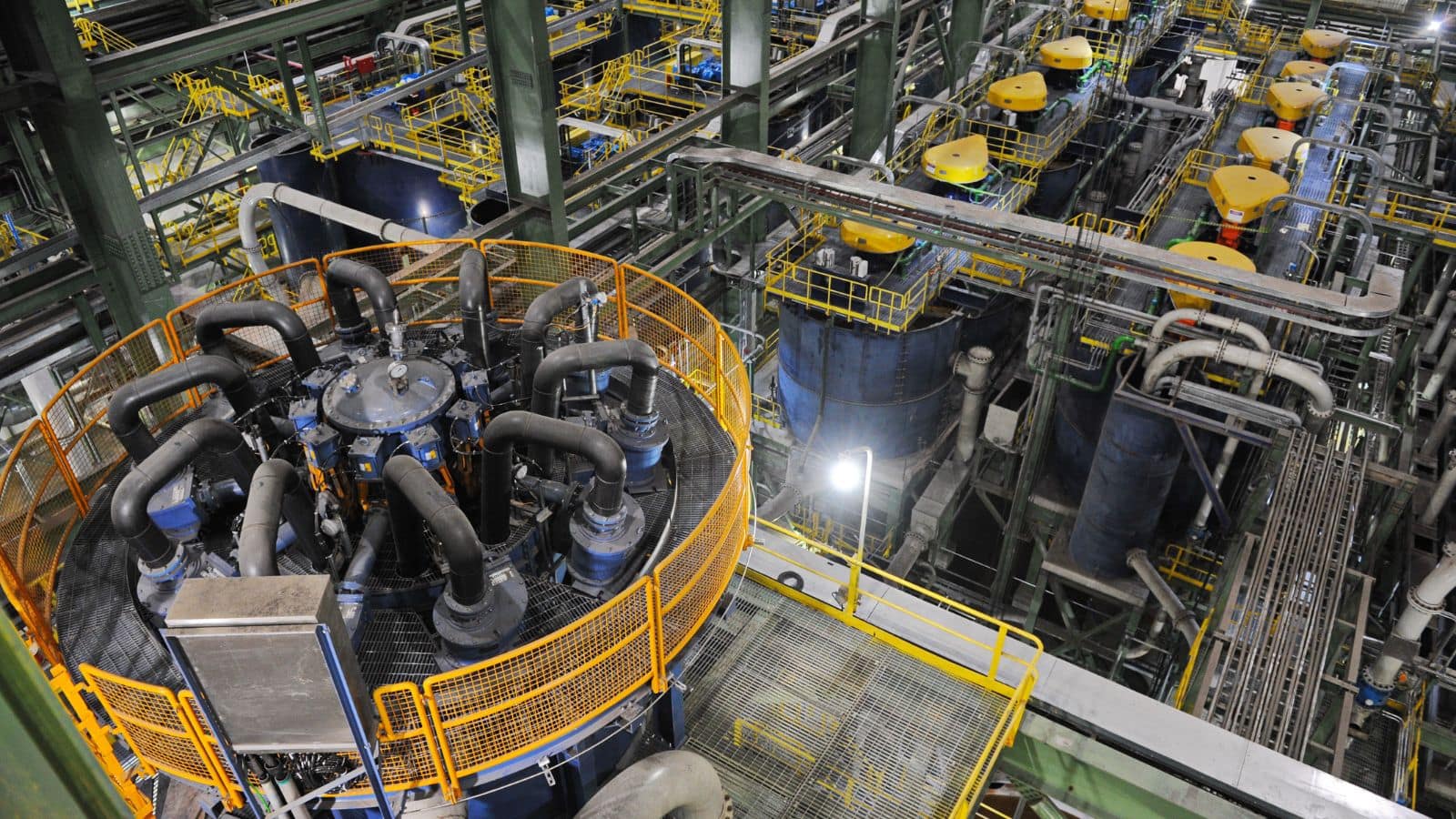
Lograr una cobertura adecuada en una gran planta de fabricación empieza con un estudio de ruido. Los niveles de presión sonora ambiental en las zonas de proceso suelen superar 85 dB, lo que hace insuficiente la potencia de salida de los altavoces estándar. En salas de compresores, edificios de turbinas y plataformas de proceso abiertas suelen necesitarse altavoces de bocina o arrays lineales de alta potencia.
- Realice un estudio de ruido para identificar las zonas donde la potencia estándar es insuficiente.
- Seleccione los tipos de altavoz (p. ej., bocinas o arrays de alta potencia) adecuados a las condiciones medidas.
- Defina las zonas para dirigir los avisos a las áreas correctas y evitar emisiones innecesarias a toda la planta.
- Valide la inteligibilidad mediante el índice STI (Speech Transmission Index).
- Supervise de forma continua mediante señalización de supervisión para detectar fallos en cada circuito.
La supervisión en tiempo real de la integridad de las líneas de altavoces y del estado de los amplificadores permite a los operadores detectar fallos de cobertura antes de que se conviertan en una brecha de seguridad. La señalización de supervisión en el bastidor del amplificador permite detectar fallos hasta el nivel de cada circuito de altavoces.
Protección contra la penetración, áreas peligrosas y ubicación de equipos
Los equipos instalados en exteriores, zonas subterráneas o áreas de lavado necesitan un grado IP adecuado. IP65 suele ser el mínimo para equipos industriales exteriores; se prefieren IP66 o IP67 en ubicaciones expuestas a chorros de agua o inmersión temporal.
- Cumplimiento para áreas peligrosas : ATEX e IECEx definen los equipos permitidos según el grupo de gases y la clase de temperatura.
- Certificación correcta : Los dispositivos antideflagrantes deben corresponder a la clasificación de la zona en la que se instalan.
- Ubicación práctica : Planifique el acceso para el mantenimiento, la dirección de entrada del cable y la protección contra impactos de vehículos o daños por manipulación.
La ubicación de los equipos debe tener en cuenta el acceso para el mantenimiento, la dirección de entrada de los cables y el riesgo de daños físicos por vehículos o manipulación de materiales. Las capotas telefónicas y las envolventes protectoras reducen la exposición al agua, los rayos UV y los impactos en zonas donde no se requiere una carcasa completamente antideflagrante.
Redundancia, disponibilidad y tolerancia a fallos
En los sistemas de comunicación críticos para la seguridad, la redundancia es un requisito de diseño, no una función opcional. Los principales modos de fallo que deben abordarse son la pérdida de alimentación, el fallo de una ruta de cable única y el fallo de un componente de hardware.
Las medidas habituales de redundancia incluyen alimentaciones dobles con transferencia automática, sistemas UPS para los bastidores de control y amplificación y redes de fibra con topología en anillo. Los anillos que utilizan protocolos como RSTP o MRP se recuperan de un único corte de cable en menos de 50 milisegundos, un intervalo imperceptible durante una llamada de voz.
Los nodos críticos, como el servidor IP-PBX, la consola de despacho y el controlador del sistema PA, deben instalarse en pares redundantes con conmutación por error automática. Documentar el objetivo de tiempo de recuperación (RTO) de cada subsistema durante la fase de diseño permite adaptar las medidas de redundancia a los requisitos operativos.
Los conmutadores Ethernet industriales gestionados admiten rangos de temperatura ampliados y protocolos de redundancia como RSTP o MRP, y se pueden configurar para segmentar la red mediante VLAN.
Elija a Joiwo para obtener soluciones integrales de comunicación industrial
Ningbo Joiwo es un fabricante especializado y proveedor de soluciones, que presta apoyo a proyectos desde el diseño y la integración hasta la instalación y el mantenimiento, y cuenta con un catálogo completo de productos que incluye teléfonos industriales, intercomunicadores de vídeo, sistemas de megafonía y comunicaciones de emergencia, sistemas de comunicación por fibra óptica y productos de TI y redes relacionados.
Si desea ayuda para definir la arquitectura adecuada para sus instalaciones, puede empezar enviando una consulta a los equipos de ingeniería de Joiwo y compartiendo los datos básicos de su proyecto.
Preguntas frecuentes
¿Cómo se conecta un sistema de comunicación industrial con el sistema de automatización (PLC, sensores y actuadores)?
En la mayoría de las plantas, los dispositivos de campo, como los sensores y actuadores se conectan a los controladores lógicos programables (PLC) en el nivel de control, y los PLC intercambian estados y alarmas con un sistema de control (como SCADA o una plataforma de control distribuido).
La capa de comunicaciones que conecta estas zonas suele ser una red de comunicación industrial diseñada para priorizar las operaciones en tiempo real de modo que las alarmas críticas y las acciones de los operadores se entreguen de forma predecible incluso cuando aumenta el tráfico rutinario.
Aquí es donde la segmentación y la gestión del tráfico son fundamentales, porque protegen el tráfico de control y, al mismo tiempo, permiten la integración y la visibilidad.
¿Qué protocolos de comunicación se utilizan habitualmente y cuándo se necesita una pasarela?
Rara vez se utiliza una única norma de extremo a extremo en una planta. Es habitual encontrar sistemas heredados de bus de campo (por ejemplo PROFIBUS) junto con protocolos modernos de Ethernet industrial como PROFINET o EtherCAT, mientras que el intercambio de datos de nivel superior se realiza cada vez más mediante OPC UA para un intercambio seguro de datos.
Cuando los dispositivos antiguos no admiten la misma interfaz que la red IP, se suele utilizar una pasarela para conectar distintos protocolos de comunicación y hacer que la modernización sea gradual en lugar de disruptiva.
¿Cómo cambian los requisitos de red con la Industria 4.0 y el IIoT?
A medida que se amplían las iniciativas de Industria 4.0 las plantas incorporan más puntos de supervisión y envían más datos a plataformas analíticas para el mantenimiento predictivo y la fabricación inteligente. Esta tendencia, a menudo denominada Internet industrial de las cosas (IIoT)—aumenta el volumen total de datos y hace que los patrones de transmisión de datos los patrones se vuelven más irregulares.
El objetivo práctico del diseño es mantener una alta disponibilidad y un comportamiento determinista para el tráfico de control y seguridad, sin dejar de admitir una conectividad escalable para nuevas aplicaciones basadas en datos.