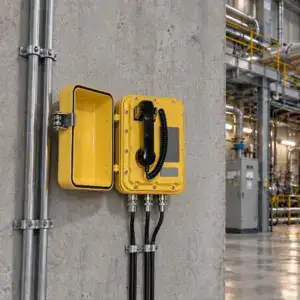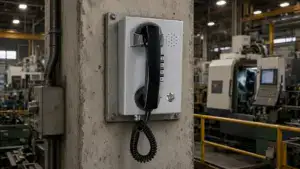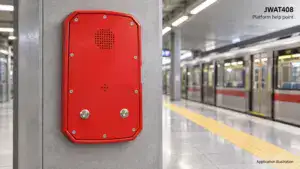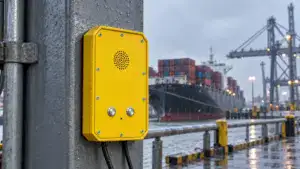
When an accident strikes, a reliable communication system is your first line of defense. In high risk underground environments or transit sites, delays are fatal. Let’s explore how to design emergency communication systems that ensure rapid response and safety for every worker and passenger.
Why You Need a Robust Emergency Telephone System
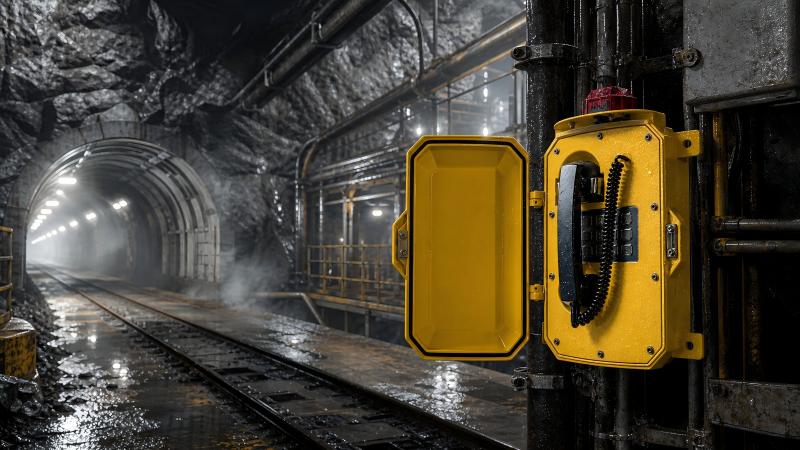
Tunnel infrastructure projects demand strict safety management. When an emergency strikes underground, standard mobile devices will fail you due to poor signal coverage.
A dedicated emergency telephone system serves as the ultimate lifeline for your site, offering several critical advantages:
- Zero Delay: Instantly connects your personnel to emergency responders when seconds matter most.
- Active Risk Mitigation: Deploying robust communication equipment reduces hazards across both mining and urban transport operations.
- Maintained Productivity: A dependable emergency communication system protects your active project, ensuring operational efficiency remains high even during a crisis.
Core Challenges in Tunnel and Underground Sites
Underground environments present unique hurdles. Every tunnel project is prone to extreme conditions that disrupt typical signal transmission. When managing tunnel projects, you must account for these harsh realities to protect your tunnel worker and passenger.
Here are the main challenges in a tunnel:
- Extreme noise and dust: Heavy machinery in a tunnel makes hearing an instruction difficult.
- Power failures: Outages can disable standard device operation inside the tunnel.
- Harsh environment: Tunnel moisture damages standard intercom units.
Device Ratings for Tunnel Environments
Tunnel phones must withstand humidity, water ingress, vibration, and in some cases, vehicle exhaust and cleaning chemicals. Minimum requirements typically include:
| Requirement | Recommended Standard |
| Ingress protection | IP65 or IP67 |
| Impact resistance | IK10 (vandal-resistant housing) |
| Operating temperature | -40°C to +70°C |
| Audio output | ≥ 100 dB SPL |
Corrosion-resistant stainless steel or reinforced GRP enclosures are preferred for long service life in damp underground conditions.
To see how these robust designs are implemented in real-world infrastructure, explore our specialized solutions for tunnels, highways, and underground utility tunnels.
Railway Communication System Considerations
Rail transit projects — whether metro systems, urban light rail, or intercity lines — demand communication infrastructure that handles both routine operations and full emergency scenarios simultaneously.
A railway communication system typically integrates several subsystems:
- Emergency field telephones at platforms, trackside, and in cross-passages
- A centralized IP PBX or dispatch console at the operations control center (OCC)
- Public address (PA) zoning for passenger announcements
- Integration with fire detection, access control, and SCADA platforms
Interoperability is a major concern for any transit project. Contractors strongly prefer SIP-based IP networks because they integrate cleanly with existing IP infrastructure. This open-standard VoIP architecture makes future station expansions simple and cost-effective.
For trackside devices, extreme durability is non-negotiable. These phones face harsh weather, high-speed train pressure waves, and potential vandalism. To ensure reliable performance, you must utilize ruggedized enclosures and sealed keypad assemblies.
For a comprehensive look at how we tailor these systems for mass transit networks, check out our dedicated railway and subway communication solutions.
Key Features of Industrial Emergency Communication
Petrochemical plants, oil refineries, port terminals, and offshore facilities add an extra layer of complexity: explosive atmospheres. In Zone 1 and Zone 2 hazardous areas classified under ATEX or IECEx standards, any electrical device — including your emergency telephone — must be certified for use in the presence of flammable gas or vapor.
This isn’t optional. Non-certified equipment in a classified zone is both a safety risk and a regulatory violation. If you want to understand the specifics of hazardous area classifications, our ATEX certification guide is a good starting point.
Beyond explosion-proof certification, industrial emergency communication equipment deployed in process plants and port facilities should include:
|
Essential Feature
|
Operational Benefit
|
|
Hands-free operation
|
Workers wearing heavy PPE can initiate calls without lifting a handset.
|
|
Integrated visual alert
|
Beacons and sounders confirm active calls in extremely noisy site conditions.
|
|
Single-button calling
|
Connects directly to the control room instantly without manual dialing.
|
|
Relay outputs
|
Allows the phone to trigger remote actions, like opening emergency gates.
|
PAGA (Public Address and General Alarm) integration is also standard practice in petrochemical facilities. Horn speakers distributed throughout the plant allow the control room to broadcast evacuation instructions or gas alerts across specific zones instantly.
Discover more about how we secure hazardous petrochemical environments by visiting our oil and gas industry solutions.
Redundancy and Reliability: Non-Negotiable Design Principles
Regardless of the specific environment, redundancy is the single most important design principle for any emergency communication system. If the system only works under normal conditions, it isn’t an emergency system — it’s just a telephone network.
Reliability is built in at multiple levels:
| Layer | Design Approach |
| Power | UPS backup; PoE devices powered from centralized battery systems |
| Network | Redundant ring topology; dual-path Ethernet routing |
| Call routing | Failover to backup SIP server or analog fallback lines |
| Physical | Armored cabling; protected conduit runs in high-risk zones |
For rail and tunnel projects specifically, survivable communications during fire scenarios are often a regulatory requirement — meaning cables must meet fire-resistance classifications (e.g., LSZH, fire-rated conduit) to maintain communication during evacuation.
What EPC Contractors and System Integrators Evaluate
When specifying emergency communication for large infrastructure projects, procurement teams and system integrators look beyond the device spec sheet. Key evaluation criteria typically include:
- Compliance documentation — CE, FCC, ATEX/IECEx certificates, and compliance with local telecom regulations
- System integration capability — compatibility with IP PBX platforms, SCADA, fire panels, and access control
- Customization flexibility — ability to configure speed-dial numbers, alarm relay logic, and PA zone mapping per project
- After-sales support — remote technical support, spare parts availability, and warranty terms
- Track record — project references in comparable environments (tunnels, rail, petrochemical)
Working with a manufacturer that offers end-to-end solutions — from field devices through to the central dispatch console — simplifies integration, reduces interface risk, and provides a single point of accountability for the communication system. Explore JOIWO’s full product range to see how individual components fit into a complete emergency communication architecture.
FAQs about Emergency Communication Systems
What is the main application of an emergency telephone system?
It provides a direct line to emergency responders during a crisis. This is vital for a tunnel, industrial site, or underground construction where standard mobile network coverage is poor.
How does a tunnel telephone differ from a regular phone?
A tunnel telephone is built for extreme durability in a tunnel. It withstands dust, moisture, and extreme temperatures, ensuring a reliable connection for emergency communication in harsh tunnel environments.
Why integrate CCTV with a railway communication system?
Pairing your railway communication system with CCTV gives operators visual confirmation of the tunnel emergency. This integration helps coordinate a faster, more accurate evacuation procedure.
Partner with JOIWO for Reliable Industrial Communication
JOIWO is a specialized manufacturer of robust industrial communication systems for high-risk environments worldwide. With in-house R&D, certified manufacturing facilities, and proven deployments across oil & gas, mining, maritime, and nuclear industries, JOIWO delivers the harsh environment communication solutions your operations demand.
If you’re looking for a reliable industrial telephone manufacturer, contact us to discuss your project requirements or request a quote.