

Blog
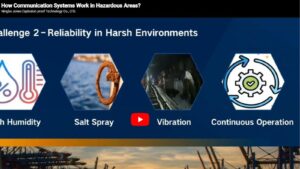
How Communication Systems Work in Hazardous Areas?
https://youtu.be/yDOBfPF5f_g?si=vB8G1xXaSBzNAP9- Joiwo Video Guide on Hazardous Area Communication Systems In this video, we will explain how communication systems are typically designed for hazardous areas, such as oil and gas facilities, chemical plants, and other explosive environments. This is not a product introduction. Instead, we will focus on system structure, key challenges, and practical engineering considerations.
Read More
2026-07-09

What is an Industrial SIP telephone? Industrial Communication Explained
Joiwo Video Guide on Industrial SIP Telephone Industrial communication systems require reliable and durable equipment. In this video, we explain what an industrial SIP phone is, how it works, and why it is different from a normal office phone. In this video, you will learn: • What is an industrial SIP phone • Key differences…
Read More
2026-07-06

How Joiwo Delivers Complete Industrial Communication Solutions
A Video Showcase of Joiwo‘s Complete Industrial Communication Solutions Discover why Joiwo is a trusted leader in industrial communication. Since 2005, we have gone beyond simply supplying products—we deliver complete, integrated communication systems tailored to demanding environments. From Oil & Gas and Mining to Correctional Facilities and Critical Infrastructure, our solutions are designed to ensure…
Read More
2026-07-04

How to Set Up an Industrial SIP Telephone Intercom System for Industrial Sites
https://youtu.be/WlULgjTa268?si=HtMDAvQx_ELU3LPE Joiwo Video Tutorial About SIP Inudstrial Telephone Installation In this video, we provide a step-by-step guide on setting up a SIP (Session Initiation Protocol) intercom system specifically designed for harsh industrial environments. Whether you are a system integrator or a site engineer, this tutorial will help you get your Joiwo devices online in minutes.…
Read More
2026-07-03

Boost Factory Communication with Rugged Industrial Phones You Can Trust
Joiwo's Video Guide on Rugged Industrial Telephones In this video, we answer the most frequently asked questions about industrial phones, covering: Key differences between industrial and commercial phones Clear communication in high-noise areas Analog, IP, and hybrid networking options Safety standards and explosion-proof certifications (ATEX, IECEx) Low-maintenance design and remote management capabilities Whether you're planning…
Read More
2026-07-02

Prison Communication Systems: Equipment and Infrastructure
Correctional facilities and prisons run on communication. From daily inmate counts to full-scale lockdowns, the ability to send and receive clear, controlled information at any moment determines how well a facility operates and how safe it remains. This article breaks down the following questions: What are the demands of prison communication systems What devices are…
Read More
2026-06-24

Industrial PA System for Facility Safety and Communication
A reliable industrial PA system is essential infrastructure when operations teams need the ability to reach every worker, in every zone, at any moment. Whether managing a manufacturing plant or a high-traffic distribution center, the right system design makes a measurable difference in both daily operations and emergency readiness. For engineers and procurement teams ready to evaluate…
Read More
2026-06-22

SIP Industrial Communication for Modern Industrial Networks
For engineers and procurement teams, Session Initiation Protocol (SIP)-based industrial communication enables industrial telephones, intercom stations, emergency call points, and dispatch consoles to operate over VoIP networks with better scalability, easier maintenance, and simpler integration than traditional phone systems. However, a few key questions still remain: How SIP systems improve industrial communication systems Which SIP-enabled devices fit harsh industrial scenes…
Read More
2026-06-15
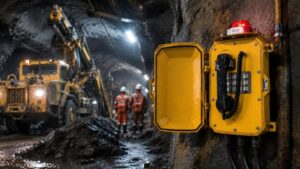
Why Industrial Communication Systems Fail in Harsh Environments — and How to Prevent It
Industrial facilities in extreme environments rely on communication systems to keep workers safe and operations running. Yet these systems fail at alarming rates — costing companies thousands per hour in downtime. Here's why it happens and what you can do about it. Common Connectivity Challenges in Harsh Industrial Environments Not all environments are created equal.…
Read More
2026-06-01
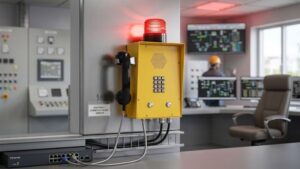
Industrial IP Telephone vs. Analog Phone System: What Modern Facilities Are Choosing in 2026
If you're still running a traditional analog phone system at your facility, 2026 might be the year that changes. Across oil refineries, tunnels, power plants, and ports, industrial operators are accelerating their shift to VoIP-based communication — and for good reason. VoIP vs. Analog Phone System: Understanding the Core Difference Before comparing the two, it…
Read More
2026-05-25

Emergency Communication in Tunnels, Railways, and Industrial Sites: Key System Design Considerations
When an accident strikes, a reliable communication system is your first line of defense. In high risk underground environments or transit sites, delays are fatal. Let's explore how to design emergency communication systems that ensure rapid response and safety for every worker and passenger. Why You Need a Robust Emergency Telephone System Tunnel infrastructure projects…
Read More
2026-05-18

Unified Industrial Communication: Future Trends Driving Smart Infrastructure Projects
Smart factories, intelligent transportation networks, and connected energy grids are transforming how industries operate. At the heart of this transformation lies a critical challenge: how do you unify telephony, broadcasting, alarms, and monitoring into one seamless system? The answer is converged unified industrial communication—and demand is accelerating fast. The Convergence of Telephony, Broadcasting, Alarms, and Monitoring…
Read More
2026-05-11