Deploying a hazardous area communication system in dangerous industrial facilities is a major engineering challenge. For a successful deployment, accurate hazard ratings, seamless integration with existing industrial networks, and strict control over the budgets and costs are needed.
In this blog, we will jump straight into what matters the most for hazardous area communication systems:
- Different compliance standards
- Product selection rules based on applications
- Integration methods for existing communication systems
- Strategies to keep a cost-effective long-term lifecycle

Regulations and Standards for Hazard Communication
Purchasing communication equipment for classified zones requires strict adherence to international and regional certification frameworks.
ATEX, IECEx, and NEC
ATEX is the mandatory regulatory framework for explosive atmospheres within the European Union, while IECEx provides a globally recognized certification scheme based on IEC standards.
In North America, the National Electrical Code (NEC) dictates the Class and Division system.
For global projects, IECEx is highly recommended as it simplifies compliance across multiple international sites. When drafting procurement specifications, engineers must map their site requirements accurately:
- Zone 0 / Class I, Div 1: Continuous hazard presence. Requires Category 1 / Ex ia equipment.
- Zone 1 / Class I, Div 1: Intermittent hazard presence. Requires Category 2 / Ex db, Ex ib, or Ex e equipment.
- Zone 2 / Class I, Div 2: Abnormal hazard presence. Requires Category 3 / Ex ic, Ex nA equipment.
The Critical Role of IP Ratings (NEMA)
While ATEX and IECEx certify that a device will not act as an ignition source, Ingress Protection (IP) ratings ensure the equipment will actually survive the harsh environment. In marine vessels, offshore oil rigs, or chemical processing plants, communication systems face high-pressure washdowns, highly corrosive dust, and extreme weather conditions.
When drafting procurement specifications, engineers must mandate stringent environmental ratings alongside hazard classifications:
- IP66 (NEMA 4X): Protects against powerful water jets and heavy seas. This is the minimum baseline for outdoor industrial installations and areas subject to daily chemical washdowns.
- IP67 / IP68: Provides protection against temporary or continuous submersion in water, ideal for extreme marine or mining applications.
Engineering Specifications: Explosion-Proof (Ex d) vs. Intrinsically Safe (Ex i)
When selecting devices, engineers must choose between mechanical containment and energy limitation. This decision directly impacts installation costs, cabling infrastructure, and future maintenance protocols.
Mechanical Containment (Explosion-Proof / Ex d)
Explosion-proof (Ex d) equipment utilizes robust enclosures to contain internal explosions and cool escaping gases. These devices are heavy, often requiring robust mounting hardware and specialized conduit or cable glands.
They are highly durable but come with a major operational caveat: maintenance requires the device to be powered down, and a “hot work” or gas clearance permit must be issued before opening the enclosure.
Energy Limitation (Intrinsically Safe / Ex i)
Intrinsically safe (Ex i) devices limit internal electrical and thermal energy to levels incapable of igniting a specific gas mixture. The core operational advantage of intrinsically safe devices are live maintenance. Technicians can perform hot-swaps, calibration, and troubleshooting without powering down the circuit or securing a gas-free permit, resulting in significantly lower maintenance downtime.
Equipment Selection for Different Situations
Each component in your communication architecture must meet specific technical parameters to survive the industrial environment. Below are the key procurement considerations for core devices.
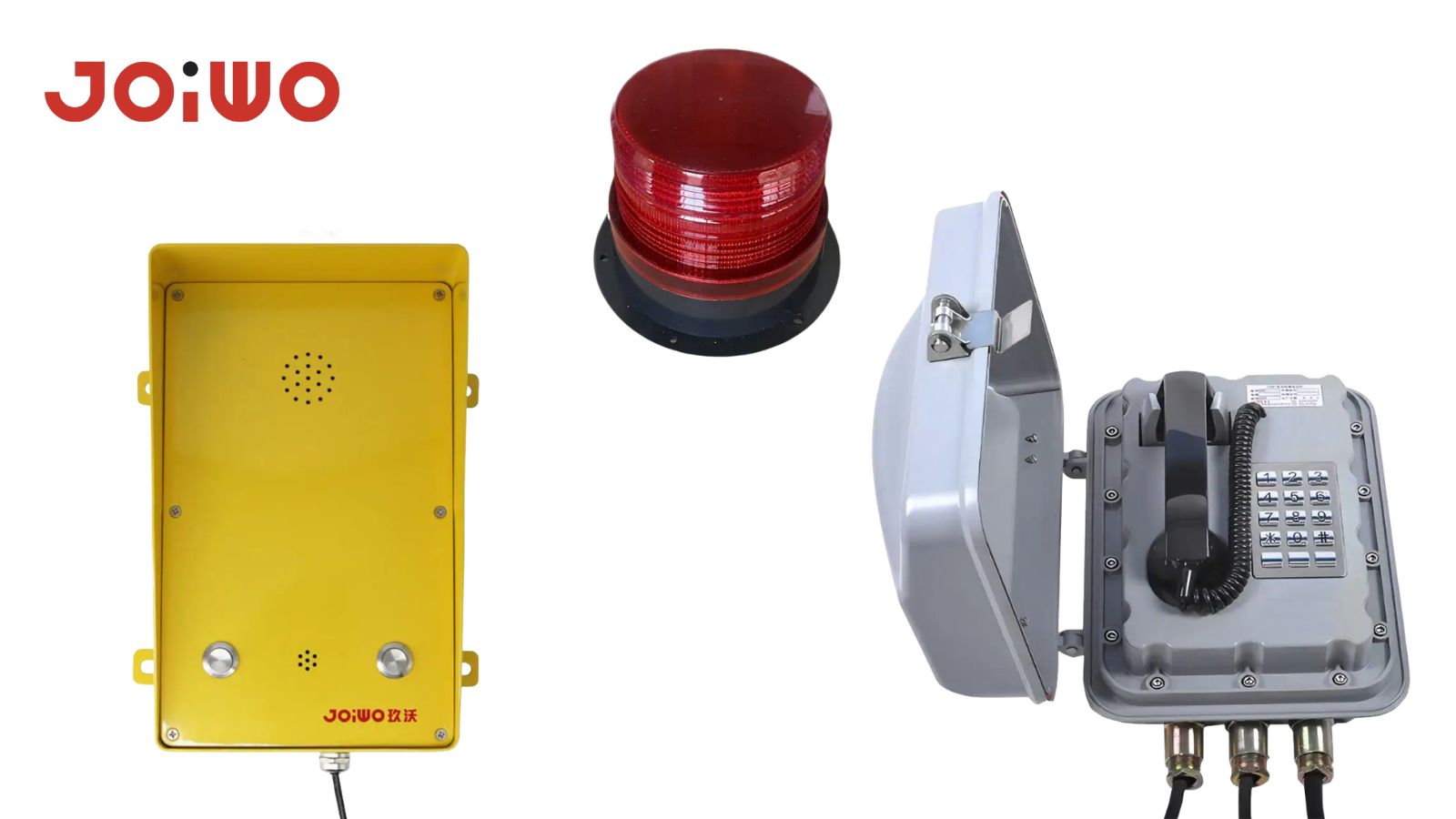
Industrial VoIP & Analog Telephones
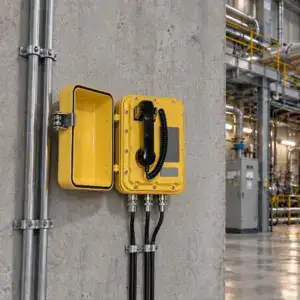
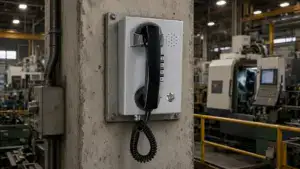
Explosion-proof telephones serve as the backbone for direct voice links between the field and the control room. When specifying these units, engineers must look beyond the ATEX/IECEx certificate.
- Housing & Durability: Look for heavy-duty enclosures with weatherproof ratings of IP66 or higher to withstand chemical washdowns.
- Audio Performance: High-noise environments necessitate noise-canceling handsets and loud ringers or visual flashing beacons to ensure calls are not missed.
- Network Protocol: Native SIP compatibility is crucial for modernizing infrastructure, allowing direct integration with PBX systems without inconvenient analog gateways.
Public Address & General Alarm (PAGA) Systems
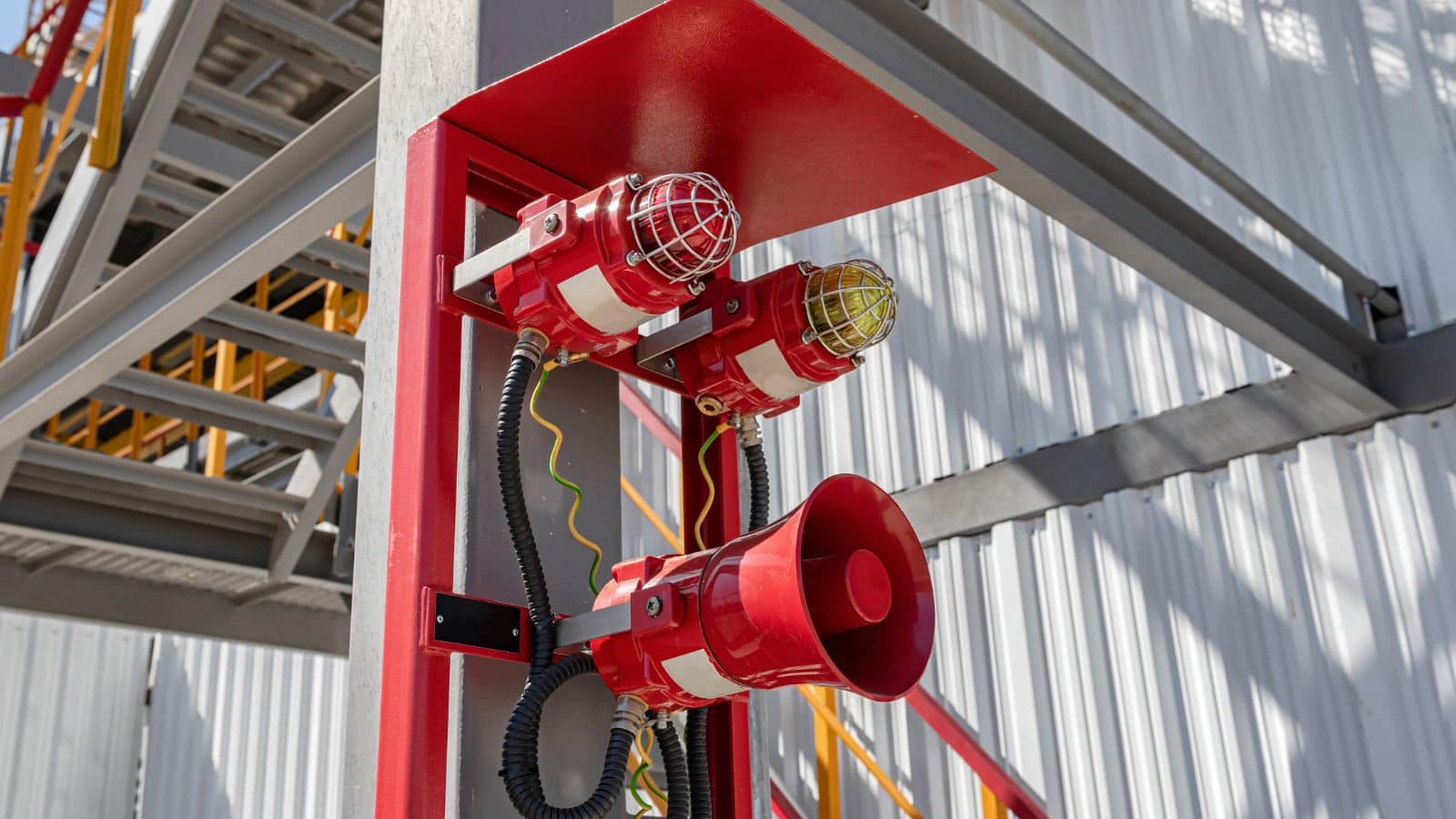
An effective public address system is crucial for emergency procedures and day-to-day operational paging in hazardous areas, and it contains an entire system of endpoints, speakers, and central server.
- Acoustic & Visual Coverage: Speaker must be heard over background machinery noise, so high-output Ex d horn speakers are standard. Furthermore, in ultra-high noise areas (exceeding 90-100dB) where audio alone is insufficient, these systems must be paired with ATEX-certified visual flashing beacons (strobes) to guarantee alerts are seen if they aren’t heard.
- Multi-Zone IP Broadcasting: IP-based PAGA networks allow control rooms to execute multi-zone paging—broadcasting specific emergency tones or live voice messages only to affected sectors of a plant, rather than triggering a facility-wide panic.
- System Redundancy: For safety-critical applications, procurement specs should mandate an A+B redundant architecture to eliminate any single point of failure in amplifiers or network controllers.
Emergency Intercom Call Stations & Muster Points
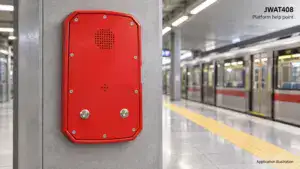
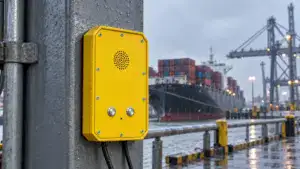
Rugged emergency intercom call stations are placed along main walkways, near hazardous equipment, and at designated muster points to act as the means for instant incident reporting. To be truly effective in a crisis, they require specific engineering features:
- Hands-Free & One-Touch Operation: During an emergency, a worker may be injured or wearing heavy PPE (gloves, respirators). Terminals should feature large, illuminated one-touch SOS buttons and support hands-free, full-duplex communication.
- Audio Processing: To ensure control room operators can clearly hear the caller over roaring machinery, the intercom must be equipped with advanced Acoustic Echo Cancellation (AEC) and background noise-reduction technology.
- Self-Monitoring: Utilizing modern SIP emergency stations allows for automated fault monitoring. If a terminal loses network connection or power, the central control system is instantly notified, ensuring the device is never dead when someone needs it most.
Material Selection for Corrosive Environments
As mentioned earlier, IP ratings gauge the capacity for devices to withstand harsh environments. To properly ensure such an ablility, enclosure and housing materials that can resist the ambient chemical or environmental conditions are vital.
Procurement and engineering teams must match the housing material to the specific environmental extremes of the installation site:
- Copper-Free Aluminum (Die-Cast): The standard choice for most onshore petrochemical plants and refineries. It offers an excellent balance of high durability, effective heat dissipation, and cost-efficiency. However, the aluminum should be treated with heavy-duty, UV-resistant epoxy powder coating to prevent localized pitting.
- 316L Stainless Steel: The most suitable option for offshore platforms (FPSOs, drilling rigs) and heavy chemical processing facilities. 316L offers superior resistance to salt-spray corrosion and aggressive industrial chemicals.
- Glass-Reinforced Plastic (GRP / SMC): Ideal for highly acidic environments or areas requiring non-conductive, anti-static enclosures. GRP is lightweight, immune to rust, and highly resistant to a wide range of chemicals, making it an excellent alternative to metal housings for specific Ex i (Intrinsically Safe) terminals or lighter industrial zones.
System Integration & Network Architecture for Process Facilities
IT and I&C engineers face the challenge of bridging legacy infrastructure with modern IP networks while maintaining strict network reliability.
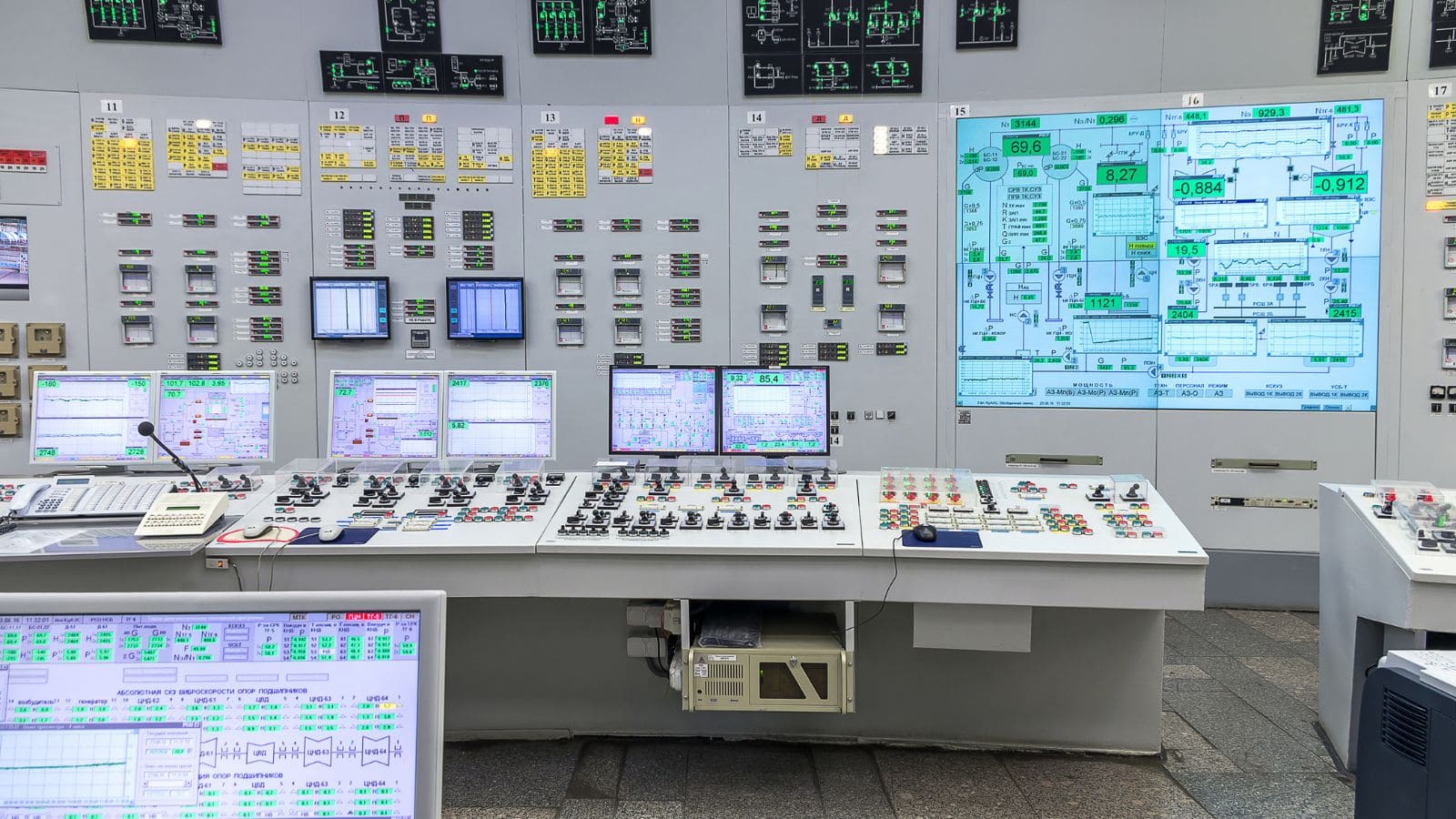
Migrating to IP and Ensuring High Availability
Modern facilities are migrating voice communication to industrial Ethernet backbones. Fiber optic cabling is highly recommended for hazardous zones; it carries no electrical current, eliminating spark risks while supporting long-distance runs.
Because these are safety-critical systems, procurement specs must mandate redundant network topologies (like ring architectures) and robust UPS battery backups.
Integration with DCS and F&G Systems
To maximize safety, communication endpoints should integrate directly with the Distributed Control System (DCS) and Fire & Gas (F&G) panels.
Utilizing dry contacts or industrial protocols, alarms from the F&G system can automatically trigger pre-recorded evacuation broadcasts over the PAGA system to expedite fire-fighting measures and personnel safety protocols.
The Hazardous Area Communication Checklist
Use this technical checklist when drafting your next procurement specification or Request for Proposal (RFP):
- Verify Area Classification: Identify the exact Zone (0/1/2) or Class/Division and the specific Gas Group (e.g., IIB, IIC).
- Confirm Certifications: Require valid ATEX, IECEx, or regional equivalents suitable for the target installation.
- Define Environmental Extremes: Specify required IP ratings (IP66/IP67), operating temperature ranges, and anti-corrosion materials (e.g., 316L SS, GRP).
- Acoustic Requirements: Document ambient noise levels (dB) to mandate necessary speaker output or noise-canceling microphone technology.
- Network Interoperability: Clearly state required protocols (e.g., SIP 2.0, PoE support) and PBX/DCS compatibility.
- Verify Mounting Accessories: Cable glands and other accessories must also adhere to the same regulatory standards as the main devices.
- Vendor SLA: Request documentation on MTBF, warranty terms, and long-term spare parts guarantees.
Joiwo: Secure Your Projects with a Certified Communication Equipment Manufacturer
Procuring communication equipment for hazardous environments requires balancing stringent safety compliance with complex IT integration. Such demands call for a partner whose credentials speak for themselves.
Joiwo’s products include explosion-proof telephones, SIP-compatible intercoms, or integrated PAGA systems, and more. They carry an extensive array of compliance credentials, including ATEX, UL, CE, FCC, CCC, RoHS, and CNEX, alongside strict IP65, IP67, and IP68 weatherproof ratings.
Furthermore, our manufacturing processes are fully certified to ISO9001, ISO14001, and ISO45001 standards, and we hold multiple exclusive patents for our explosion-proof and waterproof communication designs.
Explore our complete portfolio of global certifications here or contact our engineering team today to design a fully compliant, cost-effective communication architecture for your next project.